THE ROUTE THE DOGS AND I TAKE FOR OUR morning constitutional winds in and out of the open space for the approach to the Cheyenne airport’s eastern runway. No matter how much new construction the developers in Cheyenne may be contemplating, the Federal Aviation Administration won’t let them build in this corridor as long as aircraft are landing from the east, which means, God willing, that this neglected expanse of brome grass, sweetclover, and curly dock in the middle of town will survive longer than I’ll be around to use it.
A few months ago, the canines and I crossed the corridor and climbed up the low ridge on the south side to find a construction crew busy forming up a serious concrete pad, apparently the foundation for some unidentified installation. We watched daily as the work progressed until, last month, I saw that the project was apparently a new cell tower to handle the ever-spiraling smart phone traffic in the area. As the tower went up, I also saw that it was to be festooned with fake conifer branches in an effort to relieve its stark presence on the hilltop. I’d driven past other similarly camouflaged cell towers in the Denver metro area, but this was the first I’d seen in Cheyenne.
I doubt that drivers on nearby Windmill Avenue give the cell tower a moment’s notice— I wouldn’t either, except that the morning walk takes me past it every day, seven days a week, except when the Britts and I are chasing birds somewhere else. Every morning, the tower demands my attention as I hike along behind the dogs, insisting that I spend a minute or two contemplating the infrastructure that supports the iPhone I have in my pocket, the need the builders of that infrastructure felt to cover it up, and the strange apparition that resulted.
Critics far better informed than I have considered the effect of the smartphone/social media explosion on our culture, social interaction, sex, politics, and general sanity. All I can add is that the human animal, at least in industrial and post-industrial cultures, seems to produce an endless variety of answers to the question, “Can we?”, while utterly ignoring the question that should immediately follow the dawn of a new technology: “Should we?”
For several generations, a few prickly observers of our social order have wondered whether we’re masters of our technology or its slaves. That matter seems particularly germane today as artificial “intelligence” continues to develop and we face what seems to be an exceptionally dangerous example of our failure to assess the consequences of adopting ever-more-powerful tools. The cell tower on my morning walk strikes me as a monument to our shortcomings in this arena. We’re techno-junkies, with pretty much all the negative connotations that term carries, unable to kick habits that make us sick and may even kill us.
Then there are the branches.
Does this look like any conifer you’ve ever seen? Do the branches hide the essential structure of the tower or its purpose? Seems to me they do just the reverse: “Hey, look! Here’s a cell tower! Somebody tried to make it look like a tree!” It’s a caricature that isn’t funny. It doesn’t smell like a conifer. It doesn’t put down roots or shed needles. I won’t be shocked if the occasional crow or Swainson’s hawk uses it as a perch, like any other utility pole, but it won’t bear cones or shelter insects, so it can’t support a family of fox squirrels or birds.
Many years ago, I wrote a piece on the destruction of the huge backwaters and marshes along the Missouri River. The Army Corps of Engineers had been called in to protect lowland farmers from the river’s periodic floods and, at the same time, create a navigable channel barges could use to move grain and other bulk commodities from the northern plains to national and international markets. For decades, the largest single commodity transported up the river was the rock the Corps used as rip-rap to stabilize the jetties and wing dams they were building to create the channel, a sort of perpetual motion arrangement that justified the project while feeding it.
Under growing pressure from the National Environmental Policy Act, the Corps promised it would try to re-create some of the natural marshes and bottomland forests that had been destroyed along the river. As I contemplated the notion of a bunch of engineers restoring wetlands, I commented that we could look forward to a set of specifications for pre-stressed concrete sycamore trees. At the time, I thought it was funny. Fifty years later, as I walk by the cell tower every morning, I’ve begun to realize that I was far closer to the truth than I can bear to contemplate.
As my daily encounters with the tower have drawn on, I’ve started to see it as a metaphor of sorts. In the confrontation between wild places and “development,” this is what all too often passes as a compromise. The oil wells are drilled; the center-pivot irrigation systems are installed; the pesticides are sprayed; the power lines are strung; the suburbs are built, all with no more than a cursory nod to the effects they are bound to have. Then, after all the shareholders have been satisfied and the profits collected, we look for a way to camouflage the result with a few artificial branches. To any discerning eye, the effort to hide the impact only emphasizes what’s been lost.
Decorate it as we will, a cell tower is not a tree. What worries me most is that, far too soon, people won’t be able to tell the difference. Or care.
FOR REASONS I CAN’T BEGIN TO FATHOM, A 2023 WESTLEY RICHARDS CATALOG ARRIVED IN THE MAIL A WHILE BACK. ADDRESSED TO ME. Fascinated, I opened to the first page, which offered a breathless description of the “Lyell gilet” on offer. I had no idea what a “gilet” was— the dictionary defined it as “a sleeveless jacket resembling a waistcoat or blouse.” A word of French derivation, the dictionary said, for what I call a vest. This one claimed to be made out of “smart fleece” and was available for the bargain price of $425.
I’m vaguely aware of an echelon in the hunting community that operates in a fiscal world half the universe from mine. For such folks, I assume a $425 fleece vest isn’t even an afterthought. The model on that page was also sporting a “must-have” expedition safari shirt for just $245, and, on the next spread, another rugged guy was leaning into an overhead passing shot with a side-by-side that must be one of those guns the Limeys call “bespoke.” The stripped-down model was priced at £69,500 Sterling or about $84,000 American, quite a little more than I paid for the house I’m living in these days.
As the years have gone by, I’ve managed to raise enough in the way of liquid assets to upgrade my hunting gear, so I’m no longer limping around on blistered feet, soaked to the skin, or hovering on the ragged edge of hypothermia, and, at the moment, I’m keeping two bird dogs, which, as anyone who hunts with canines will testify, isn’t cheap. Still, I think the price of that shotgun may be more than all the money I’ve spent on my outdoor pursuits over sixty years: dogs, clothes, guns, vehicles, licenses, travel— the whole shooting match.
Somewhere in the demographic research Westley Richards used to identify me as a potential customer, something went terribly, horribly wrong.
And that’s okay, I suppose— considering the prices Westley Richards is asking, I imagine they can afford the utter waste of a few catalogs. Judging from decades of experience, I think I’m safe in saying I will not meet one of their customers in the places I hunt and fish, and, since they represent no competition for scarce birds or coverts, I wish them well in their outdoor pursuits.
But there’s one other thing about this catalog that touches on a detail of the refined sporting experience I’ve never understood. The cover features a tight shot of a well-manicured male model with perfect teeth squinting into the late afternoon sun from under the waxed cotton brim of a safari hat, his salt-and-pepper whiskers whispering of a life spent on rough shoots for red grouse and treks on the high veldt in pursuit of cape buffalo and black-maned lions. Between index and middle finger, he wields a cigar that probably cost as much as my last pair of field boots.
It’s the cigar that stops me. There seems to be some connection between truly cultured venery and cigars, a connection I can be forgiven for not understanding, since the style of my venery is clearly not cultured.
I first encountered the use of the cigar as some sort of upscale talisman more than thirty years ago when, as a young editor of an outdoor publication, I perused a manuscript that described a gentleman who had ventured into the high Wind River Range of Wyoming, fly rod and vest in his pack, in pursuit of record golden trout. At one point in this trek, a thunderstorm loomed up over the peaks, and the angler was forced to take shelter in a talus field. He wrote that the hair on his arms and the back of his neck stood up with the static electricity in the atmosphere while the lightning stabbed the surrounding pinnacles. In that awful moment, with the power of the firmament dwarfing the very mountains themselves, he suddenly remembered the cigar he was carrying. He lit up in the shelter of the boulder where he crouched and watched the rest of the storm, wreathed in smoke, with the equanimity of a member of the elect.
At the time, the cigar seemed more parenthesis than exclamation point; in fact, it struck me as a little silly, a distraction from the mood the writer was trying to communicate, but in subsequent decades as editor and reader of outdoor literature, I’ve encountered the cigar over and over again. The cigar as the pinnacle of satisfaction after a day spent in the pursuit of giant cutthroat trout on the South Fork of the Snake or discriminating browns on the Beaverkill. The cigar in a moment of quiet contemplation after a morning with Atlantic salmon on the Miramichi. The cigar in a respite from the presentation of Number 22 dries while considering the work of Izaak Walton on the River Test. The cigar as celebration for the success of a long hunt for (fill in the blank) Dall sheep, mountain goat, ibex, mouflon, argali, kudu, oryx, etc. The cigar as the subject of feature articles in upscale sporting magazines. The cigar as a companion with a fine single-malt scotch when the setters have been fed and the quail have been turned over to the help for processing. That link with rare scotch is a connection of long standing, although, in recent decades, the range of alcoholic beverages acceptable to the enlightened seems to have expanded to include expensive bourbon and even— gasp!— beer, although it must be a craft brew with origins so obscure and name so outlandish that no reader could possibly have any experience with it.
When I consider the history of the writing and art that have taken up the hunting and fishing experience with some pretension, I can see that this fixation with tobacco is nothing new. For generations, the pipe was the sporting gentleman’s preferred accessory, along with a cravat and a tweed jacket. I’m not sure why the pipe faded in popularity— it’s possible that, by the mid-twentieth century, stylish gentlemen had simply lost patience with the constant maintenance a pipe requires. Since the common folk were comfortably addicted to cigarettes or chew by then, I suppose the expensive cigar was the next logical way for sportsmen of means to demonstrate their rarified tastes.
And the taste IS rarified. I’ve never been a smoker, but, like most of my generation, I grew up in a household of adults who were seldom without a cigarette. I never liked the smell of Camel straights, but, since that cloud of combusting tobacco was my dad’s constant companion, I had no choice but to put up with it. One of Dad’s cronies preferred a pipe. I have no idea what blend he used, but it was some of the only tobacco smoke I’ve ever been forced to breathe that actually had a pleasant scent. My limited experience with cigars has been far less pleasant.
There was a huge oil refinery about twenty miles south of my childhood home. Thanks to the prevailing west wind, the stench from that facility generally drifted to the south of us, but, often on a spring morning when the moisture was drifting up the Mississippi from the Gulf, we spent a day inhaling that indescribable fragrance. In my admittedly limited experience, cigar smoke combines that inimitable bouquet with the exhalation from the typical pit toilet and undertones of compost. I think it’s fair to say that, from a strictly esthetic point of view, the transition from pipe to cigar among sporting folk has not been an improvement, at least for the folks nearby.
If your idea of post-sporting bliss is inhaling the rich fumes of a Cuban Cohiba, you certainly do not need to pay any attention to the rants of heathens like me. One of the most appealing elements of the hunting and fishing experience is its freedom, its privacy. My quarrel isn’t with the cigar smoking itself; it’s with the use of the cigar as a symbol in writing and photography of the more ethereal, refined planes some hunters and anglers achieve in these pursuits. I’m not sure cigars ever had anything to do with that higher plane, but, if there was ever a connection, it’s long since faded for most Americans, even most hunters and anglers.
If the sporting press should ever dispense with cigars as a status symbol, I suppose there would be a need for some other prop that implies the same sort of upscale connection— a tin of beluga caviar next to the bespoke double gun? A smear of paté on a dainty slice of Melba toast next to a brace of red-legged partridge? Or maybe, just perhaps, we could dispense with the not-so-subtle suggestions of class and status altogether and focus on the heart of the experience itself.
As for the fine folks at Westley Richards and other upscale retailers, I think they might profit by attending to the marketing strategies of their colleagues to the south, the manufacturers in Italy and Spain. They’re masters at finding smoldering young female models who wear the tailored tweeds, leather shell bags, and six-figure double guns offered in the catalog with sinuous grace while staring into the camera with eyes that would melt titanium. Smoldering Cuban cigar or smoldering Spanish lady— I know which one says “class” to me.
IT’S A TINY SCRAP OF THE ORIGINAL, MAROONED ON THE NORTH SIDE OF CHEYENNE BETWEEN THE SKATEBOARD PARK AND THE COMPOSTING FACILITY. I have no idea how it’s escaped the incessant digging, paving, draining and all the other kinds of rape that are included in that oh-so-gentle term, “development,” but there it is— half an acre of pristine shortgrass prairie, going about its business as it has since the last glacier.
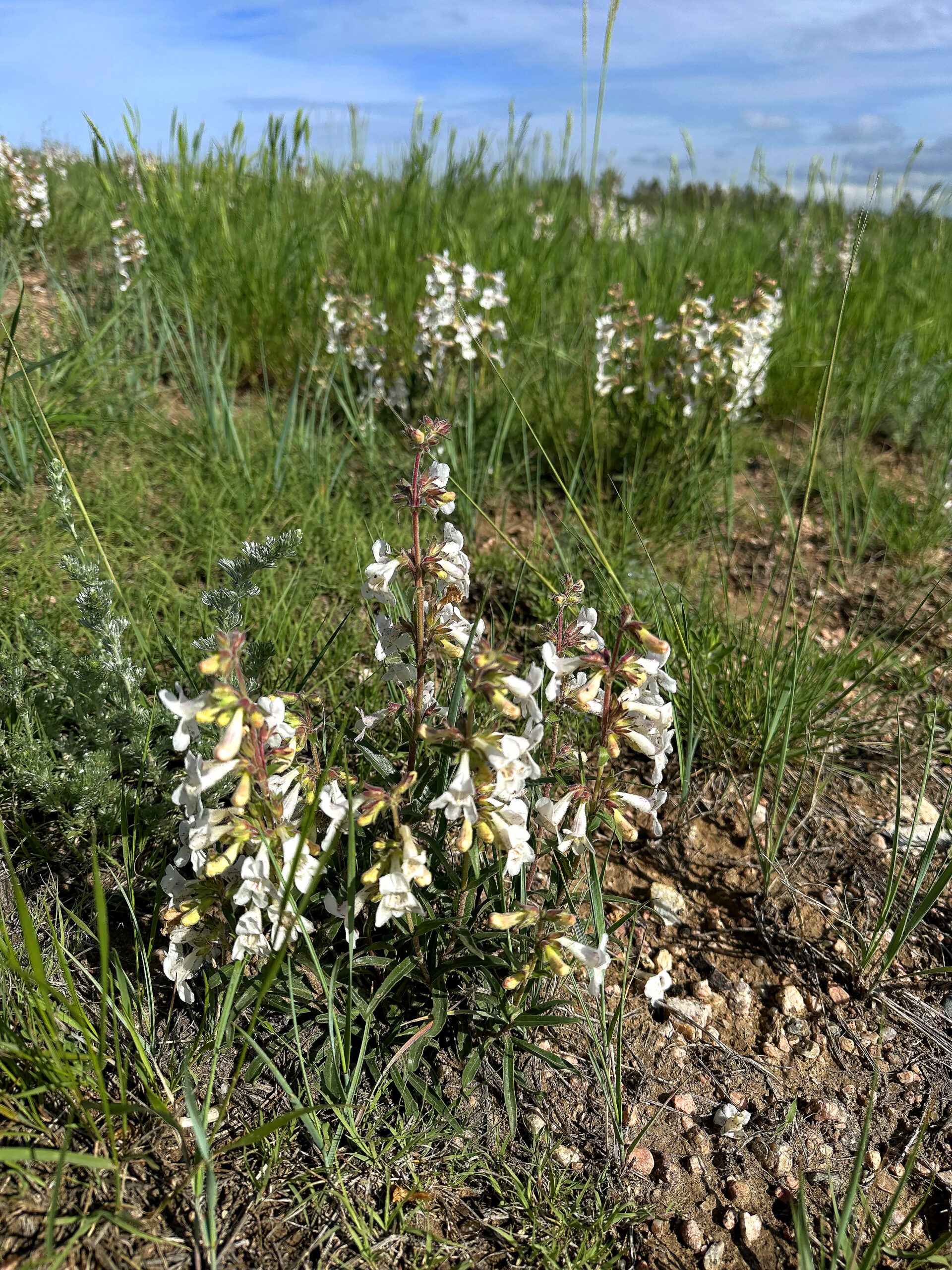
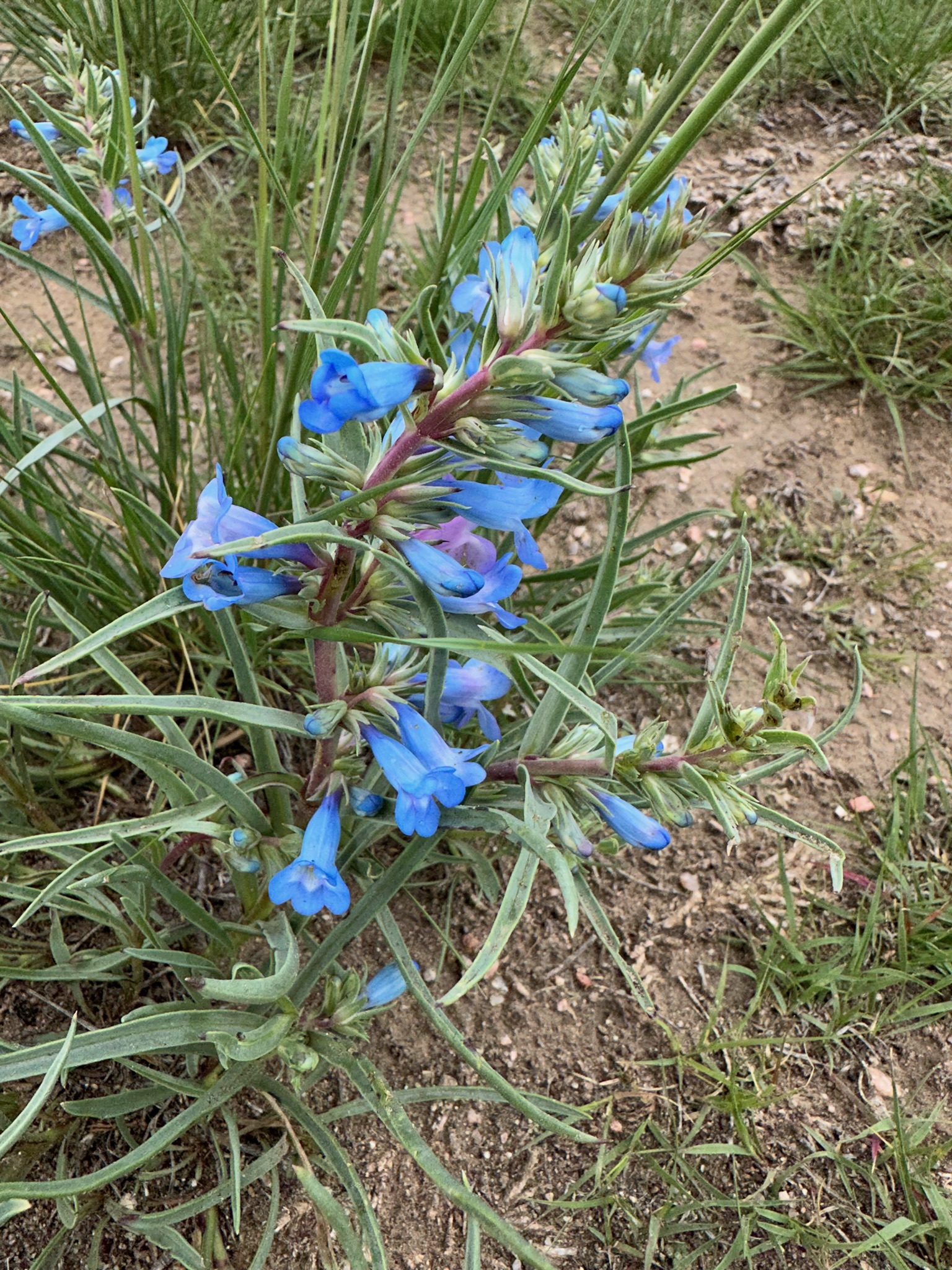
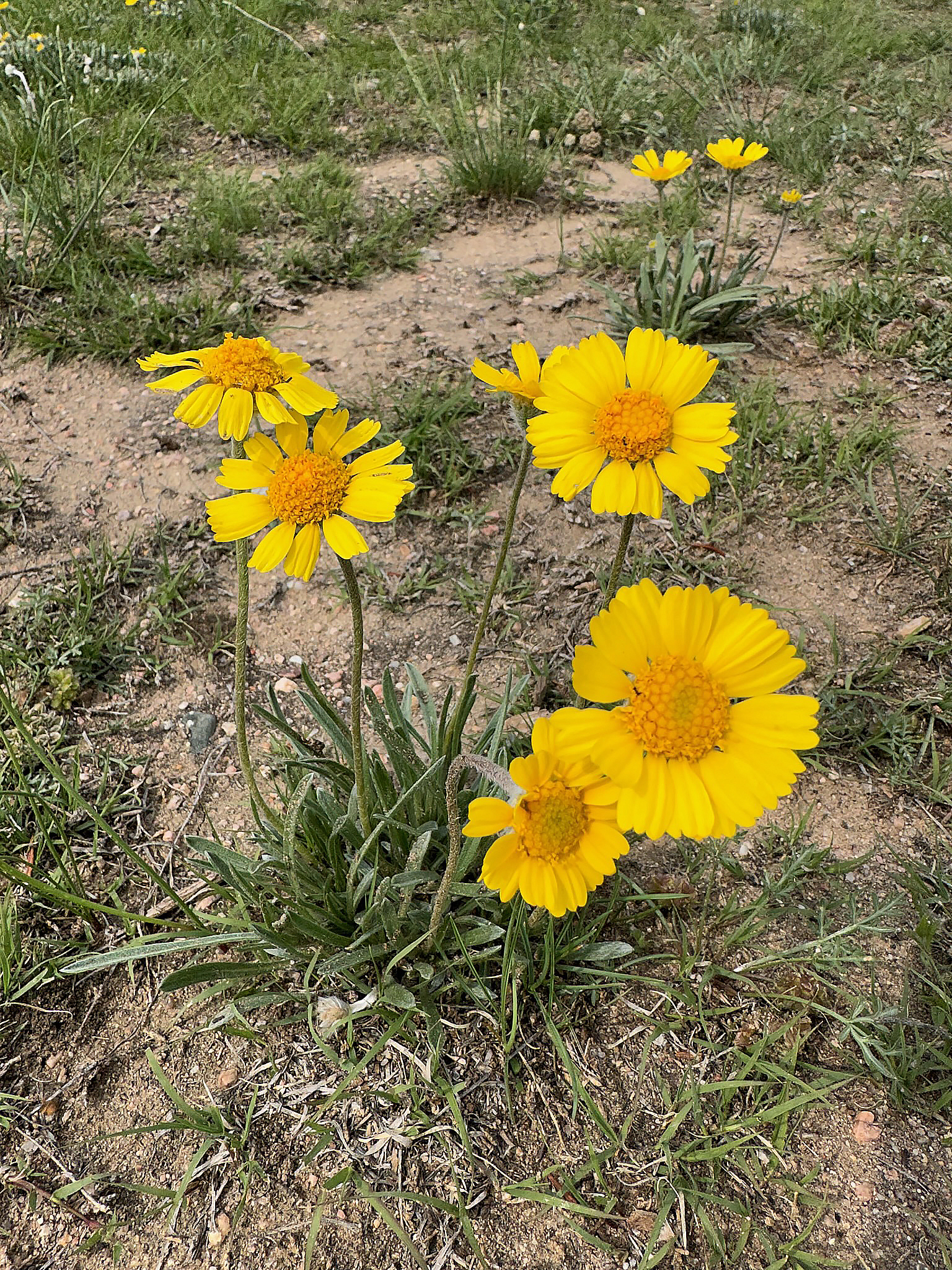
This spring has brought some relief from years of drought that have haunted the High Plains, and the little micro-prairie has responded with an outburst of gaiety— Easter daisy and sand lily followed by alpine phlox and sandwort, wild onion, globemallow, and a profusion of penstemon, white and sky blue.
It’s a dwarf garden. Even in a luscious spring like this, the natives keep low to the ground. The buffalograss and blue grama are never more than four inches high, and the flower stalks are barely more than a foot tall. Here and there, the seed heads of the needle-and-thread and squirrel tail grasses may reach as high as the middle of my calf, but the plants of the High Plains have been trained by the ceaseless wind to keep their roots deep and their heads down.
The dogs and I pass this way every morning. As I walked through the penstemons last week, I found myself wondering whether this hillside has a certain sort of consciousness. Does it have some recollection of the bison that once passed this way? Does it remember the mammoths and the men who hunted them? At sunrise on a cool June morning, I could almost believe it. And if dreams are memories filtered through our subconscious selves, then is it possible that the penstemons are the dreams of the prairie? I walk carefully, this time of year, making sure I don’t crush the flowers.
Yesterday morning, the penstemons were gone. An energetic city employee in faithful execution of his duties had mowed the bluegrass lawn around the skateboard park, then worked his way down the slope across the skimpy cover on the hillside. Everything was trimmed evenly two inches off the ground.
Since this shortgrass community was never likely to get more than four inches high, I wondered why anyone would bother to waste the gasoline mowing it, and the motive seemed even more elusive when I looked down the hill to the lush stand of exotic brome grass that had been planted to stabilize a piece of ground after it had been bulldozed. With all the moisture, the brome was three feet tall and studded with patches of leafy spurge and toadflax, two invasive plants that are regarded as enemies by the county weed and pest authorities. Mow the prairie and leave the brome? Why would anyone do that?
The answer came immediately: They don’t know any better. The person on the mower doesn’t know the difference between penstemon and toadflax, between prairie and weeds. Just doing his job. His supervisors probably know little more, and their supervisors even less. Aside from the demonstration of ecological ignorance, I thought, there was a more basic esthetic issue. The prairie slope had been a garden, but, with the taller vegetation removed, patches of poor soil not even the buffalograss had been able to cover were exposed. The lingering impression was less neatness than pattern-baldness or mange.
As we headed over the hill, the dogs and I, it occurred to me that the guy on the mower was more than an employee of the city; he was an agent of the culture. Like him, we don’t know what we don’t know— and we really don’t want to know. And, if I had to judge us by our actions rather than our rhetoric, I’d have to conclude that we prize neatness over beauty, control over understanding.
“Grumpy old man,” I thought as we left, “the penstemons don’t care. They’ll try again next year.”
AS WE WAIT OUT THE ENDLESS VARIANTS OF THE MOST RECENT PANDEMIC, I FIND MYSELF CONSIDERING THE VARIOUS forces that brought us to this point, the reasons SARS-CoV-2 got its start in humans. I’m not interested in laying blame; I just want to figure out what this might mean for the future.
This is by no means the first time a pathogen has found its way out of another animal host into people. Smallpox, tuberculosis, malaria, measles, and cholera all began as pathogens in other animals, probably spreading to humans in the early phases of animal domestication and herding.[i] The infamous black death, the plague that haunted Europe off and on for almost 500 years, probably got its start in a Chinese rat 2,000 years ago.[ii] The virulent “Spanish” influenza, responsible for at least 50 million deaths worldwide in 1918, probably arose in China, not Spain, and may have been brought to Europe through Canada in a force of 96,000 Chinese workers who eventually worked behind the Allied lines along the Western Front in Europe.[iii] Analysis of the strain’s RNA suggests that it originally evolved in birds, although there is reason to believe it may have spent some time in humans before the outbreak.[iv]
As I wonder why these diseases have been so catastrophic in people, several contributing factors come to mind. First, our immune systems tend to be ambushed by a pathogen that suddenly jumps across the physiological barrier that separates us from other animals. We haven’t evolved with the disease or been exposed to similar bugs that might prepare us to fight it, so it might make us sicker.
The chances that a pathogen in another species will adapt to humanity probably increase as the amount of contact between people and animals increases, which may well be driven by the sheer number of people. With any communicable disease, it’s clear that the potential for spread increases with the number of people exposed and the density of the human population.
Finally, the likelihood of spread increases with the amount of traveling people do. The plague almost certainly came to Europe as a result of trade along the Great Silk Road. The 1918 influenza may have been carried from Asia across Canada to western Europe. And it’s pretty clear that SARS-CoV-2 arrived in the United States by commercial jet. The one salient exception to this general rule could be a virus carried by a migratory bird, which is why, when the avian influenza virus H5N1 got loose in Asia in the late 1990s, authorities in North America sampled wild ducks and geese that might have mixed with Asian waterfowl in the Arctic.
A theme arises from these observations: more people mean more risk of pandemic disease. In Guns, Germs and Steel, author Jared Diamond offers a brilliant analysis of the difference between diseases that are sustained in small, isolated groups of people and what he calls “crowd” diseases that will flare up, then disappear in small populations, simply because all the members of the group either die or develop immunity. From an evolutionary point of view, a crowd disease that finds a large group of people can “afford” to be more aggressive and immediately deadly because there are always new victims to infect.[v]
These epidemiological realities are strangely related to another human malady: climate change. Like the crowd diseases, climate change is ultimately caused by large populations of humans. Carbon dioxide and other greenhouse gases all pass through cycles of varying lengths, which means that the planet can absorb a certain amount of them without changing the acidity of the ocean or the heat-trapping properties of the atmosphere. The problem become critical when too many of us release to much greenhouse gas.
In this, as in so many physical and biological processes, everything depends on rate. If that’s hard to grasp, consider this thought experiment: You’re in an airplane 10,000 feet above the ground. The plane catches fire, and you have to jump. Do you want a parachute? You’ll avoid the fire and get to the ground either way, but the outcomes of the two escapes are quite different. It’s all a matter of rate.
Clearly, there are a couple of ways to increase the rate at which we release greenhouse gases— each person can release more or we can add more people doing the releasing. Or a combination of the two. Lately, the amount of CO2 we’re been releasing around the world, per person, has gone up a little— about seventeen percent between 1990 and 2018. Here in the United States, the per-person release has actually dropped about twenty-seven percent in that time.
Trouble is, the number of people keeps going up. So, between 1990 and 2018, total amount of CO2 in the atmosphere has increased by sixty-seven percent.[vi]
Climate change resembles SARS-CoV-2 in one particularly disturbing way: Symptoms of the disease don’t start to appear until some time after the patient is infected. In the case of SARS-CoV-2, the gap between infection and first symptoms may be as much as fourteen days.[vii] With climate, the gap between infection and illness is much, much longer.
A molecule of carbon dioxide, the most common greenhouse gas, released into the air today may linger for from five to 200 years. A molecule of methane, for twelve years. A molecule of N2O, nitrous oxide, for 114 years.[viii] So, from the time I burn a gallon of gas, the resulting greenhouse gases could hang around for a century . . . or more.
It’s increasingly clear that the SARS, MERS, and SARS-CoV-2 outbreaks are harbingers of a new age of pandemic disease in the world. Some may be less dangerous, some more, but most epidemiologists expect that, some awful year, a raging killer could emerge to rival the 1918 flu and the Black Death. I think it’s fair to say that this new age of disease is largely driven by the size of the world’s population and the growing interdependence that arises from our increasing numbers. Can our medical technology keep up with the evolutionary processes that deliver new pathogens to our doors more and more rapidly? I guess we’ll find out.
And, as this biological threat stalks us, we face the certainty of a deteriorating climate with all its attendant problems— drought, floods, wildfire, monster storms, desertification. We’ve already passed the first thresholds science warned us about, and we’re already seeing the first effects that were forecast, from loss of glacial ice, declines in supplies of freshwater, loss of crops, to catastrophic rain and wind, killer tornados, oceans turning to acid. Like pandemic disease, the problem of climate change is, to a large degree, a problem of too many people.
As an ecologist by training, I’m deeply pessimistic about the future of the system we’ve built for ourselves, the blind embrace of technologies that have allowed four centuries of unbridled population growth. In the last thirty years, we’ve refused to look for other ways to power our civilization, which means we’ve absolutely locked in an increase in global temperature whose consequences will be profound and entirely negative. And we seem uninterested in spending the money or changing the way we live to minimize the risk of pandemic disease. Both of these problems stem, in large measure, from our inability to control our drive to procreate.
Our chance for limiting ourselves to a sustainable number probably passed us sometime in the 1920s, when human population rose beyond two billion souls. It took less than fifty years for that number to double, and even as the rate of population growth begins to slow, we’re just about ready to double it again. Demographers estimate that, if current trends continue, world population will plateau around the year 2100 just short of 11 billion.
Near the end of my orals for a master’s degree, an eminent phytoecologist on my committee asked me to estimate the carrying capacity of the planet for the human species. Setting aside my broader philosophical views on the question, I talked science for a while— net energy conversion efficiencies from one trophic level to another and finally decided that, if everyone became vegetarians, we could probably support about six billion people with a much more modest lifestyle than the ones we were enjoying.
“Would you believe two billion?” he replied.
At the time, I certainly did. Now, with the marvelous climate that has sustained us for the last 10,000 years steadily deteriorating, I’d say his estimate was high.
We’re caught in the jaws of a vise, tightened inexorably by the underlying problem that we seem incapable of solving— too many people.
As the symptoms become ever more debilitating, many of the people who are most concerned about responding worry that the general public is either unaware of the threats or so informed that they are paralyzed by despair. Hope is what should be communicated, they say; otherwise, humanity will just surrender to the inevitable and fade away to nothing.
I find that demeaning. It impugns the innate toughness and perseverance that have been the wellspring of success for the human animal ever since we came down out of the trees. It ignores a history of self-sacrifice and tenacity that has followed us right down to the present hour.
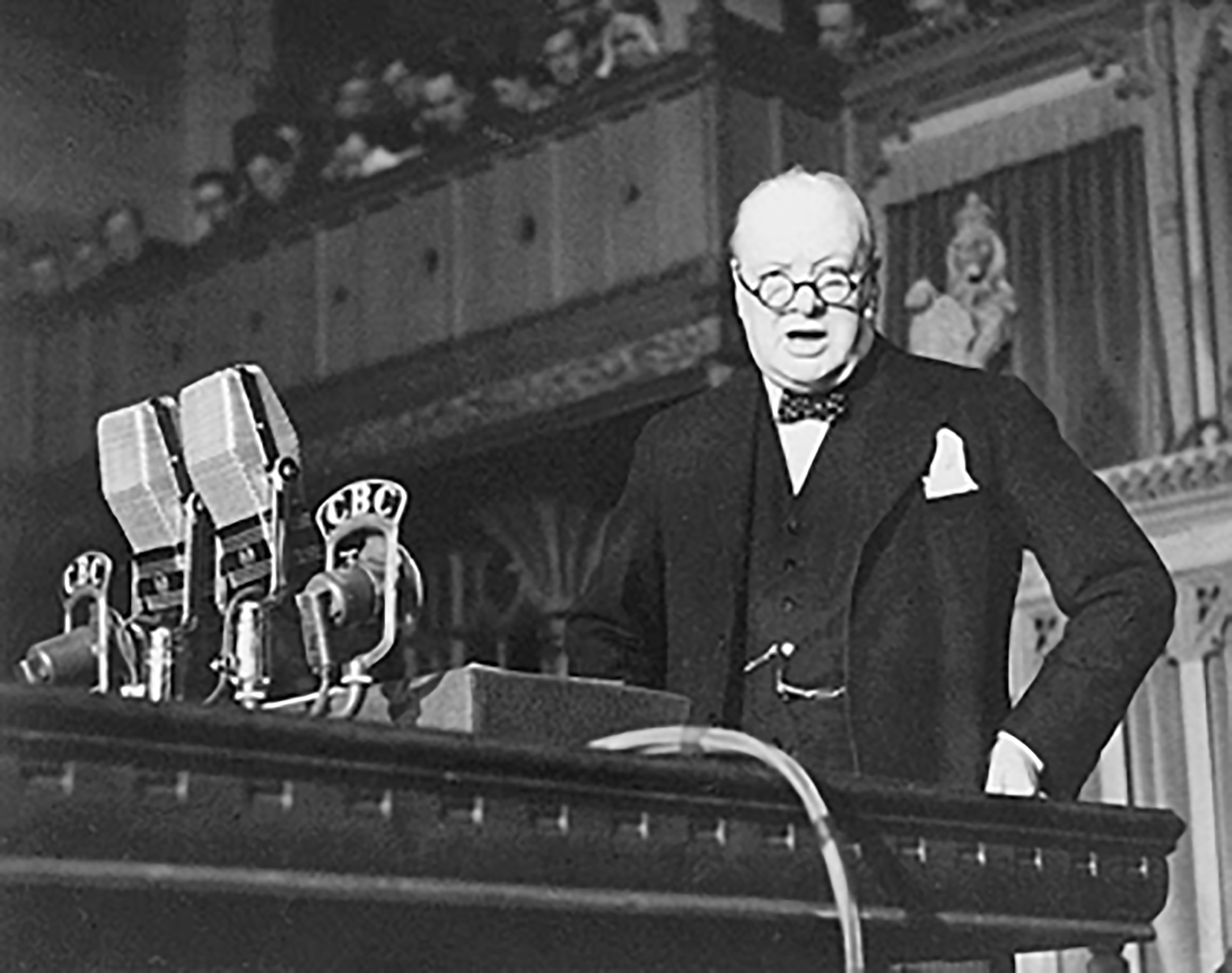
I’m reminded of Winston Churchill’s famous speech in the darkest hours of 1940, with Europe overrun, London in the process of being reduced to rubble, no sign of help from America, and the most powerful army in the history of the world massing its boats twenty miles from Dover. Three days after he became prime minister, Churchill addressed Parliament:
“I would say to the House, as I said to those who have joined this government: ‘I have nothing to offer but blood, toil, tears, and sweat.’” Then he added, “You ask, what is our aim? I can answer in one word: It is victory, victory at all cost, victory in spite of all terror, victory, however long and hard the road may be; for without victory, there is no survival. Let that be realized; no survival for the British Empire, no survival for all that the British Empire has stood for, no survival for the urge and impulse of the ages, that man will move forward toward its goal.”
So said Winston Churchill in a moment that must have seemed beyond hope.
Was the threat the Free World faced in those dark days worse than those we face today? I suppose that assessment depends on one’s point of view. Certainly, that threat was clearer, easier to understand than ours. And the solution, while it seemed almost impossible to achieve at the time, was relatively straightforward and called on some our most dependable traits as a species— the instinct to protect our homes and families along with our capacity for uniting against an easily recognized common enemy and our great talent for making new tools. As strange as it seems, that was a luxury— the situation played to our strengths.
This time, the enemies have no faces. They don’t live beyond a wall in another nation but here, among us. Their campaign isn’t waged on a human time scale. They can’t be negotiated with or threatened into an early surrender. Their weapons are subtle but almost unimaginably powerful, channeling, as they do, the forces of physics and organic evolution rather than man-made technologies. For all these reasons, many people are not yet convinced they even exist, which makes a coherent response doubly difficult to adopt. For all these reasons, I think the circumstances that face us as a species may be more dire today than they have been at any other time in the 200,000 years since we became human.
I very much doubt that the doomsayers who predict the extinction of the human species will turn out to be right. Even in the worst case, there will be enclaves of climate, soil, and vegetation that will support people. But the number of people will be no more than a fraction of current world population, and the process that will reduce the number of people we have to the number that new planet can support will be horrendous, even in the best case.
Our efforts to control COVID brought us startlingly near to economic breakdown as production and transport of basic foodstuffs slowed to a crawl and large sectors of the American economy ground to a halt, putting tens of thousands of wage earners and entrepreneurs on welfare. And that with a pathogen that was really fairly benign. It doesn’t take much imagination to conceive of a pandemic that is more communicable and far more dangerous than COVID— I wonder whether the fragile economic system that supports us all will survive such a challenge.
As large areas of the earth become uninhabitable, waves of climate refugees will come looking for food and shelter. We’ve watched the strain such emigration has placed on Europe in the last twenty years— can our economic and political systems survive a far more drastic increase in that flow? And, if these systems fail under stress, our capacity to help each other will be crippled, and the subsequent human suffering will be further magnified.
Through generations of ignorance and neglect, we have put ourselves in the vise. It is possible that, for the majority of us, for most of our children and even grandchildren, there is no way out. It’s hard to say whether there is even a way through, at least as any sort of civilization. It’s critical that we grasp the reality of the situation we face. It shouldn’t be exaggerated, but neither should it be softened or camouflaged to spare the feelings of people who simply don’t want to face it. I think we’re beyond hope.
And that may be for the best. Hope is an overrated emotion— puerile, feeble, without intention or resolve. We need to rediscover the steel in our souls, the sand in our craws. We may well face the greatest challenge in the history of humanity. We need to get to work, regardless of the chances of success, and we desperately need to face the truth about the trouble we face, no matter how disturbing it may be to tender sensibilities. As for hope— nurturing it simply wastes time we don’t have. We should leave it behind.
——————
[i] Diamond, Jared, 1997. Guns, Germs and Steel: The Fates of Human Societies. W.W. Norton and Company, New York, NY. p.196.
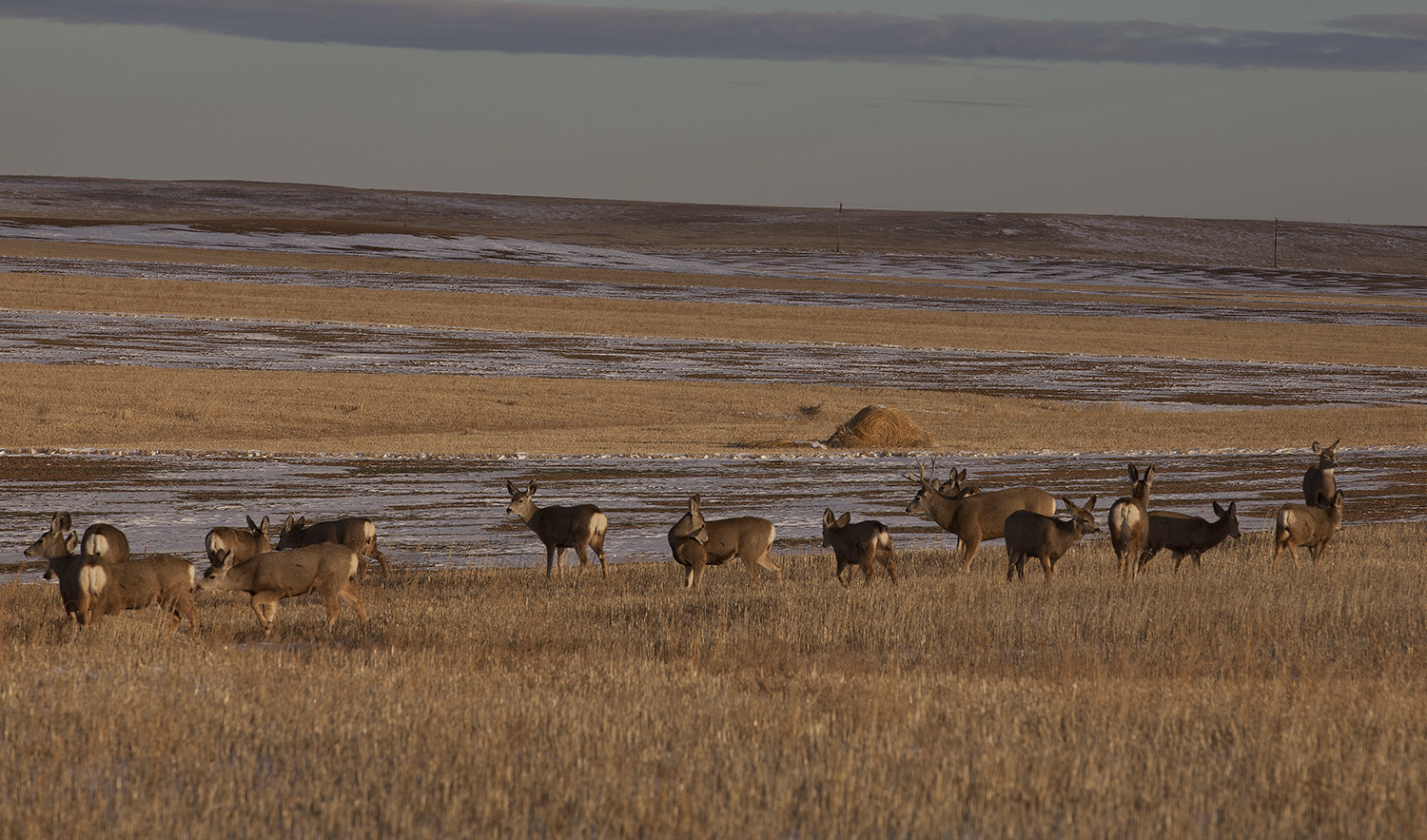
Plains mule deer in wheat stubble. Copyright 2018, Chris Madson, all rights reserved.
WE HADN’T BEEN IN THE BLIND FIVE MINUTES WHEN HE STEPPED OUT OF THE TIMBER.
“Good Lord,” I whispered to Buster. “Look at that rack!” The bases of the antlers were as big around as a man’s wrists, and the beams spread at least a foot on either side of the buck’s ears, then curved up and up into five massive points on each side. He was an orgasmic trophy. “How big do you think he is?”
“Hang on a sec.” Buster leaned over his laptop and flicked the mouse. “That’s 1403. Let’s see . . . he’s at 327 typical this year. Not bad.”
“You must live with these deer. How can you tell which buck that is from here?”
“Well, I do spend a lotta time out here, but figurin’ out which deer is which ain’t no problem. Look.” He flicked to another screen. It was a GoogleEarth map of the preserve. Superimposed on the GIS layout were several hundred fluorescent dots.
“See, we’re here.” He moved the mouse to the lower left corner and put it on one of the dots. “And this is him.” A dialogue box popped up. “1403, male, 327T, BD: 5/28/2015.”
My jaw dropped as I looked at the screen. “How’s that work?”
“Well, we useta put GPS collars on all the deer, but the clients didn’t like ‘em much, so we switched to subcutaneous transponders. Under the skin. They bounce a signal out to the satellites and give us real-time locations. Handy.”
“Well, I’ll take him,” I said, reaching for the .270.
Buster put a hand on my arm. “Wish you wouldn’t.”
“Why not?”
“That rack’s got at least three more years’ growth coming. Could top out near 360. If you shoot him now, there’d be a surcharge for foregone potential.”
“Foregone potential?”
“That’s what our lawyers call it. He’ll be worth at least another five grand before he’s done.”
I put the .270 back in the rack.
B.C. “Buster” Pointcounter is the manager of UltraDeer®, Inc., a 10,000-acre shooting preserve near Whitetail City, Kansas. When Buster and his partners invited me to visit UltraDeer®, I figured it was just another quality-deer operation, but they assured me the trip would be worthwhile. Among other things, they guaranteed I’d kill a whitetail that would rank in Boone and Crockett’s top five. That’s the kind of guarantee a deer hunter just has to test.
“No brag, just fact,” Buster told me when I asked him how he could make such an offer. “For most of the last hunnerd years, deer management was stuck in the dark ages— bunch a’ state biologists wanderin’ around, tryin’ to figure out how many doe licenses they had to sell to keep a wild herd from eatin’ itself out a’ house and home.
“Then quality deer management came along: Feed those deer; make sure they got the minerals they need; use yer hunters to clean up the genetics, and when you let somebody kill one a’ yer trophies, make him pay fer the privilege. That was thinkin’ in the right direction— they just didn’t take it far enough.
“We’re thinkin’ out a’ the box. Lemme show you.”
We jumped in his pick-up and drove around the lodge to a complex of buildings that looked a lot like the U.S. Veterinary Health Labs at Iowa State University. Some had fenced compounds outside with carefully tended grass and shrubs to give their four-legged residents a sense of security. Others were more substantial. We drove up to the door of the largest of these, and Buster led me inside
“It’s all about genetics,” he explained as we checked in with the receptionist, took out our security badges, and went into the shower room to put on our hospital scrubs.
“The quality-deer folks had that right,” he said as we emerged into a vast laboratory. “Trouble was the way they tried to control gene flow. Shoot the little ones and let the big ones grow? Way too primitive. You can’t tell fer sure what a yearling buck’s potential is just by looking at his horns. Is he just a spike? Well, what if he was born late because his momma didn’t get bred in her first heat last fall? Case like that, he might have a lot of potential, but he’d be dead in a quality-deer operation.
“And what about his momma? She’s half the genetic equation and a quality-deer manager don’t know a thing about her. Naw, we figured there had to be a better way to breed fer quality bucks. That’s some of what we’re doin’ here.”
“So how does UltraDeer® go about it?”
“First, you gotta know every deer. When a fawn is dropped on this preserve, we get our hands on it the first day. Tattoo the registration number on the inside of the lip, stick a transponder under its hide, and follow that critter the rest of its life. Here, take a look at this.”
Buster stepped over to a computer terminal and called up a file.
“Here’s the kind of records we keep on every deer. Birth date, birth weight, all the vital statistics. DNA analysis. Whole pedigree, too— that goes back ten generations now. What buck was bred with what doe . . .”
“Wait a minute. How the heck do you control the breeding?”
“Well, you can’t maximize the potential a’ these here bucks if you don’t control the breeding. There ain’t much— how can I put this delicately fer yer readers?— there ain’t much lovemakin’ between deer on our place. We took a page out a’ the livestock industry’s book— several of ‘em, in fact. We electro-ejaculate our best bucks. The whole operation runs on artificial insemination.”
“So you chase the bucks around while they’re in rut, catch them, then run them through your semen harvesting operation?”
“Oh, we don’t haveta chase ‘em; they come in on their own.”
“Huh?”
“Well to tell you the truth, some of the bucks kinda like the process— you hadn’t oughta print that. But we got other ways to lay our hands on ‘em. The quality deer folks was thinkin’ the right direction on that, too, but they didn’t take it far enough.”
“Ah, you use feeding stations.”
“Well, yeah, but not the way you’re thinkin’. Feeding’s important— you can’t get yer whole genetic potential out of a buck if you don’t control his diet. We’re doin’ research on that, and we got a good mix. But deer are pretty skittish. You go trappin’ ‘em at feed stations, messin’ with their privates, they may not come back.
“So we took the whole thing another step. When our deer come into a feed station, they gotta squeeze in, and when they do, they get an injection. It’s all automatic. We give ‘em some antibiotic— that’s another page from the livestock industry, helps ‘em grow— and a little somethin’ else, too. After they get that first shot, they’ll be comin’ back fer more, no matter what.”
“They’re addicted! What do you use— heroin?”
“We don’t like the word ‘addicted.’ Let’s just say they like the stuff. Keeps ‘em calm, helps ‘em grow better. I can’t tell you what we use— it’s a trade secret. Comes from Colombia, though.”
“So you hold the does here while they’re in heat . . .”
“Used to. Now we gotta good bead on the way all that works. Catch ‘em at the injection station when they’re ready and do the whole thing there. Wham, bam, thank you, ma’am.”
“It all seems a little . . . tame,” I said.
“Yeah, well, you gotta put aside some a’ these romantic notions if you wanta make money. Nice thing about the AI is it gives us another revenue stream. We useta’ sell a few of our bigger bucks to quality deer operations. Now, we can sell semen instead. Get a’ lot more bang fer yer buck that way. Heh, heh . . I kind a’ like that. . . .”
I’ve got to give you this, Buster. Looks like you’ve got this genetic issue pretty well solved.”
“We’re comfortable with the way we’re working things right now, but we’re not done. Not by a long shot.”
“What else is there?” I wondered.
“Oh, the R&D guys got some great ideas. Here the last couple years, they been working on gene splicin’. Great opportunity . . .”
“What do you mean?”
“They found the gene that makes elk antlers. Three of ‘em, actually. Spliced ‘em into some a’ our whitetails. We had a buck last year scored almost 500 Boone and Crockett. That was some rack!”
“I guess so! Can I see him?”
“Nah. He died. Couldn’t hold his head up. We’re workin’ on that, though. If we can find the elk genes fer neck muscles, we figger the sky’s the limit on racks.”
I pondered the idea of a 500-point whitetail rack for a minute or two. The fossils of the extinct Irish elk came to mind, stags whose racks spanned up to twelve feet and weighed up to ninety pounds. UltraDeer® was on its way to recreating that trophy. Then another side of the operation came to mind.
“Who are your customers, Buster?”
“Clients. We call ‘em clients. When you’re payin’ $25,000 for a basic hunt, plus trophy fees, you got a right to a little respect. They’re mostly men, like you’d expect. In six years now, I don’t think we’ve had more than a couple a’ women come to hunt, and they came with their men. Most of the guys are on the shady side a’ sixty. Made their millions, now they want to enjoy some a’ the good things in life. We put ‘em up in the lodge— nice place, dontcha think?— feed ‘em real good, and give ‘em the chance to kill a once-in-a-lifetime trophy.”
“They’re all hunting out of your blinds?”
“Yep. They don’t wanna walk, and we don’t want ‘em walkin’ anyway. Just stirs up the stock. And, when you’re out walkin’, you can’t use the computer; no computer means you can’t ID the bucks you’re lookin’ at. The blinds work better. They’re set up right there at the injection stations. Clients get a good look and an easy shot. Electrical outlets, heat, T-1 hook-ups fer the laptops.”
“I see in your brochure that you provide meat processing and packaging along with taxidermy.”
“Oh, yeah, we’re a one-stop operation. The taxidermy sideline’s been good for us. The meat processin’, not so good.”
“Why’s that?”
“Well, turns out most of our clients ain’t interested in the meat. Just want the trophy. But that’s okay. We recycle the meat they don’t take.”
“Recycle?”
“Yup. Now this is off the record. We’d been lookin’ for a high-protein supplement for our deer feed, and it struck us— why not use the meat? That there’s another lesson we took from the livestock boys.”
We spent the rest of the afternoon touring the facilities, then at a little before five, Buster looked at his watch.
“Oops. We’d best be headin’ out to the blind.”
“When do they start coming out?” I asked.
“There ain’t no ‘start’ to it. The buck you’re gonna shoot’ll be at his injection station at 5:20 sharp. Number 2508. Ain’t the best buck we got on the place by a long shot, but he’s scorin’ 205 typical this year. That’ll look good in the book.”
“I can’t tell you how much I appreciate this, Buster. Your operation really is one of a kind.”
“UltraDeer®, man— no brag, just fact. By the way, you gonna want yer meat?”
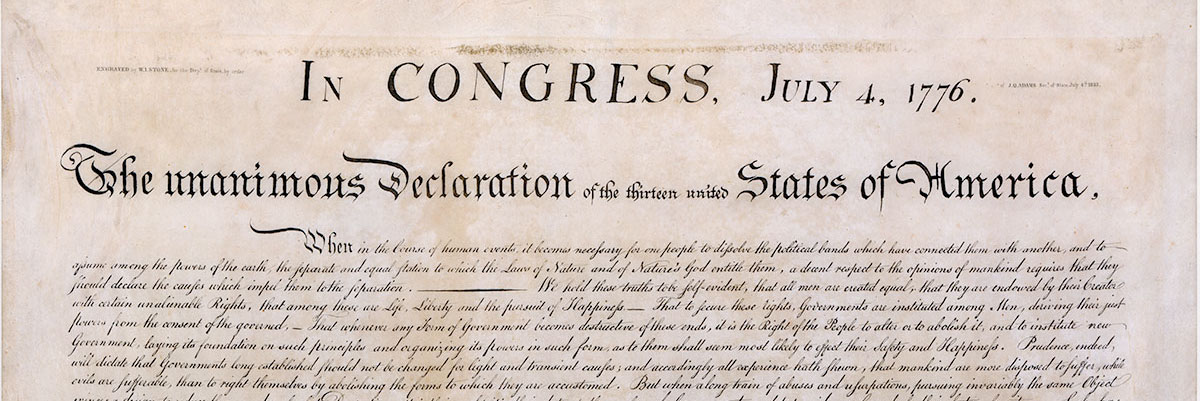
“WE HOLD THESE TRUTHS TO BE SELF-EVIDENT: THAT ALL MEN ARE CREATED EQUAL; THAT THEY are endowed by their creator with certain unalienable rights, that among these are life, liberty, and the pursuit of happiness.” The philosophical underpinning of the great American experiment. Words to stir the soul.
And perhaps that’s enough. Maybe it’s too much to expect a rallying cry, a declaration of independence, to be internally consistent as well as inspiring. Still, as I recall these words after a long life watching the turbulence of American governance, I find myself pondering the tension in the rights Jefferson and his colleagues guaranteed to the citizenry of the new nation.
For the purposes of this essay, I’ll set aside the most glaring injustices these guarantees ignored: the protection of slavery, the disenfranchisement of those who did not own property, the callous disregard for women, and the implicit hostility toward the peoples who had occupied the continent for millennia before the arrival of the first European. These prejudices were deep-seated and corrosive; after more than two centuries, they continue to gnaw at the foundations of our system, demanding solutions we still struggle to impose or even identify.
But I want to focus on an even more fundamental contradiction in Jefferson’s words: the antithetical concepts of equality and liberty.
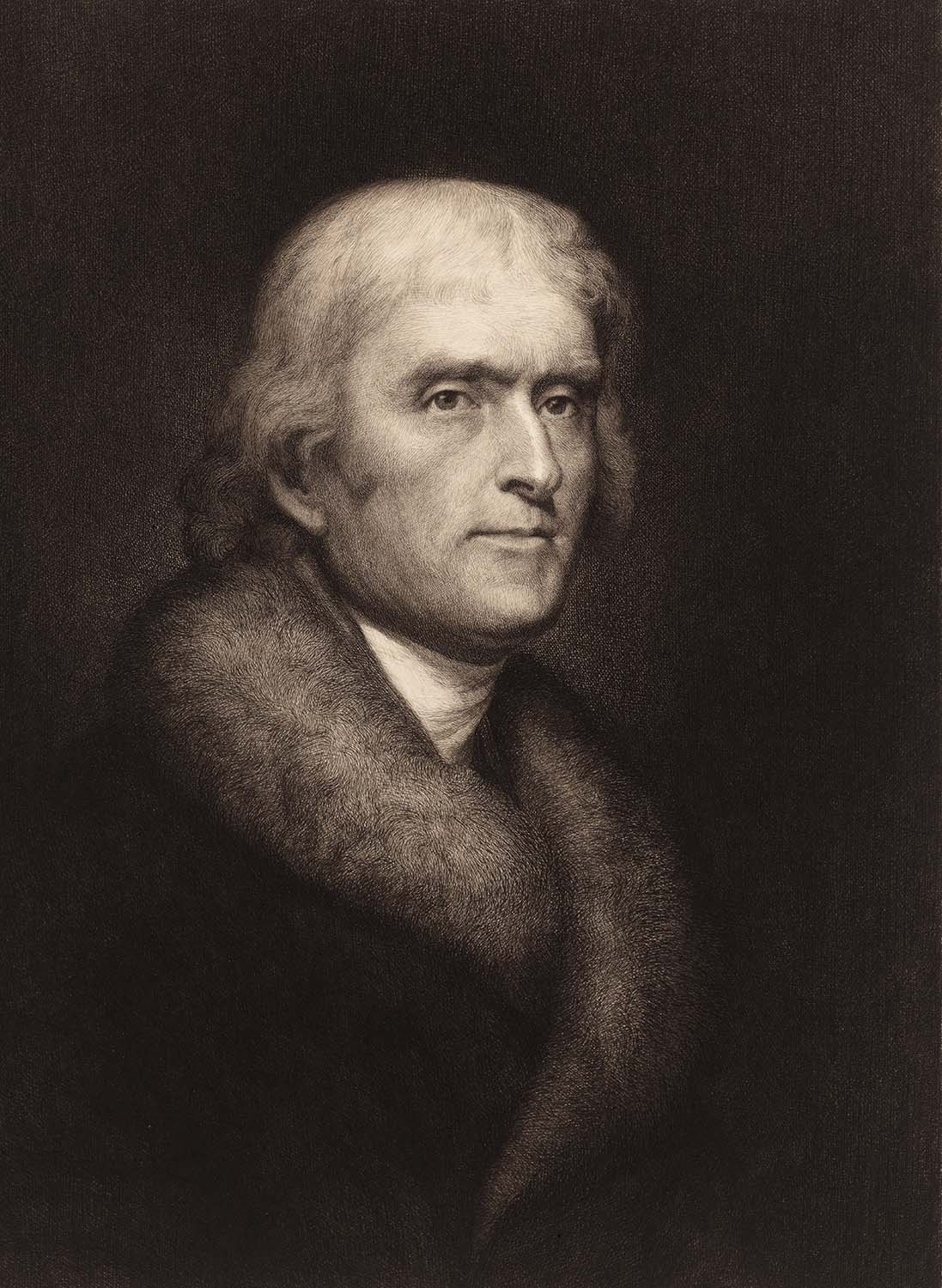
Thomas Jefferson, primary author of the Declaration of Independence. By Jacques Reich, Library of Congress.
“All men are created equal.” Is that true, as Jefferson claimed? Clearly not. Even in the eighteenth century, it was obvious that people were born with different intellectual and physical abilities. Besides the reality of birth defects, there was the simple reality that some people were bigger, stronger, prettier, more thoughtful, more dexterous, more inventive than others. Add to that the part that blind luck plays in success, the hard reality that some talents are worth more than others in the marketplace and that this scale of value shifts over time. The abstract computational and engineering aptitudes that were necessary to build the modern computer could well have condemned their owners to prison or execution in another era. For uncounted millennia, the need for raw physical strength, speed, and endurance were crucial to the survival of any social group; today, they are relegated almost entirely to sports arenas. A talent for training and managing horses was once a valuable commodity; these days, it’s a novelty with little practical value. The capacity to read and write, indispensable in modern American culture, was useless over most of the span of human history. The standard of feminine beauty has changed over and over again, to the advantage of some and the disadvantage of others.
While there have been many efforts to interpret Jefferson’s statement in a way that bears some faint resemblance to the facts, to twist the definition of the word “equal” until it fits the system we’ve built, we are not created equal, nor do our innate talents have equal economic or cultural value. It’s simply not true that we all begin the race at the same starting line or that the rules of the contest apply without exception or modification to all the contestants.
Nor, in spite of all our high-flown rhetoric, does our system offer anything like equality of opportunity for advancement. The hard numbers show that Americans born into poverty have practically no hope of rising to great wealth, while Americans born with silver spoons in their mouths are likely to enjoy a position in the de facto aristocracy all their lives. The social and economic hierarchies Americans have roundly condemned in other societies have taken a slightly different form in our culture but are nearly as virulent and entrenched.
The right to liberty guaranteed us in the opening lines of the declaration would seem to be unrelated to the notion of equality, and, in theory, they may be quite separate, but in the real world, the American ideal of liberty isolates the individual, emphasizing competition over cooperation and, by implication, placing the responsibility for any failure, any inequity, directly on the person who suffers it rather than recognizing the stark differences in genetics, innate talents, family backgrounds, income, and education that enforce status and economic position in modern American society.
The men who ratified the declaration can, perhaps, be forgiven for advocating personal freedom with such force— they were, after all, the scions of a long lineage of people who had been oppressed in the name of an unending succession of monarchies and dictatorships. Still, a few more words on behalf of brotherhood might have been appropriate. It’s worth noting that, after their presentation of a revolutionary theory of ethical government and the litany of grievances that followed, they waited until the last sentence of the document to mention their commitment to each other— “we mutually pledge to each other our Lives, our Fortunes and our sacred Honor.”
In the years, the decades, the centuries that followed, the mandate implicit in that pledge was often lost, while the pursuit of individual liberty continued with a white heat. The conflict between the concepts of liberty and equality has been at the root of many of the nightmares that have arisen from the American dream.
For the first century of the republic, there was one safety valve that lowered, ever so slightly, the pressure created by the collision of the two ideas. That safety valve was the myth of frontier. I say “myth” because there was no real frontier, if, by the word, we meant land that was unoccupied and available, without moral or physical challenge, to anyone who claimed it. There were long-term residents in the New World when Columbus first hit the beach, residents who proved to be unwilling to cede their rights to invading hordes of Europeans. Subsequent waves of immigrants convinced themselves that these original occupants had no right to the land, freeing themselves of legal and ethical constraint and opening the “golden door” of opportunity for millions of people, some of them fresh from the Old World, others simply tired of dealing with the entrenched power brokers of the New. For generations of Americans, there was always an alternative to the constraints of “civilized” society: the “free” land to the west.
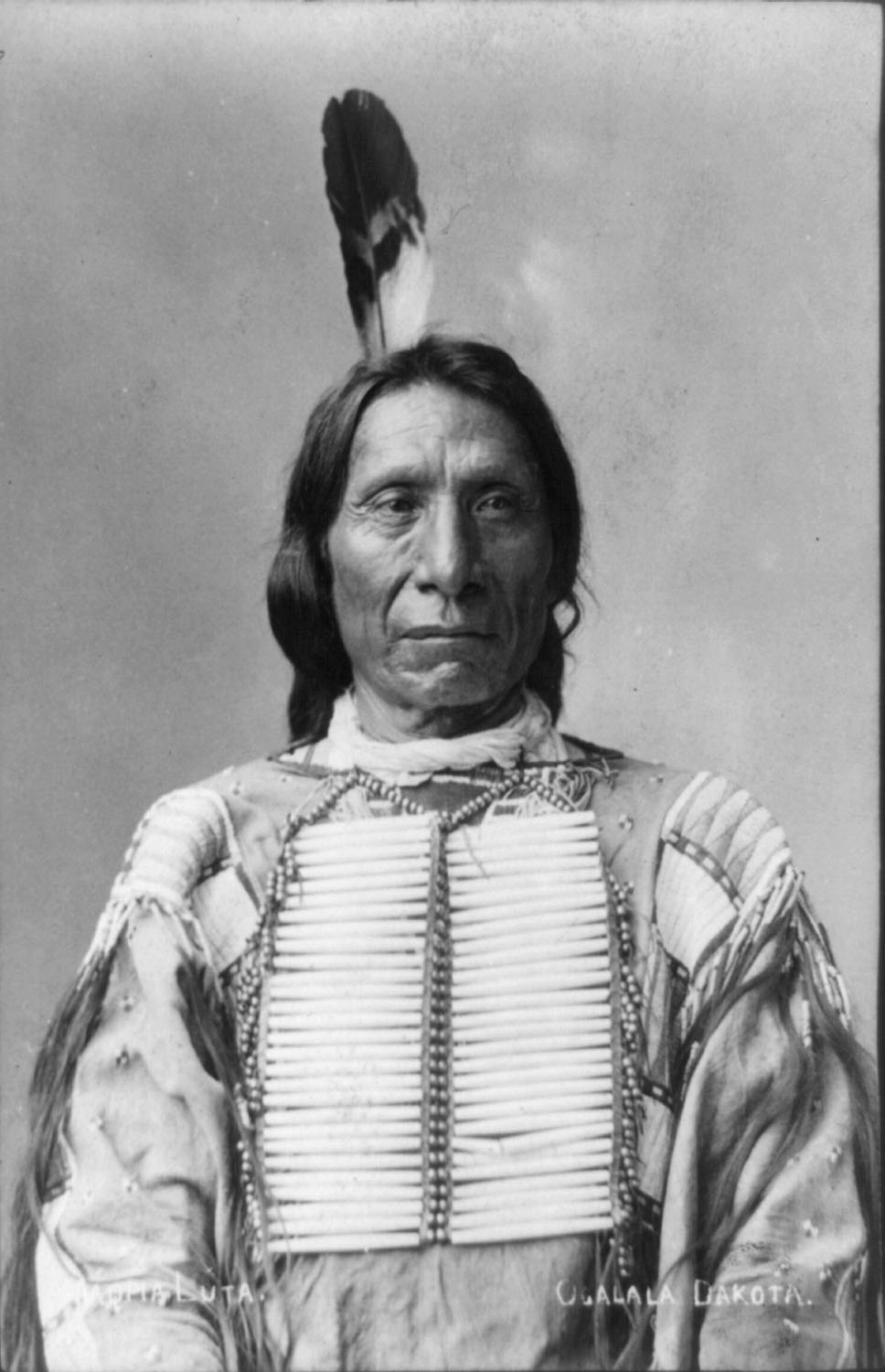
Red Cloud of the Oglala Sioux. Photo by William Henry Jackson, Library of Congress.
Of course, that land was anything but free. Claiming it was a dangerous, expensive gamble that failed more often than it succeeded. Still, the choice was there, and it offered an escape from the economic and social constraints of the eastern establishment. The myth of frontier bolstered the American ideal of individual liberty.
In 1893, the historian Frederick Jackson Turner announced that the frontier as a demographic phenomenon no longer existed in America. The frontier, he argued, was “a gate of escape from the bondage of the past. . . . And now, four centuries from the discovery of America, at the end of a hundred years of life under the Constitution, the frontier has gone, and with its going has closed the first period of American history.”
Turner’s analysis has been criticized for its emphasis on English, Germanic, and Scandinavian influences at the expense of other ethnic groups like the French, Spaniards, native Americans, and Chinese; it has been attacked for its failure to appreciate the central role of slavery in American culture; it has been condemned as paternalistic and racist. There is some ground for all these points of view and possibly even more justification for criticizing Turner’s tacit assumption that the land on the continent was somehow unoccupied and “free.”
As I see it, Turner unintentionally offered an accurate description of frontier, not as objective reality but as a cultural touchstone— a myth. Does that matter? Is there anyone who doubts the power of myth? Frontier was the driving force behind American expansionism, a nation’s “Manifest Destiny,” even more powerful in defining our character than the slave-owning culture we abetted. The possibilities it seemed to offer captivated hundreds of millions of people around the world and persuaded many of them to emigrate to the New World. When that myth disappeared, the clash between the guarantees of liberty and equality had no other outlet.
The first sixty years of the twentieth century were full of distractions that deflected American attention from this fundamental conflict. Generations united to fight wars and economic catastrophe, but, even as they struggled to surmount those challenges, the underlying tension between the guarantees of liberty and equality drove wedges between major segments of American society.
For the last thirty years or more, we’ve been largely spared the kinds of great historical calamities that occupied our fathers and grandfathers. Freed of mortal enemies, insulated from the most destructive fluctuations of our economy, we find ourselves confronted again with two ideals that were proposed as a foundation of government but probably can’t exist together in anything like pure form.
It seems to me that liberty and equality are inversely related, at least in a nation that has no empty spaces left with which to accommodate its malcontents. I’m not sure whether the two exist in a zero-sum relationship, but I am pretty certain that, as one increases, the other tends to decline. To the degree that is true, the exuberant language of the Declaration of Independence created a conflict of expectations that echoes down through history.
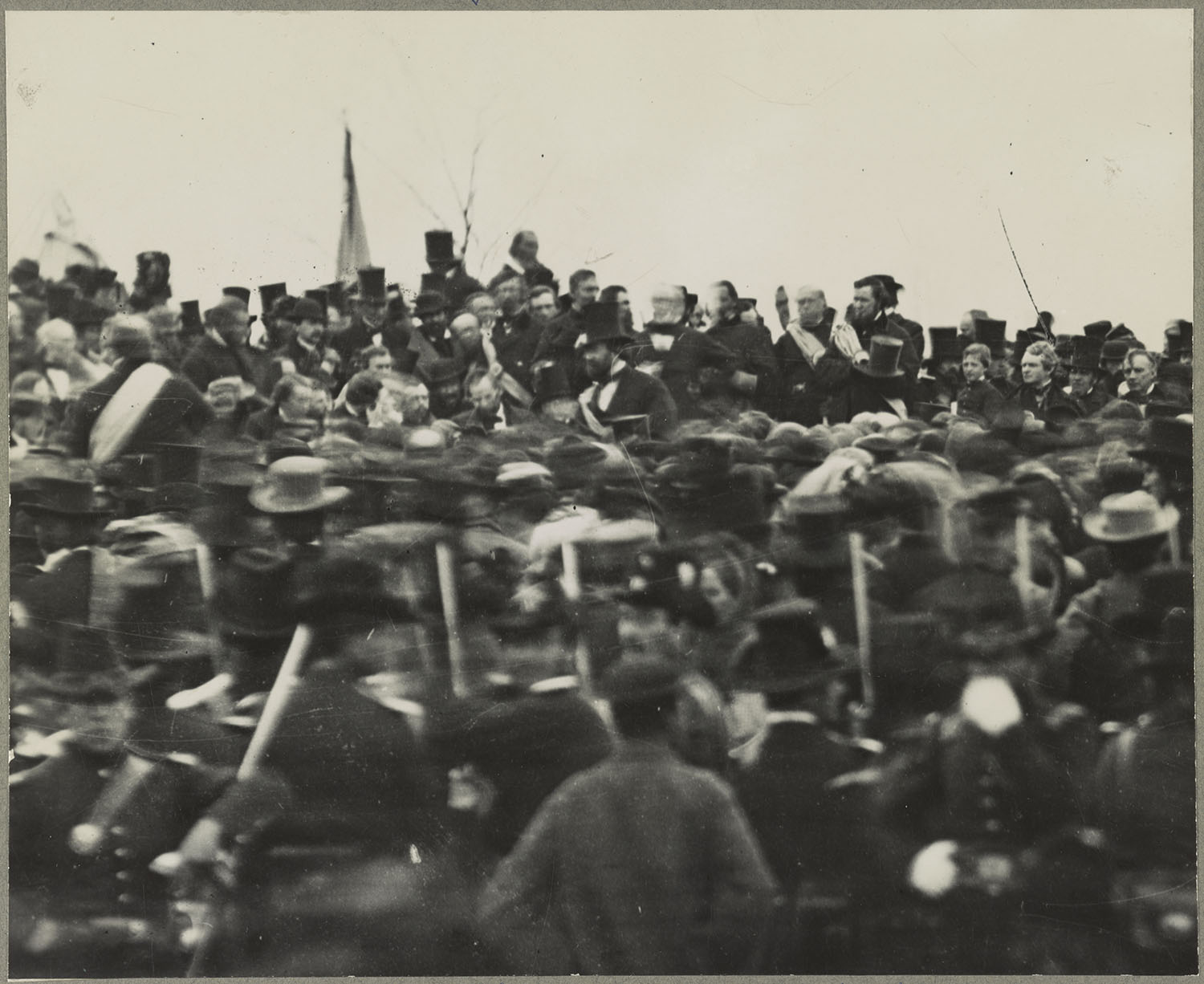
The crowd at Gettysburg for Lincoln’s address. The President is bareheaded and seated just to the right of the flag in the background. Photographer unknown, Library of Congress.
Almost a century after Jefferson’s words were ratified, another American leader spoke of “a new nation, conceived in Liberty, and dedicated to the proposition that all men are created equal.” He wondered whether “that nation, or any nation, so conceived and so dedicated, can long endure,” implicitly recognizing the clash between the two Jeffersonian ideals, liberty and equality. The magnitude of that conflict was reflected in the carnage of the Civil War, the violent confrontation between one man’s liberty to hold another human being as property set against the right of every man to be free. Two radically different conceptions of individual freedom and equality.
In 1865, the nation ratified the thirteenth amendment to the constitution, which guaranteed liberty to a people that had been enslaved. The question of the equality of those people was not addressed. It strains America’s social fabric to this day.
The commitment to the ideal of equality constrains liberty. The commitment to the ideal of individual liberty undermines equality, whether we prefer to focus on some sort of philosophical equilibration of intrinsic human importance or a more pragmatic assessment of the social value of each individual. There is a balance to be struck, a balance so fragile and ephemeral that it may never be found. The great declaration aspires to something that may never be achieved, that may not be possible to achieve.
At Gettysburg, Lincoln said our work was unfinished, that there was a “great task remaining before us.” Had he survived the war, he might well have recognized just how much greater the task was than even he anticipated. In that moment, at the height of the blood-letting, I don’t think he expected to reach the goals that rang out in the declaration. His aim was modest in comparison— simply to preserve the union.
Nearly 160 years later, the greater task remains. I think it’s fair to say that we’re closer to a humane balance between liberty and equality than we were in 1863, but the venom in the debate these days leaves the question Lincoln posed unanswered: Can a nation committed to striking that balance long endure? I don’t know. But I join the Great Emancipator in the prayer he offered on that terrible battlefield— “that government of the people, by the people, for the people, shall not perish from the earth.”
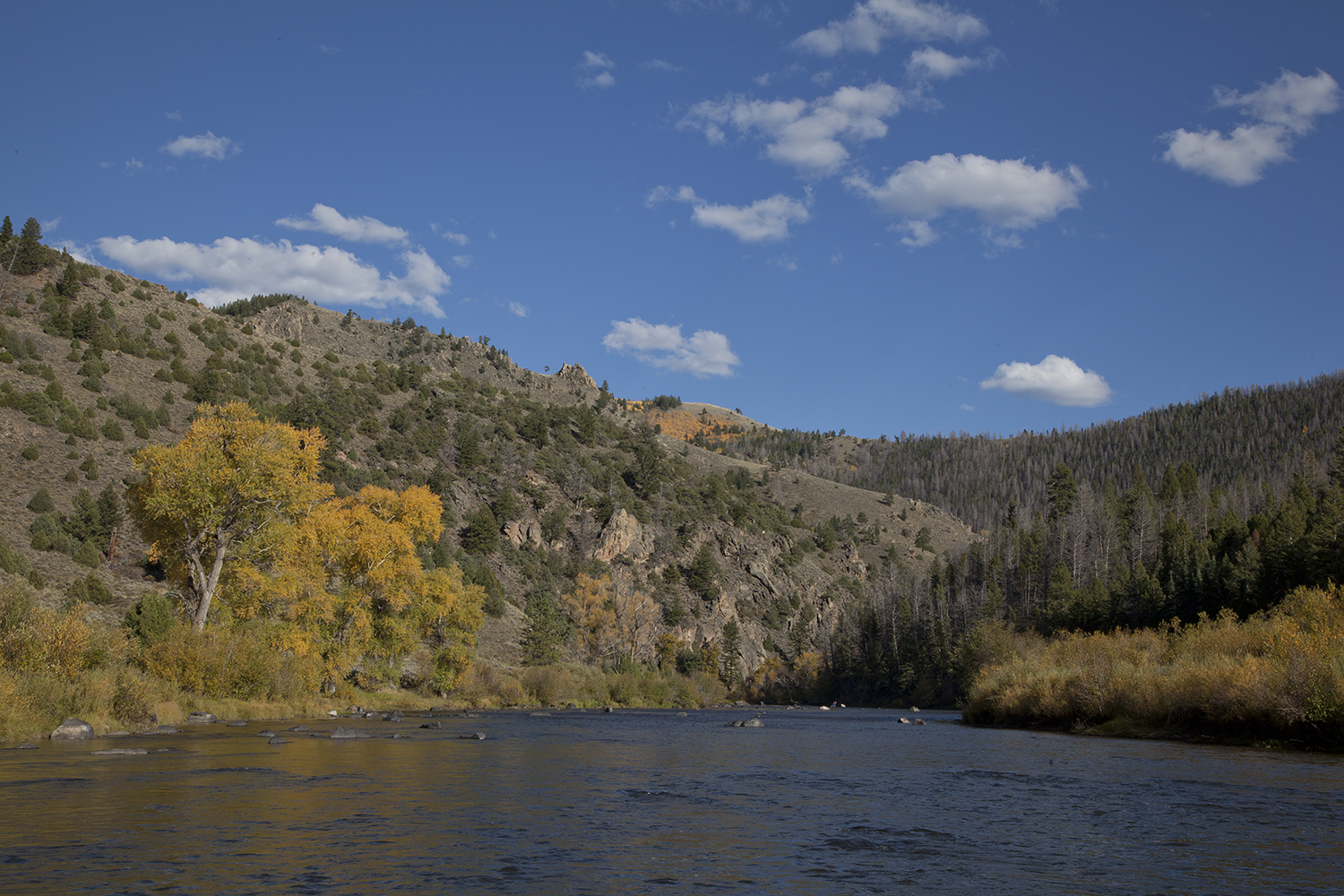
One of my favorite fishing spots, but it’s nearly thirty miles of high-country gravel from the nearest pavement. If I tried getting there in my Prius, I’d leave pieces of the undercarriage scattered over the last fifteen miles of very bad road. (Copyright 2016 by Chris Madson, all rights reserved.)
TREASURE OF THE SIERRA MADRE. ONE OF MY DAD’S FAVORITE FILMS, WHICH MEANT IT WAS BOUND TO BECOME ONE OF MINE. And I guess neither one of us had reason to apologize for that prejudice, since the film won two academy awards in 1948 and has been named one of the fifty best movies of all time.
So many great lines in that film. The one everybody remembers: When Bogart asks the leader of the banditos to show a badge to prove he’s one of the federales he claims to be, the bandito answers, “Badges? We ain’t got no badges! We ain’t got to show you no stinking badges!” One of my favorites always comes to mind when I’m about to start up a mountain after elk: The old prospector looks at the flecks of gold dust in a handful of dirt he’s found at the base of a rockbound ridge and says, “It’s rich, but it’s not that rich. Up there,” pointing to the spine of the mountain, “up there’s where we’ve got to go!” And another of my favorites in elk camp: “Hey, you fellas, how about some beans?” the old prospector asks his two exhausted companions after they’ve collapsed from a hard day’s travel. “Goin’ through some mighty rough country tomorrow,” he says as he loads up his plate. “Better have some beans.” And, when the greenhorns start pouring water on a rock they think is the motherlode, the old prospector tells them it’s just pyrite. “Say, next time you two fellas strike it rich, holler for me before you start splashing water around. Water’s precious— sometimes, more precious than gold.”
One other line has drifted to mind in the last few weeks. Humphrey Bogart draws a pistol on his partner as they make camp for the night, forces him out into the darkness at gunpoint, and shoots him for the gold the two of them have spent the better part of a year digging out of solid rock. He comes back to the campfire, struggling to come to terms with what he’s done.
“Conscience,” he says to himself, as he stares into the flames. “What a thing. If you believe you’ve got a conscience, it’ll pester you to death. But, if you don’t believe you’ve got one, what can it do to you?”
Here, in the first warm days of spring, that line comes back to me.
I live in Cheyenne, Wyoming. If you draw a circle 200 miles in radius around the town, you’ll find a ready supply of just about everything that feeds my soul:
Some of the most famous trout water in America and a dozen other streams that are almost as good and practically unknown.
The sagebrush grasslands of the big sky country, last refuge of something like three-quarters of all the pronghorn left on planet Earth, home to mule deer and desert elk, sage grouse and golden eagles, bobcats and swift foxes.
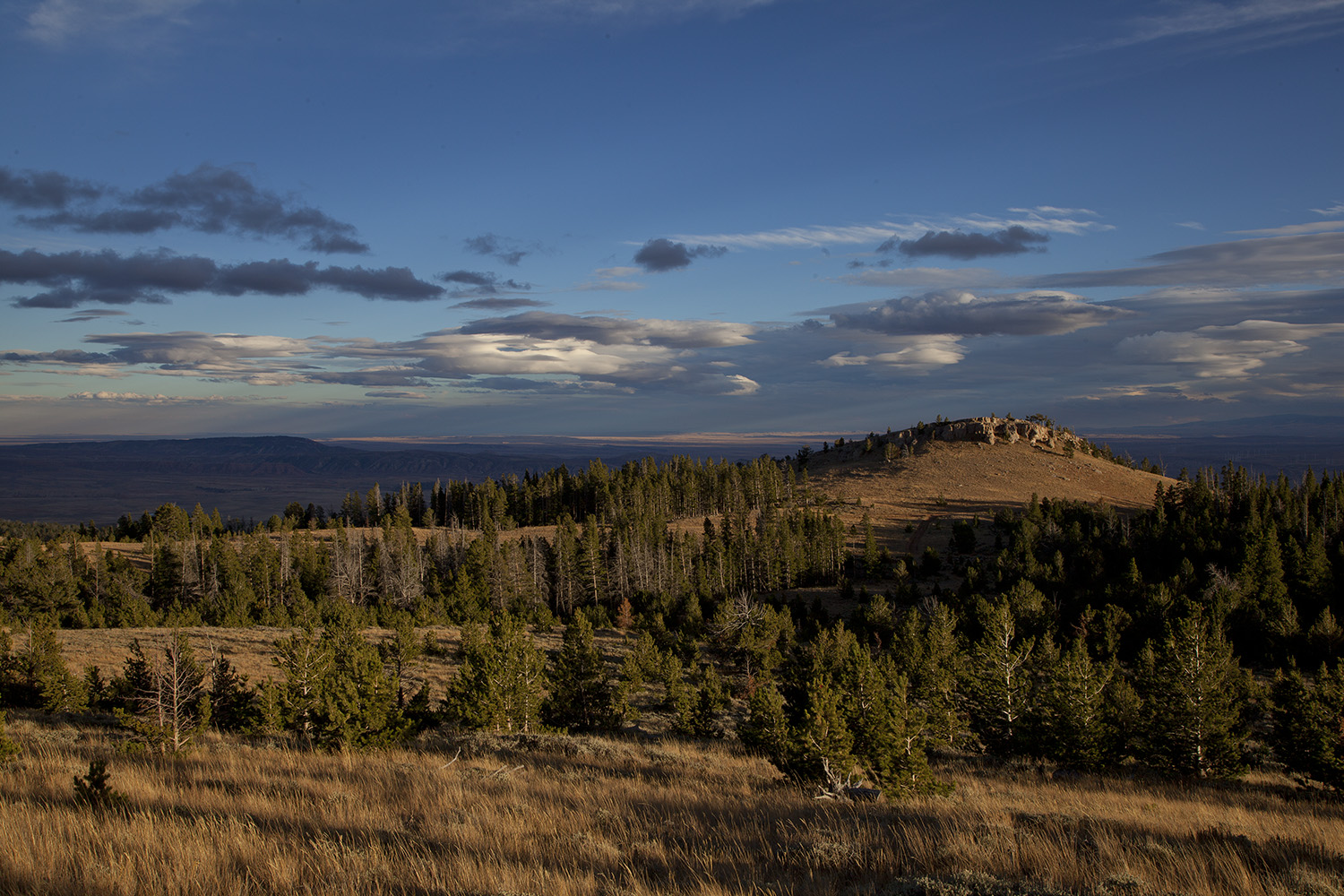
The pursuit of elk in the high West leads to some exceptional places at exceptional moments. This one is twenty of the worst miles in creation from the nearest highway. (Photo by Chris Madson, copyright 2018, all rights reserved).
The high country— lodgepole and aspen up into the spruce and fir, and, finally, the tundra where the willows cling to lichen-spangled boulders around the high lakes and the brook trout fight each other to take a fly. Elk, moose, bighorn sheep.
The marshes where mallards and geese congregate in the fall and the prairies to the east, where the sharptails and pheasants wait to match wits with my Brittanies.
These are the places and things that have sustained me, lo these fifty years and more.
Draw a twenty-mile circle around Cheyenne and you will find none of them.
For nearly all my adult life, the days I’ve treasured always begin with a drive of forty, eighty, sometimes as much as 250 miles, one way. And they generally end on a sketchy Forest Service road covered with busted rock and blocked by the occasional fallen tree, a dirt track rim-deep in mud, a section road covered by two feet of wind-driven snow, or a tractor trace along the edge of a field of CRP where the badger holes are mostly camouflaged by little bluestem and switchgrass and the snowdrifts are never disturbed by the county plows.
For all those reasons, my main outdoor transport has long been a four-wheel-drive pickup. Real four-wheel, not the all-wheel drive that sells low-slung compact SUVs to the suburban set. A lot of the time, I need high clearance to get over loose rock or deep ruts, and, now and then, I need serious low-range four-wheel drive. I don’t need it very often, but when I do, I really, really need it. Often with chains on all four wheels. And a shovel. I may be eighty miles from the nearest tow truck; thirty or forty nasty, suspension-pounding miles from the nearest house or pavement; twenty miles (in an unknown direction) from the nearest guy with a pick-up who might consent to help me. Out of cell range. In circumstances like those, grandma gear in all four comes to the rescue.
The obvious disadvantage of this transportation is the gas it consumes. I wince when I fill the tank on my way out of town . . . and fill it again when I get back. It’s a bite in the billfold, but for many years, I’ve comforted myself with two justifications for the expense: first, that these trips stock the family freezer with our annual supply of red meat and poultry, the domestic versions of which don’t come cheap, and second, that I’d probably spend just as much or more if I took up golf or started spending Saturday nights at the sportsbar. This is probably nothing more than transparent rationalization on my part, but it has helped soothe my misgivings about the cost.
Harder to soothe are my misgivings about what I leave behind as I drive down the road. The carbon dioxide.
I began to pay close attention to the threat of climate change quite a while back, and, as the years have passed, my concern has deepened steadily. In the 1990s, my region of the country went through a drought that lasted, almost without relief, for nearly a decade, and the federal drought monitors in the last few months suggest that we may be on the front end of another one just like it. Hardly a summer goes by when there isn’t a week or two of smoke hanging over town, the sun a pale white orb in a noonday sky whose color has faded from blue to dirty tan as another forest goes up in flames. Researchers are finding that mule deer in my part of the world regularly suffer from poor nutrition on their summer range— it’s hard to grow rich browse when there’s no rain. By the middle of July, some of my favorite trout streams have dwindled to pathetic trickles, too small and too warm to fish. Last October, I loaded my decoys and headed to my favorite duck marsh, only to find an expanse of cracked mud when I arrived. My favorite pheasant and sharptail haunts were strangely short of birds last fall, probably because of a series of severe thunderstorms that swept the area with cold rain and hail just as the nests hatched.
Climate change has touched me where I live, literally and metaphorically. It’s eating away at the wildlife and wild places that keep me sane and grounded in a world that otherwise seems to make little sense. It makes me so angry I can’t breathe, and then the anger turns to sadness, the sadness to regret, the regret to guilt. Because I’ve played a part in what is happening. I still play a part. . . .
Bird dogs take space and a lot of equipment, more easily carried in a pickup than a Prius. One of the last times the dogs and I were out in search of pheasants last January, we got stuck in a snow drift— even with high clearance and four-wheel drive. Luckily, I had a shovel in back . . . and tire chains. (Photo by Chris Madson, 2019, all rights reserved)..
We’ve tried to minimize our impact, my wife and I. We live on a postage stamp lot in an aging suburb because we recognize that our impact would be far greater if we had settled on a ten-acre lot at the edge of a national forest in the middle of crucial big game winter range. We let the bluegrass lawn die when we moved in, and we xeriscaped to save a little more water for the trout. We’ve insulated, replaced windows, invested in a high-efficiency furnace and high-efficiency appliances as the old ones have worn out. For much of my office career, I commuted to work on my bike for nine or ten months out of the year. Our over-the-road vehicle is a Prius we couldn’t afford, and when Kathy retired a few years back, she decided to spend her retirement check on eighteen solar panels instead of replacing our dilapidated fifty-year-old kitchen. I’ve completely surrendered the notion of fishing with friends in Alaska or Baja or the far-flung waters of Argentina, and I haven’t flown anywhere in almost a decade. We even think twice before we plan a road trip to see relatives.
Some of the choices we’ve made have been relatively easy and inexpensive, but the easy ones— like the LED light bulbs and weatherstripping around the doors— have long since been checked off the list of things we could do to help. The ones that remain have become ever more difficult and often more than our income could really support. Our growing sense of emergency has forced us to keep nibbling away at the list because our carbon footprint, while much less than the average American’s, is still huge. As I watch the things I treasure slowly, almost imperceptibly, slipping away, the question arises: What more can I do?
The price tags on those remaining decisions are pretty steep: stand-alone solar panels, battery storage for the electricity so we could maybe go completely off-grid, another round of even more efficient windows, electric furnace, electric on-demand water heater. We’ll chip away at those as we find the cash, neglecting the worn-out carpets and sagging kitchen cabinets.
And I’ll see if I can find a compromise between clearance and all-wheel drive on one hand and gas efficiency on the other. Fully electric transport is still not practical on the wild landscapes I frequent— the range of electric vehicles is too limited; charging stations are far too scarce, and charging times simply too long. If I win the lottery, I may look into a hybrid SUV, but, the price tags are breathtaking, and, in the long term, even that compromise won’t be sufficient. General Motors has committed to producing nothing but electric vehicles by the year 2035. If they reach that goal or come anywhere close, I wonder how many gas stations will be left, especially on the unpopulated landscapes of the High Plains and Intermountain West.
Some sort of carbon tax also looms on the horizon, enthusiastically supported by many climate activists. It seems like a fairly straightforward way of using market forces to wean people off gasoline engines, and people of means in urban areas might find the transition to new transportation relatively easy. For me, out here in the Big Empty, it may well mean the end of a way of life. I fully recognize that the continued deterioration in climate will have the same effect, and so I’m caught between a large rock and a very hard place.
As difficult as this is to admit, the ethical choice may well be for me to abandon that way of life. Sell the pickup truck before it becomes unmarketable, the backpacks and mountain tents, the spinning rods and fly rods, the duck and goose decoys, the canoes, the shotguns and centerfire rifles, the high-energy Brittanies. Settle down to some backyard birdwatching and a seasonal appreciation of the wildflowers that decorate the battered prairie behind the local big box store. Become a “townie” in every sense of the word.
I’m ready to make that sacrifice, even though I bleed at the thought. But here’s the thing: I’m NOT ready to sacrifice so much that I hold dear until America shows its willingness to do something similar. Something more than turning down the thermostat. I’ve taken many steps to reduce my carbon footprint. I’ve sacrificed conveniences and luxuries to pay for the things we’ve done to reduce our impact. As I watch the bustle along the Front Range, I see folks who are trying. They’re biking instead of driving; they’re investing in hybrids and solar panels. But for every one of those committed people, there are thousands who just don’t seem to give a damn. Before I give up the things I love most, I have to see some evidence that most other people are willing to do what’s required.
This is all just another round of rationalization, of course. Here I am, across the fire from Bogart, reflecting on conscience, responsibility, and ethical dilemmas. I won’t abandon the dictates of conscience but neither am I inclined to take the clear path to some sort of ethical purity all by myself. We got into this mess together; we’ll have to get out the same way. And that will mean sacrifice. From everyone.
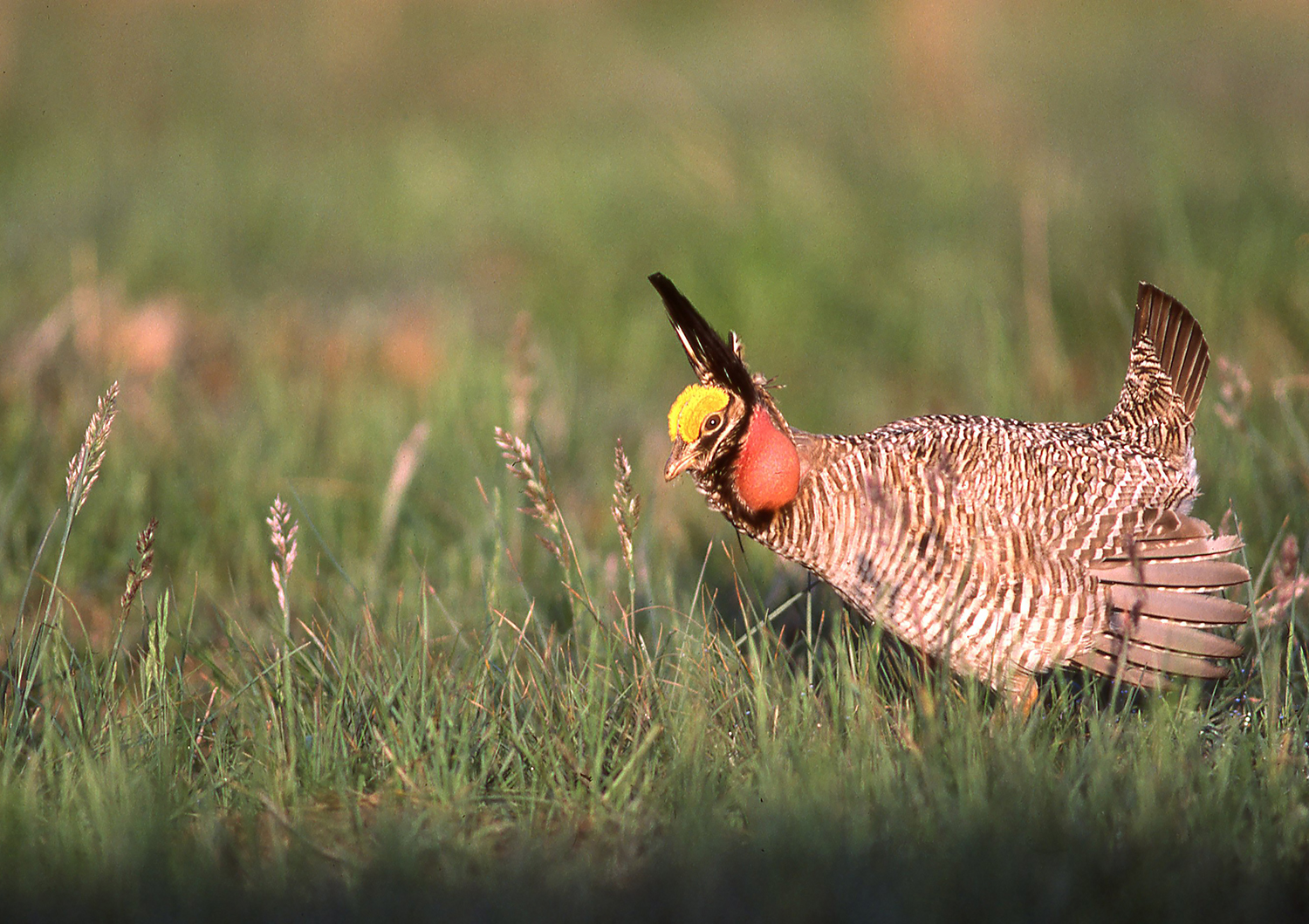
A lesser prairie chicken male displaying on a communal lek in the sandsage prairie of southern Kansas. (Copyright 1980 by Chris Madson, all rights reserved.)
IT’S NOT A BIRD WITH A BIG FAN CLUB. NOT A POP STAR LIKE THE BALD EAGLE OR WHOOPING CRANE OR EVEN THE EASTERN bluebird.
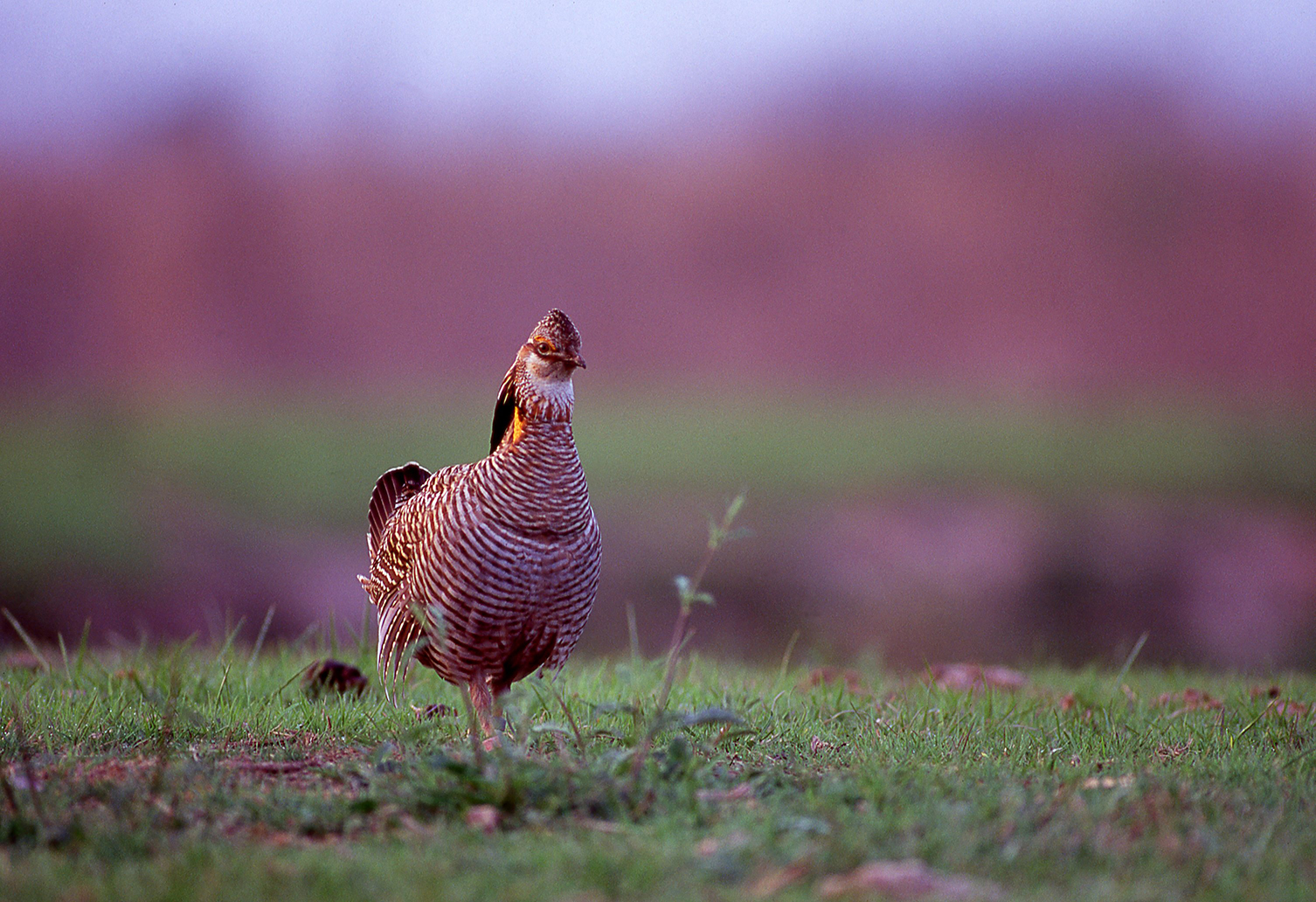
Not that it lacks charisma. For more than a month every spring, the males of the species gather at traditional sites for a dance competition to decide who will sire the next generation. The strange, other-worldly trilling and cackling can be heard a mile away on a quiet morning, and the flamenco steps and pirouettes are so beguiling that they were imitated by Plains Indians in their ceremonials. The males have feathered tufts they raise like antlers, plumb-colored sacs of bare skin they inflate during their displays, yellow combs over their eyes— altogether a striking combination.
I suspect the problem with their public relations isn’t what they are but where they live. They have adapted to survive— and thrive— on one of the most challenging landscapes in North America, the sun-scalded, wind-whipped expanses of the southern Great Plains. It’s one of the Rodney Dangerfields of American ecosystems, a land that gets no respect, so it comes as no surprise that the specialized animals living there get little more.
The bird is known to science as the “lesser” prairie chicken to separate it from its cousin, the “greater” prairie chicken, which was one of the first game birds settlers from northern Europe encountered when they hit the beach in New England.
Perhaps the rarest bird in North America, the Attwater’s prairie chicken clings to a precarious existence on the last scraps of coastal prairie along the Texas Gulf coast. (Copyright by Chris Madson 2016, all rights reserved.)
One subspecies of the greater prairie chicken lived in the grassy openings on and near the Atlantic coast. The earliest colonists there had many names for it, but students of natural history called it the heath hen. It had the poor luck to stand in the way of some of the earliest and most intense European settlement— by 1830, it had disappeared from the mainland, and by 1932, it was extinct.[i][ii] A second subspecies, the Attwater’s prairie chicken was once abundant along the Gulf coast of Texas and southwestern Louisiana. It is now one of the most profoundly endangered species in North America with somewhere around 100 birds left in the wild.[iii]
The lesser prairie chicken was probably the last of America’s prairie grouse to be introduced to the scientific community, simply because it lived in a place that did not yield easily to White exploration or settlement. In 1873, it was classified as a subspecies of the greater prairie chicken, but, by 1885, taxonomists had examined the bird and its behavior more carefully and decided it was its own species: Tympanuchus pallidicinctus, Greek for the “pale-belted drummer” in recognition of the air sacs it uses to call during spring courtship and the fact that it is generally lighter in color than greater prairie chickens.
No one will ever know how many lesser prairie chickens there were before the first Europeans arrived. One authority has estimated that there may have been as many as two million in Texas alone before the turn of the last century.[iv] The recollections of men who hunted the High Plains in those days left a more personal impression of the abundance of the species. Walter Colvin, an amateur ornithologist and avid bird hunter, made several trips from his home in northeastern Kansas to the far southwestern corner of the state in pursuit of what was then a little-known species.
“It was a cold October day in 1906,” he remembered, when his party pulled into a farm in southwestern Kansas, having heard that “there were a ‘few’ chickens in a cane and kaffir corn field a quarter of a mile east. . . . Such a sight I have never seen before nor since,” he wrote, years later. “Chickens were flushing everywhere, and droves of fifty to a hundred would take off down the corn rows, sounding like a moving avalanche as they touched the blades of corn. . . . Mr. Ward and I estimated that there were from three thousand five hundred to four thousand chickens in this one field, a sight never to be forgotten.” A nearby farmer never allowed shooting on his place and planted a field especially for game birds. “In the fall 1904,” Colvin reported, “my brother estimated that he saw in a single day fifteen to twenty thousand chickens around this one grain field.”
Colvin and his friends came back for years to relive that experience, but as he packed to head home after a hunt in 1913, Colvin thought back to his first visits with regret. “I realized with a shudder that we were nearing the sunset life of the king of upland game birds. The decrease in their numbers is not due so much to the gunners, as gunners are few per capita in those parts, but is due largely to the cutting up of this vast wilderness into small farms.”
Colvin mulled that over as he and his hunting partner drove east into the night at the end of their hunt that fall. In an article he wrote the following winter, he remembered the conversation:
“’There will be plenty of chickens here ten years from now,’ Ralph said after awhile.
“’You’ll be lucky to find a few chickens to shoot five years from now,’ I replied, and that is the truth.”[v]
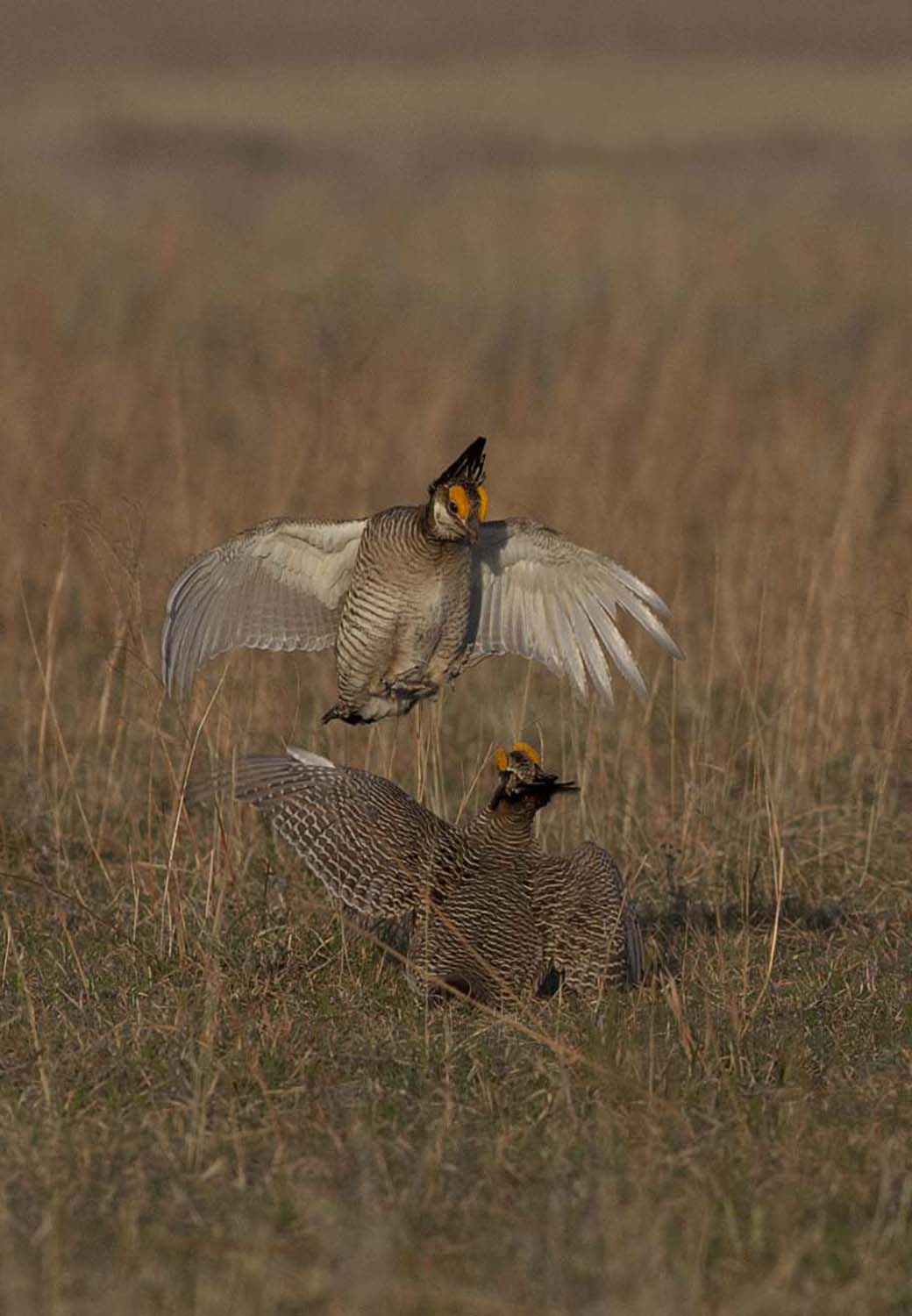
Two male lesser prairie chickens fight for the right to mate with hens that will eventually join them on the lek. (Photo copyright 2014, Chris Madson, all rights reserved.)
In the decades that followed Colvin’s last visit, populations of lesser chickens ebbed and flowed with the fickle patterns of rain on southern plains, fading during drought, recovering with moisture, but never achieving the peaks they’d known before the plow. During the Dust Bowl, a manmade ecological catastrophe of Biblical proportions, lessers almost disappeared in Kansas, southeastern Colorado, and eastern New Mexico. They recovered slightly in the wetter years of the 1940s, then collapsed again in the droughts of the 1950s.[vi] Weather was the obvious driving force behind the wild fluctuation in numbers, but the long-term downward trend was driven by that all-too-familiar cause: the steady loss of habitat.
By 1980, some experts in the field estimated that the lesser prairie chicken had disappeared from ninety-two percent of its pristine range.[vii] Estimated population was said to have declined even more— by ninety-seven percent[viii]— an indication that the habitat the chickens still occupied was, for one reason or another, less than ideal.
The collapse was duly noted by wildlife professionals. In 1973, the U.S. Fish and Wildlife Service’s “Threatened Wildlife of the United States” had this to say about the lesser prairie chicken: “much reduced or extirpated from large portions of its former range. . . . Decreasing and vulnerable.”[ix] In spite of that gloomy assessment, the lesser chicken was not included in the list of “threatened” or “endangered” species established under provisions of the Endangered Species Act of 1973. State wildlife agencies managed to set aside a few tracts of native grassland on the bird’s behalf, but the general trend of neglect— and loss— continued.
In 1995, the Biodiversity Legal Foundation filed a petition under the authority of the federal Endangered Species Act, demanding that the Fish and Wildlife Service list the lesser prairie chicken as “threatened.” The Service concluded that the listing was ”warranted but precluded by other higher priority listing actions.”[x]
Legal confrontations between various environmental groups and the Fish and Wildlife Service continued until 2014, when the Service announced that the lesser chicken would be given “threatened species status.” That ruling led to another court battle between the Service and several counties in New Mexico that claimed the listing was “unlawful.” The federal district court in west Texas sided with the counties, and the lesser chicken was summarily “delisted” in 2015.[xi]
Even more legal action ensued— finally, in the fall of 2019, the Fish and Wildlife Service agreed to revisit the listing decision and announce its finding by May 26, 2021.[xii]
While the status of the lesser chicken is endlessly debated in court and federal offices, the bird continues to lose habitat. According to researchers with the Defenders of Wildlife, 800,000 acres of chicken habitat have been plowed under for cropland in the five years since the species was delisted. Another 19,000 acres have been invaded by oil and gas or wind energy development.[xiii]
The lesser chicken isn’t alone alone in feeling the effect of disappearing grasslands on the southern plains. The scaled quail is a bird of the Chihuahuan desert. The northern edge of its habitat overlaps most of the lesser chicken’s range. Scaled quail are known to boom and bust with changes in rainfall, but in the last sixty years, the busts have outstripped the booms— according to the national Breeding Bird Survey, scaled quail numbers in the U.S. have dropped fifty percent since 1966.[xiv]
The Harris’s sparrow winters on the high prairie of the southern plains. I first met representatives of the species in the mid-1970s as I hunted pheasants in the sandhills south of the Arkansas River in southern Kansas. They were the most common songbird in the native plum thickets in those days, a dash of bright call notes and curiosity that relieved the tedium of a gray January afternoon. Now, forty years later, the U.S. Fish and Wildlife Service lists the species as a “bird of conservation concern.” Estimates of their population have dropped by more than sixty percent since 1970.[xv]
The grasshopper sparrow is another resident of the southern prairie that has come on hard times in the last fifty years. Like the Harris’s sparrow, it’s considered a “bird of conservation concern” with population declines of nearly seventy percent since 1970.[xvi]
The chestnut-collared longspur winters on the southern plains and has suffered even greater losses. The Canadians have listed it as “threatened;” the International Union for the Conservation of Nature considers it “near threatened” across its range, and, in the U.S., it’s classified as another “bird of conservation concern.” Its numbers have dropped eighty-five percent since 1970.[xvii]
IN THE 1880S, WE CAME IN OUR TENS OF THOUSANDS TO THE GREAT PLAINS, ARMED WITH ALL THE MIRACLES of modern technology— John Deere’s steel plow, Dan Halladay’s self-regulating windmill, Joseph Glidden’s barbed wire— and driven by the boundless hubris of American expansionism. As it happened, we arrived at the beginning of a miraculous series of wet years, a period that allowed the railroad’s real estate boosters to sell the pernicious myth that rain followed the plow on the grasslands. What followed was poignantly described by an observer of farming on the plains in 1902:
“From the 98th meridian west to the Rocky Mountains there is a stretch of country whose history is filled with more tragedy . . . than perhaps any other equal expanse of territory within the confines of the Western Hemisphere. . . . As the territory bordering upon it became more thickly settled and the pressure for land became ever fiercer, the line of settlements encroached more and more upon this stretch of apparently worthless soil. This line of social advance rose and fell with rain and drouth, like a mighty tide beating against the tremendous wall of the Rockies. And every such wave left behind it a mass of human wreckage in the shape of broken fortunes, deserted farms and ruined homes.”[xviii]
The wave advanced in the 1880s and broke in the drought of the 1890s. It advanced again during the wet years in the early decades of the twentieth century and broke with a crash heard around the world in the Dust Bowl of the 1930s. It advanced during the war years and broke in the drought of 1946-1956. It advanced in the 1970s and broke again in the drought of the early 1980s. And again in the great drought of the millennium from 1998-2014. Now, in the spring of 2021, the entire state of New Mexico and parts of west Texas are on the ragged edge of yet another drought disaster.[xix]
The Kanorado, Kansas, grain elevator and a nearby center pivot irrigation system during an April dust storm. Eighty years after the great drought of the 1930s, dust still blows in the Dust Bowl. (Photo copyright 2015 by Chris Madson, all rights reserved)
The great antidote to drought on the plains was Frank Zybach’s center-pivot irrigation system, a pipe on wheels tethered to a well that pumped groundwater out onto the field. The southern and central plains sat on a natural underground reservoir that held as much water as Lake Erie. At last, it seemed, farmers could make their own rain.
At least as long as the aquifer lasted. After two generations of intense pumping, shallower areas of the Ogallala Aquifer in the Texas panhandle are on the verge of being depleted; surface flows in major rivers like the Arkansas and Platte have dwindled, and many smaller springs and ephemeral creeks have dried up. Some operators are already planning for a time when there is no more groundwater for irrigation.
The deepening hot, dry conditions on the plains have increased the risk of catastrophic wildfire. Between 2006 and 2018, major fires burned 4.4 million acres on the southern prairie. In March of 2016, a single fire in southwestern Kansas consumed 663,000 acres in just two days.[xx]
And what does the future hold? Average annual temperatures in the southern Great Plains are expected to increase by 3.6 to 5.1 degrees Fahrenheit by the middle of this century and 4.4 to 8.4 degrees by 2200. Researchers expect thirty to sixty more days over 100 degrees each year by that time. They predict drier summers with fewer, heavier storms.[xxi] In short, the weather will be getting worse for agriculture in the region, not better.
The residents of the southern plains seem to face a common fate, whether they’re lesser prairie chickens . . . or farmers. As yet, relatively few outsiders have shown much concern. When the nation considers the effects of climate change, fires in California and hurricanes on the Gulf coast claim the spotlight, and, when the conversation turns to rare wildlife, attention falls on species with more star power like the gray wolf or the California condor. The great American grasslands still get little respect.
Ecologists who pay attention to such things are cautiously optimistic that the Fish and Wildlife Service will relist the lesser prairie chicken. Even if that happens, I doubt that it will result in a sudden outpouring of support for the bird, the prairie, or the people who live there. I hope that a listing will, at the very least, channel some desperately needed funding into the region.
Because it’s abundantly clear that the way we’ve used the southern grasslands over the last 150 years is unsustainable. It’s been bad for prairie chickens and not much better for people. Before another wave of disaster crashes down on the plains, before another Dust Bowl ravages its people and its wildlife, we need to find a way to live with this land, not on it. Helping the lesser chicken would be a good start.
————-
[i] Gross, Alfred O., 1928. The Heath Hen. Boston Society of Natural History, 6(4).
[iv] Crawford, John A., et al,, 1980. Status, problems, and research needs of the lesser prairie chicken. Proceedings of the Prairie Grouse Symposium, September 17-18, 1980. Oklahoma State University, OK. https://shareok.org/handle/11244/299331. Accessed April 19, 2021.
[vii] Taylor, Maple A. and Fred S. Guthery, 1980. Status, Ecology, and Management of the Lesser Prairie Chicken. USDA Forest Service General Technical Report RM-77.
[x] U.S. Fish and Wildlife Service, 2014. Endangered and Threatened Wildlife and Plants: Determination of Threatened Status for the Lesser Prairie-Chicken. Federal Register 79(69): 19974-19975.
[xiii] Evans, Michael, 2021. Lesser prairie-chicken habitat changes since court delisting: Satellite and government data show extensive habitat loss. Defenders of Wildlife, Washington, D.C. https://defenders-cci.org/publication/lpc_habitat_loss/. Accessed April 20, 2021.
[xiv] Anon, nd. North American Breeding Bird Survey. Patuxent Wildlife Research Center, Laurel, MD. https://www.mbr-pwrc.usgs.gov/. Accessed April 21, 2021.
[xxi] Bartush, Bill, et al, 2018. Southern Great Plains. In Impacts, Risks, and Adaptation in the United States: Fourth National Climate Assessment, Volume II. U.S. Global Change Research Program, Washing, D.C. https://nca2018.globalchange.gov/chapter/23/. Accessed April 22, 2021.
The treeless sagebrush grasslands of the intermountain West trap huge amounts of carbon and provide critical habitat for a host of wildlife species, many of which cannot survive on any other landscape. Photo copyright 2015, Chris Madson, all rights reserved.
I CAN’T REMEMBER EXACTLY WHEN I MADE MY FIRST ACQUAINTANCE WITH A GARDEN HOE— IT’S TOO LONG AGO— BUT I think it was about the time I learned to read. My mother introduced us. I clearly remember the tongue-lashing she gave me when, accidentally on purpose, I chopped down a row of okra in her vegetable garden in my day-to-day combat with the weeds. When she discovered the atrocity and called me to account, I used the classic kid defense: blank-faced ignorance. I didn’t know what it was, I protested. But I really did. I never was a big fan of okra. . . .
We lived on the bluffs overlooking the Mississippi River just downstream from the mouth of the Illinois, and I got to know the dirt in mom’s garden in the intimate way one learns about soil at the end of a hoe. It was heavy, yellow clay left over from the days, not all that far distant, when the ridge top had been covered in red and white oak, shagbark hickory, and black cherry.
The man who cleared that ground had been none too careful with it, so the layer of thin brown topsoil that had once lain under the trees had washed down the hill, down the creek, and, by the time I started hoeing, had probably made it all the way to the Louisiana delta. What was left was sticky when wet and concrete-hard when dry, even after mom had convinced dad to mix in some old cow manure from the abandoned dairy barn down the road.
It was the contrast that made such a powerful impression on me.
We were visiting my grandmother in Story County, Iowa. She lived in a small frame bungalow with a sagging back porch and a cellar that smelled of potatoes. I was in the front yard, killing time until the adults loaded us into the station wagon for the drive out to Uncle Cliff’s for the annual Fourth of July gathering, hands in my pockets, no time to find any mischief, just standing on the bluegrass lawn, scuffing the ground with the toe of my Chuck Taylor All-Stars.
The dirt made dark gray puffs of dust as I stirred it, which was something unusual in my experience. I knelt down and took a pinch of the soil. It came away in fine crumbles, as black and feathery as the ash of burned paper in the palm of my hand. Although I didn’t realize it at the time, I suspect it was the exactly the same moment of discovery that convinced my Norwegian ancestors to end their long trek from the home country only a few miles from where I knelt, hitching up the breaking plow to three yoke of oxen and turning the tallgrass upside down in pursuit of that rich, black earth— the truest, most abiding wealth of the New World.
It’s no accident that central Iowa’s topsoils look like ash. They contain a remarkable amount of carbon. Their appearance and their immense productivity are both due to the accumulation of organic matter over the 12,000 years since the last glacier began its retreat[i] and, especially, over the last 8,000 years,[ii] as the plants of the tallgrass prairie sent their roots and rhizomes as far as sixteen feet below the surface in search of water and nutrients.[iii]
The permanent cover established on land retired under provisions of the Conservation Reserve Program begin the long process of replenishing carbon in the soil that was lost when the land was tilled. Photo copyright 2015, Chris Madson, all rights reserved.
As much as two-thirds of the plant mass in a tallgrass prairie is underground,[iv] largely out of reach of drought, frost, hail, fire, or any of the other stresses the flatlands can inflict on growing things. Much of the organic matter in these roots stays in the ground after the plant dies. It’s carbon, the same black carbon found in ash. It gives the soil its color and, up near the surface, its immense fertility. Farther down, out of reach of the oxygen-rich atmosphere, shallow roots, bacteria, and other decomposers, this carbon is more or less permanently trapped. Which could be a powerful tool in our effort to trap greenhouse gases.
We’ve finally recognized that pumping carbon into the atmosphere, mainly in the form of carbon dioxide, is warming the entire planet and threatens our future. In response to that problem, environmentalists and politicians have been looking for ways to reduce our carbon dioxide emissions, while engineers have been working on technological methods for removing carbon from the atmosphere.
Ecologists have pointed out that there is a less mechanical way of doing that. It’s called photosynthesis. It’s part of the process that trapped all that energy in fossil fuels like oil and coal several hundred million years ago. This basic biochemical fact has led some scientists to recommend a straightforward approach to removing carbon from the atmosphere: plant trees. A lot of trees.
Last year, a group of researchers estimated that the earth has 3.5 million square miles that could support forest but currently have none. They figure that planting trees on that area could eventually trap 226 billion tons of carbon.[v] This led to public campaigns to plant a billion trees, 8 billion trees, even a trillion trees to help fight climate change.
Some of the assumptions of the study itself have been called into question, and there are experts who argue that helping indigenous peoples protect the tropical forests that exist is a better idea than planting a bunch of seedlings. No one’s against the idea of using forests to help trap carbon, but there’s an awkward fact the tree-planting campaigns generally ignore: Trees won’t grow everywhere. And, since large parts of the world’s land mass continue to dry out with the warming climate, the area that won’t grow trees is likely to expand, not shrink.
Shortgrass prairie on the high plains of western Nebraska. While this native vegetation traps less carbon than the lush tallgrass prairies to the east, it still locks huge amounts of carbon underground where it cannot be released by fire. Carbon sequestration with trees won’t work on this arid landscape. Photo copyright 2017, Chris Madson, all rights reserved.
After considering this snag in an otherwise laudable strategy, a different group of scientists, this bunch at U.C. Davis, took a look at the predicted shifts in climate across the state of California and estimated the probable loss in forest acreage that would result. They expected that frequent wildfires and persistent drought would reduce the amount of carbon trapped by the vegetation, but grasslands, whose carbon is stored mainly underground and whose plants are better at handling drought, managed to store much more carbon than forests. In the most extreme climate change scenarios they examined, the difference amounted to more than 400 million tons of carbon. They concluded that “the inherent resilience of grassland vegetation to drought and wildfire translates to a more reliable C sink than forest ecosystems in response to 21st century climate changes.”[vi] At least, in California.
This research has generated plenty of debate, based, as it is, on modeling and several assumptions that are open to question. What isn’t open to question is the fact that some landscapes grow grass better than they grow trees. And there is no doubt that grasslands remove substantial amounts of carbon from the atmosphere.
How much? Researchers measured the carbon in the soil under a scrap of original tallgrass prairie in southern Wisconsin and found almost 160 tons of carbon to the acre. The soil under a nearby piece of ground that had been planted to tallgrass species sixty-five years before the study held about half as much, but still an impressive amount, all of it out of reach of fire or drought.[vii]
Forests in the same region store about eight-five tons of carbon, and three-fourths of that is locked up in wood and other vegetation above ground, where it can be quickly moved back into the atmosphere by fire, harvest for lumber, and, in the understory, by grazing or browsing.[viii]
The lesser prairie chicken is one of several grassland specialists that have declined as America’s native grasslands have been destroyed. Photo copyright 2014, Chris Madson, all rights reserved.
Not all grasslands store carbon as efficiently as the Midwest’s tallgrass prairie. As precipitation wanes out on the high plains, productivity in native grasslands drops, along with the amount of carbon trapped in the soil. But it’s clear that, whatever the grasses and broad-leafed plants that make up native prairie, they store massive amounts of carbon in growing conditions no tree could survive.
Plow that prairie, and it loses at least half of the carbon locked in the soil. Restore that prairie on ground that has been converted to cropland, and the amount of carbon in the soil increases steadily but slowly. It may take a century to get back to the amount of carbon that was originally trapped by the native plants, but get there we can.
Any savvy bird hunter will recognize the practical implications in all this soil science. If we care about prairie grouse and the declining hosts of nongame prairie birds, we’re wise to avoid plowing the native grasslands we have left. That doesn’t mean they’re lost to agriculture— they can produce a lot of animal protein when judiciously grazed and still keep the carbon in the ground instead of in the air.
And returning cropland to permanent prairie cover through programs like the Conservation Reserve and CREP is a good idea. These restorations have all the short-term benefits we’ve come to appreciate— better air and water quality, reduced soil erosion, dramatically improved wildlife habitat for a host of birds and mammals, and a guaranteed revenue stream for farmers who face ever-growing uncertainty in weather and international markets.
They also help moderate climate change.
In the modern era of conservation, it’s not often that a “win-win-win” approach to a set of problems turns up. I think this is one.
[iii] Weaver, J.E., 1954. North American Prairie. Johnsen Publishing Company, Lincoln, NE. p.246.
[iv] Kucharik, C.J., Nathan J. Fayram, and Kimberly Nicholas, 2006. A paired study of prairie carbon stocks, fluxes, and phenology: comparing the world’s oldest prairie restoration with an adjacent remnant. Global Change Biology 12: 122-139. https://onlinelibrary.wiley.com/doi/abs/10.1111/j.1365-2486.2005.01053.x.
[vi] Dass, Pawolok, Benjamin Z. Houlton, Yingping Wang, and David Warlind, 2018. Environmental Research Latters 13 (2018): 074027.
[vii] Kucharik, C.J., Nathan J. Fayram, and Kimberly Nicholas, 2006. A paired study of prairie carbon stocks, fluxes, and phenology: comparing the world’s oldest prairie restoration with an adjacent remnant. Global Change Biology 12: 122-139. https://onlinelibrary.wiley.com/doi/abs/10.1111/j.1365-2486.2005.01053.x.
[viii] Birdsey, Richard A., 1992. Carbon storage and accumulation in United States forest ecosystems. United States Department of Agriculture, Forest Service General Technical Report WO-59. P.4. https://www.nrs.fs.fed.us/pubs/gtr/gtr_wo059.pdf. Accessed August 13, 2020.
A great horned owl breast feather, molted in early August, showing severe wear on its margins. Photo copyright 2020, Chris Madson, all rights reserved.
HE MAY HAVE BEEN ROOSTING IN THE SPARSE COTTONWOODS ALONG THE CREEK AS FREYA THE BRITTANY AND I WALKED BY at the edge of town, an hour after sunrise, but I’d have expected him to fly as we approached, and a great horned owl on the wing is impossible to miss. Chances are he came through on the north breeze during the night, hunting as he went, then moved on.
Judging by the extreme wear on the breast feather, I figured its loss was part of the molt, not the result of an accident, and, considering the timing of the molt and relatively pale color of the feather, I took its previous owner to be a teenager, on his own for the first time. The gravy train of prey from mom and dad was over, I thought. He’s looking for his own groceries now.
That transition is tough on most young raptors. While they’re hard-wired for the business of hunting, there is an awkward time in their youth when instinct has to be translated into the practical, day-to-day— or in this youngster’s case, night-to-night— business of finding prey and reducing it to possession.
Possibly because of their imposing size and nocturnal habit, young great horned owls fare somewhat better than smaller birds of prey. One twenty-year study found that two-thirds of nestlings survived their first year. Having made it through that crucial primary education, three-fourths survived to celebrate their second birthdays. After that, an adult great horned owl may live more than twenty years. One owl banded as an adult lived another twenty-nine years wearing the bracelet.
Small mammals are a staple for great horned owls. Where they’re found, cottontails and jackrabbits make up the majority of the owl’s winter diet. Photo copyright 2017, Chris Madson, all rights reserved.
Great horned owls aren’t picky about their diet. They’ll eat worms, grasshoppers, and other small invertebrates when the opportunity arises, but mostly, they hunt mammals— voles and mice, generally, but cottontails, jackrabbits, ground squirrels, prairie dogs, wood rats, muskrats, opossums, ground hogs, marmots, raccoons, skunks, porcupines, and, in town, the occasional house cat.
On the avian side of the menu, great horned owls commonly take ducks, coots and rails, pigeons, starlings, other species of owls, and, occasionally, much larger prey. One study found the remains of an adult male osprey in an owl nest; another reported a great-horned owl taking an adult great blue heron. Great horned owls steal immature birds out of the nests of crows and ravens, goshawks, and red shouldered and broad-winged hawks. One study found that great horned owls were the leading cause of death among the nestling red-tailed hawks it followed; another found that barn owls comprised more than ten percent of the diet of great horned owls in eastern Washington.
Fearsome predators. But, as ferocious as they may be, they can’t survive without something to hunt, which may explain why the national survey of bird populations shows the number of great horned owls declining slowly but steadily since the mid-1960s. Great horned owls occupy a niche near the top of a complex food web stretching across the continent and beyond. Being an apex predator is always precarious, whether the hunter is a wolf, a polar bear, or an owl— a swaying perch at the top of an edifice whose foundation is a constantly shifting interaction of weather, plants, plant eaters, and the thoughtless hammer blows inflicted by 330 million self-absorbed humans. The trajectory of the hunter’s population says a lot about the condition of the system that supports it.
My best wishes go with this youngster. May he find a steady supply of food, both furred and feathered, enough to keep him in good condition for many years to come, enough to feed a mate and a long line of offspring. The feather he left is some slight reassurance, a sign that, as much damage as we’ve done to the land, it still gives shelter and sustenance to things wild and free.
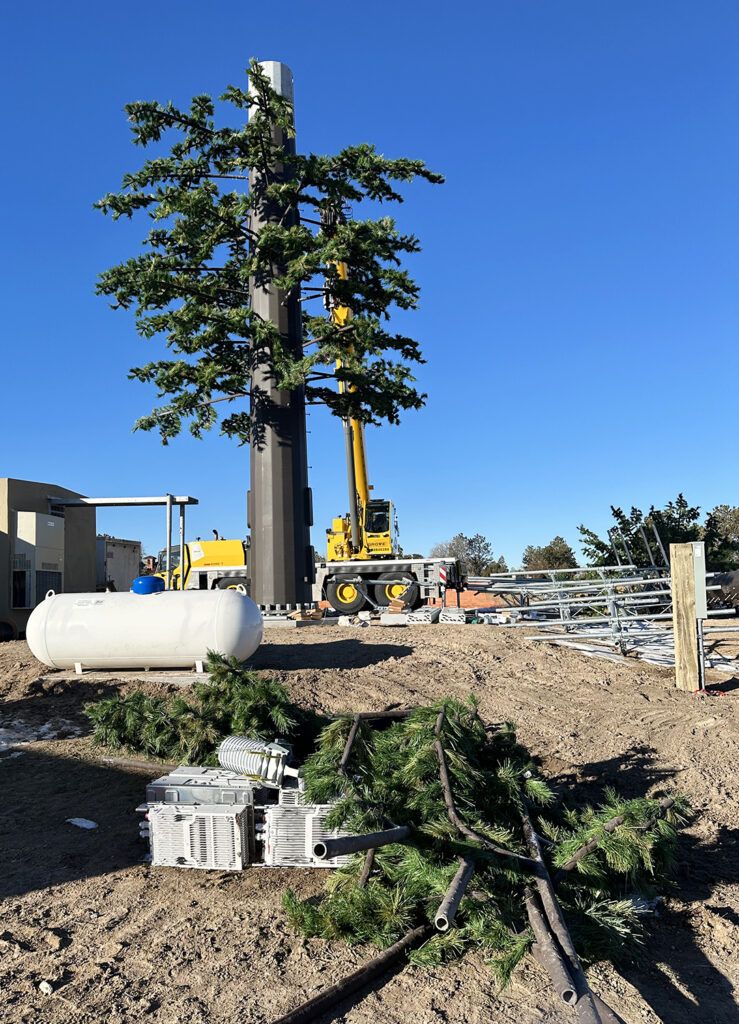 THE ROUTE THE DOGS AND I TAKE FOR OUR morning constitutional winds in and out of the open space for the approach to the Cheyenne airport’s eastern runway. No matter how much new construction the developers in Cheyenne may be contemplating, the Federal Aviation Administration won’t let them build in this corridor as long as aircraft are landing from the east, which means, God willing, that this neglected expanse of brome grass, sweetclover, and curly dock in the middle of town will survive longer than I’ll be around to use it.
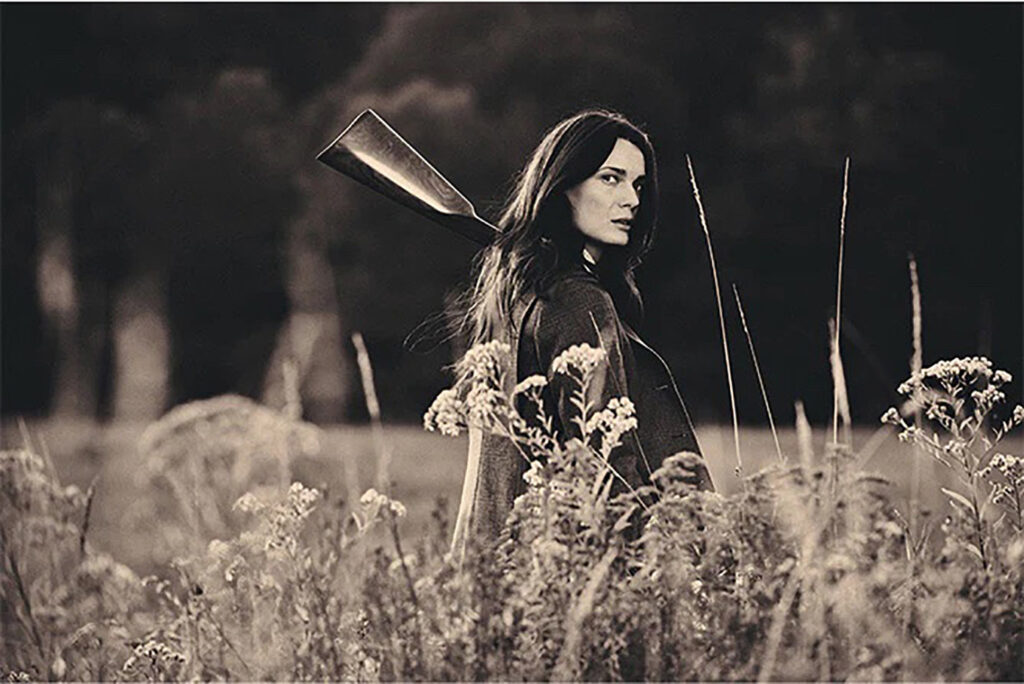 If your idea of post-sporting bliss is inhaling the rich fumes of a Cuban Cohiba, you certainly do not need to pay any attention to the rants of heathens like me. One of the most appealing elements of the hunting and fishing experience is its freedom, its privacy. My quarrel isn’t with the cigar smoking itself; it’s with the use of the cigar as a symbol in writing and photography of the more ethereal, refined planes some hunters and anglers achieve in these pursuits. I’m not sure cigars ever had anything to do with that higher plane, but, if there was ever a connection, it’s long since faded for most Americans, even most hunters and anglers.