the land ethic

toward a state of harmony between men and land by Chris Madson

Author: Chris Madson

  • Lessons from the playground

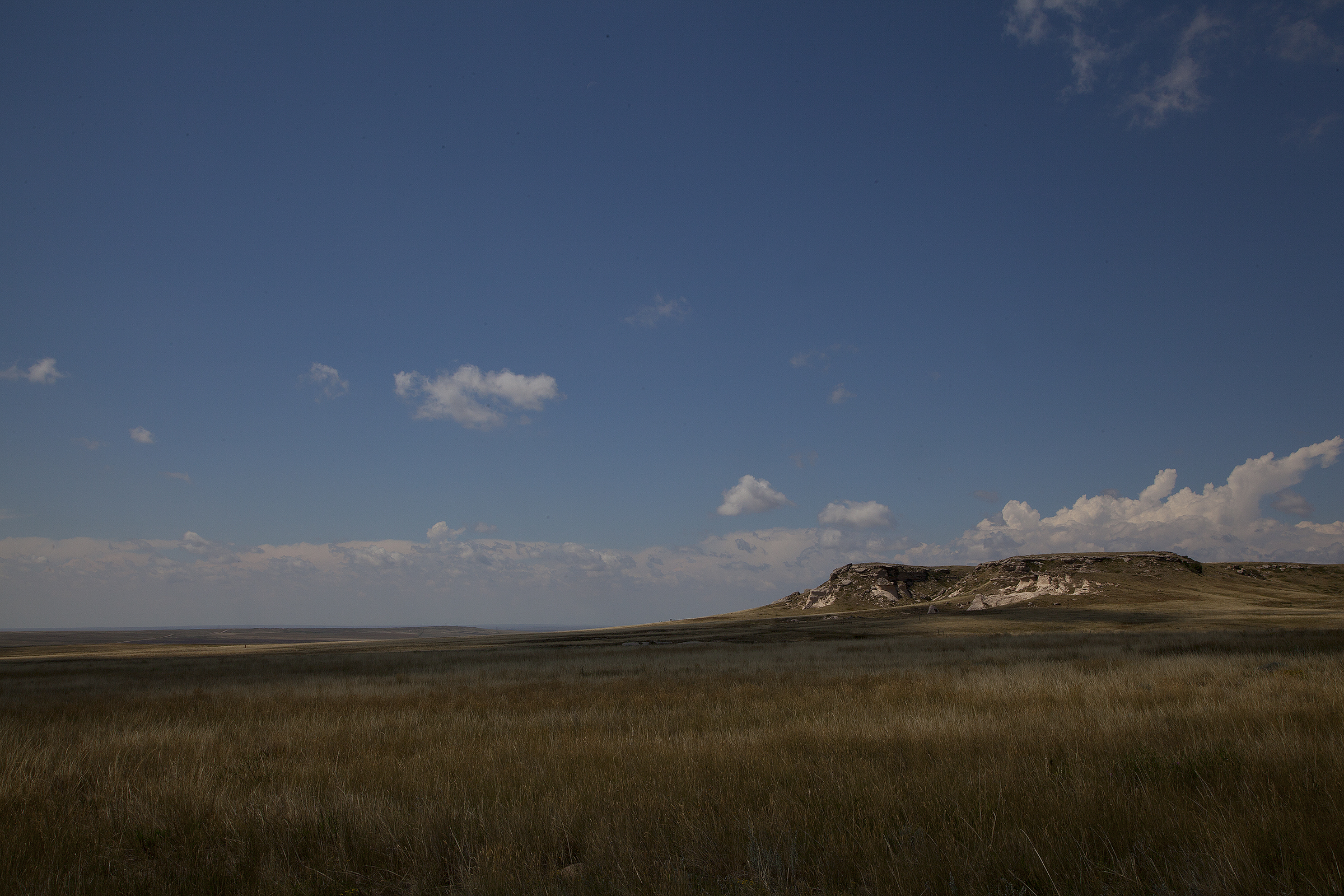
    CO high plains outcrop lrFOR MORE THAN TWENTY YEARS, MY WIFE WAS ONE OF THE LONG-SUFFERING PEOPLE WHO WENT OUT on an elementary school playground to enforce the house rules on an unruly mob of first through sixth graders. This time of year was particularly challenging. After a summer of more or less feral recreation, the young kids had to be introduced to the regulations on the playground, and the older kids had to be reminded.

    Inevitably, Kath would apprehend a youngster throwing a rock, jumping out of a swing, shoving another kid, or otherwise breaking the rules. When she confronted the wayward child, a variety of alibis were proffered. One of the most popular was, “Well, HE [SHE] was doing it!’ There followed a short lecture on basic ethics: The fact that he [she] is doing it does not excuse your doing it.

    Of course, there’s a practical justification for this rule: That rock you threw might hit and hurt somebody, which could easily result in another rock coming back to hit and hurt you. Even if the kid next to you managed to jump out of the swing without injury, that doesn’t mean you can follow suit without breaking an ankle, arm, or other portion of your anatomy. The rules are there to protect you.

    There’s also a more philosophical rationale: We should not blindly follow another person’s example, depend on that other person’s judgment. The responsibility for distinguishing right from wrong lies with each individual. This is the foundation of all human morality, even more basic than the golden rule.

    And it seems to be a lesson we struggle to master.

    In the litany of reasons that have been used to justify the ongoing American failure to grapple with the underlying causes of climate change, one of the most common has been that the United States is responsible for just 13 percent of world CO2 emissions. China is responsible for 24 percent; India and the European Union produce 7 percent each, and setting those nations aside, the rest of the world is spewing half of all the carbon that finds its way to the atmosphere. These statistics clearly demonstrate that, even if the U.S. stopped emitting CO2 altogether, it wouldn’t do much to curb the increase in greenhouse gases.

    Or, to put it in terms a seven-year-old could understand: “Well, THEY’RE doing it!”

    It’s true that we can’t stop the increase in climate-changing gases by ourselves, but that doesn’t mean that an effort in that direction wouldn’t help the situation. The United States is uniquely positioned to design and test new technology that would reduce our carbon footprint. Breakthroughs in that arena would not only help us but would give the rest of the world the tools it needs to follow suit. It would be nice to think that we would donate new technology to any nation that needed it, but even if we insisted on payment, we would be on the cutting edge of what could easily prove to be the most important market sector on the planet.

    A serious American commitment to reducing greenhouse gases would also serve as an example to other nations. At best, it would be a demonstration of techniques that would eliminate greenhouse emissions with a minimum of economic upheaval, but even if the transition proved to be a greater challenge than it appears, we would at least prove that a nationwide commitment is politically possible. Think of it as leadership or as an effort to bring pressure to bear on other major emitters— either way, it would show a way toward a solution to perhaps the most dangerous problem the human species has ever faced.

    Those are the practical justifications. There is also the moral justification: We should do everything in our power to reduce the concentration of greenhouse gases in the atmosphere BECAUSE IT IS THE RIGHT THING TO DO. At this point, it would probably not eliminate the suffering that rising world temperatures will inflict on us, but it would reduce that suffering for ourselves, our children, and grandchildren, for residents of the wealthiest nations and for the majority of humanity that does not enjoy our standard of living. I believe there is power in a commitment of that kind, but even if it persuaded no one else, it would go far toward relieving us of the responsibility for the situation we have created.

    It’s easy to profess a high moral standard when it doesn’t cost anything. The test of a moral people is how they respond to a challenge when that response is uncomfortable, even painful. America is unique among nations in its aspiration to a higher moral ground. We’ve risen to the challenge of hard times before— hard times face us again. Will we rise? Or will we point to the failure of others and use it to justify our own? Either way, our choice will be remembered.


  • The sins of the fathers . . .

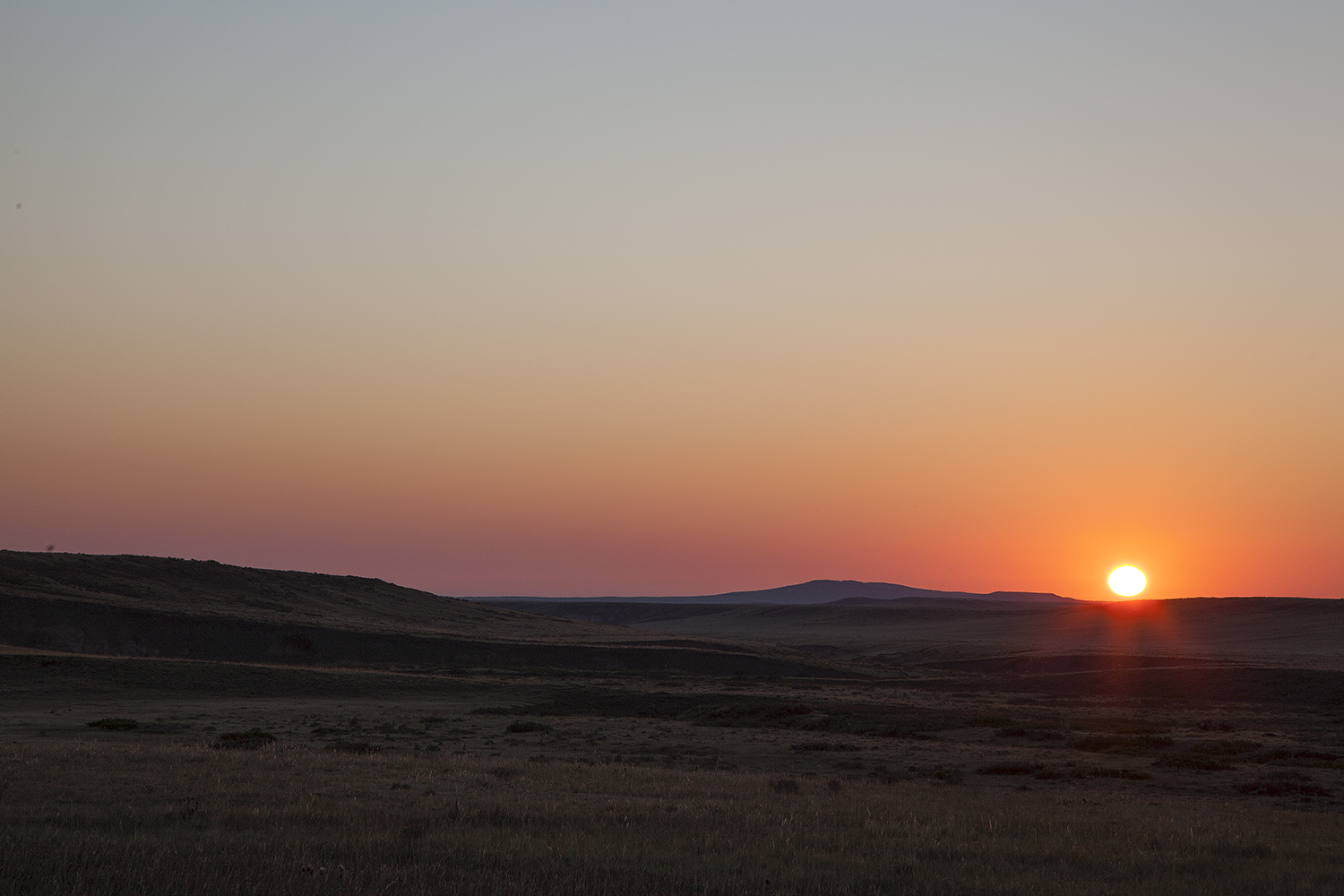
    Laramie County sunrise 3GUILT, THE PSYCHOLOGISTS SAY, IS A CORROSIVE EMOTION.  SO IS REGRET, THEY SAY.  AND I SUPPOSE they’re right. Obsessing over mistakes that have already been made may not be a good recipe for maintaining mental health, let alone finding constructive solutions for intransigent problems. It’s possible that such emotions are best left to old people who have the time and memories to indulge them. That may be why I find myself so often despondent these days— an old man looking over his shoulder at what might have been.

    On August 1, The New York Times magazine published an article called “Losing Earth: The Decade We Almost Stopped Climate Change.” It’s a well-researched piece that discusses, in painful detail, how close the United States came to addressing the problem of greenhouse gases in a nonpartisan way in the 1980s. In that essay, the author mentions an earlier report, “The Long Term Impact of Atmospheric Carbon Dioxide on Climate,” published in April of 1979. Heart-breaking to read this prescient analysis of the efforts that were made nearly forty years ago to respond to the impending dangers of climate change.

    And, as I reviewed the NYT Magazine article, earlier efforts came to mind. The report of the Environmental Pollution Panel of the President’s Science Advisory Committee, published in November of 1965 with an entire chapter titled “Atmospheric Carbon Dioxide.” “By the year 2000,” the report concluded, “the increase in atmospheric CO2 will be close to 25%. This may be sufficient to produce measurable and perhaps marked changes in climate, and will almost certainly cause significant changes in the temperature and other properties of the stratosphere.”

    And the ground-breaking technical paper by British investigator, Guy Callendar: “The artificial production of carbon dioxide and its influence on temperature,” which appeared in the Quarterly Journal of the Royal Meteorological Society. In 1938.  “It is evident that present temperatures, particularly in the northern hemisphere, are running above the calculated values,” Callendar wrote after extensive analysis of CO2 emissions and their behavior in the atmosphere and oceans. He thought this was good news, since it would allow a northward expansion of farming and delay “the return of the deadly glaciers.” He was certainly right about the glaciers.

    And, of course, the seminal paper on climate change by Svante Arrhenius in 1896.

    The technical community has been analyzing the effects of carbon dioxide on global climate for more than a century and warning us about the consequences of increasing CO2 emissions for at least fifty. We almost took the warning to heart in the 1980s but drew back, paralyzed by the size of the problem and its solutions.

    So we find ourselves at this place, still paralyzed by a problem that grows steadily larger and more overwhelming with solutions that are ever-more draconian. Still beset by men like James Inhofe whose names will be written with Hitler’s and Stalin’s for the commission of crimes against humanity. They will be remembered as long as the written history of our species survives . . . which, sadly enough, may not be that much longer.

    Can an understanding of past mistakes help us find our way in the future? Perhaps. Certainly, George Santayana thought it was a necessary first step. But as my hair turns gray, I begin to doubt the human animal’s capacity to learn, even from the most horrendous errors. Too often, the solutions to our problems cost more than we are willing to pay, and so we pass them on to another generation, a legacy of neglect, greed, and shortsightedness that makes me sick with shame.

    Opportunities missed, warnings ignored. Guilt. Regret. The burdens of old men . . .

  • The price of procrastination

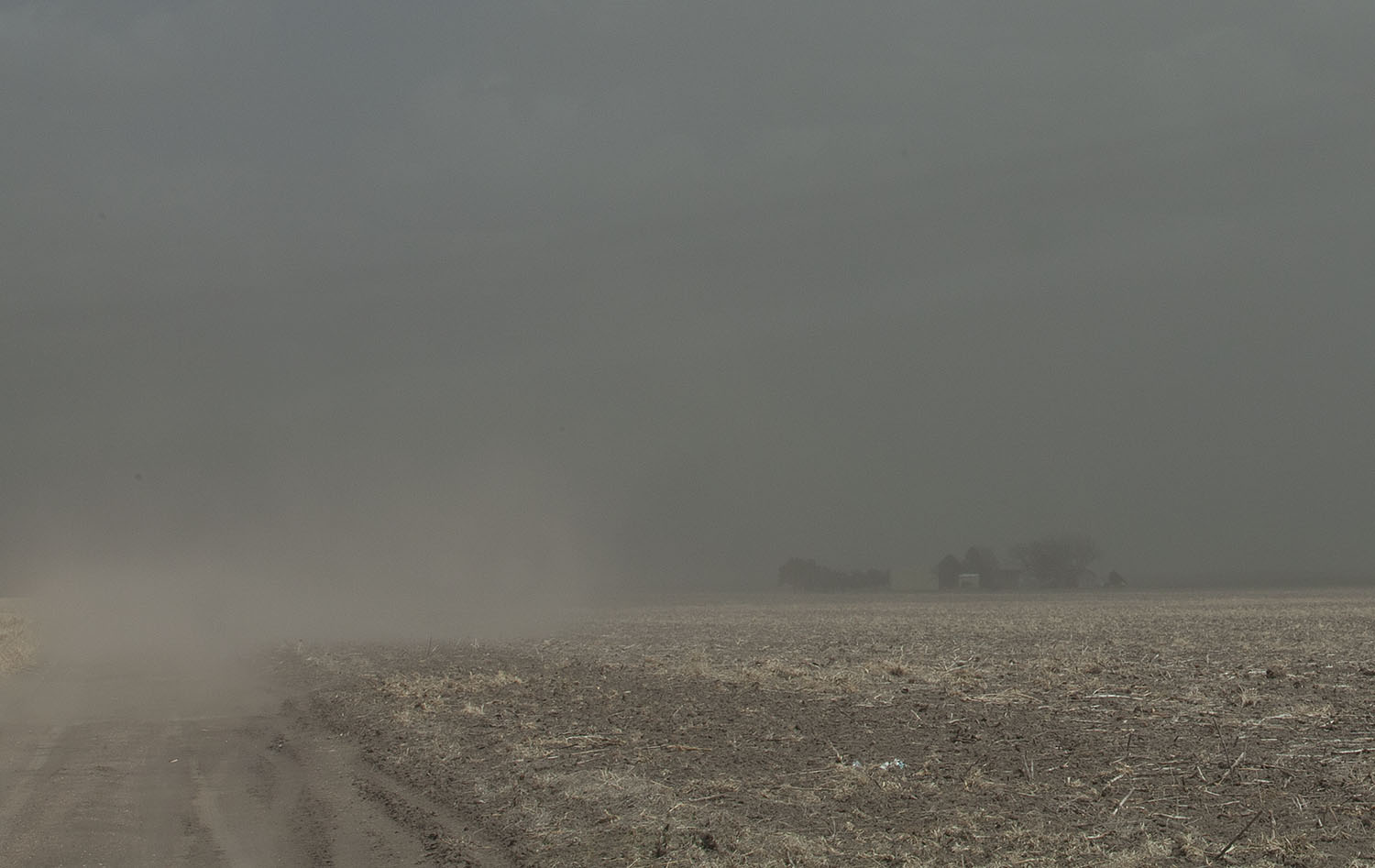
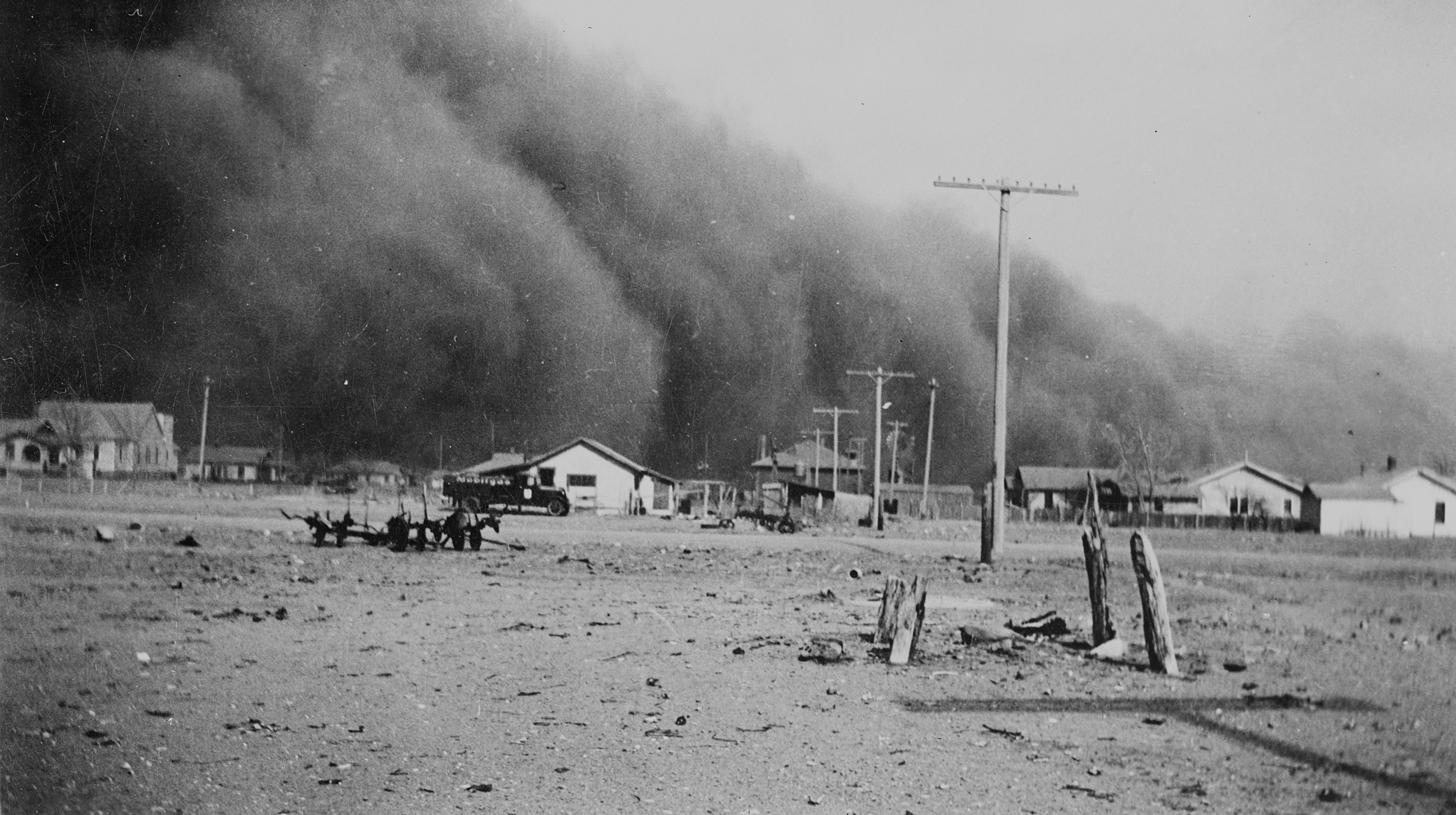
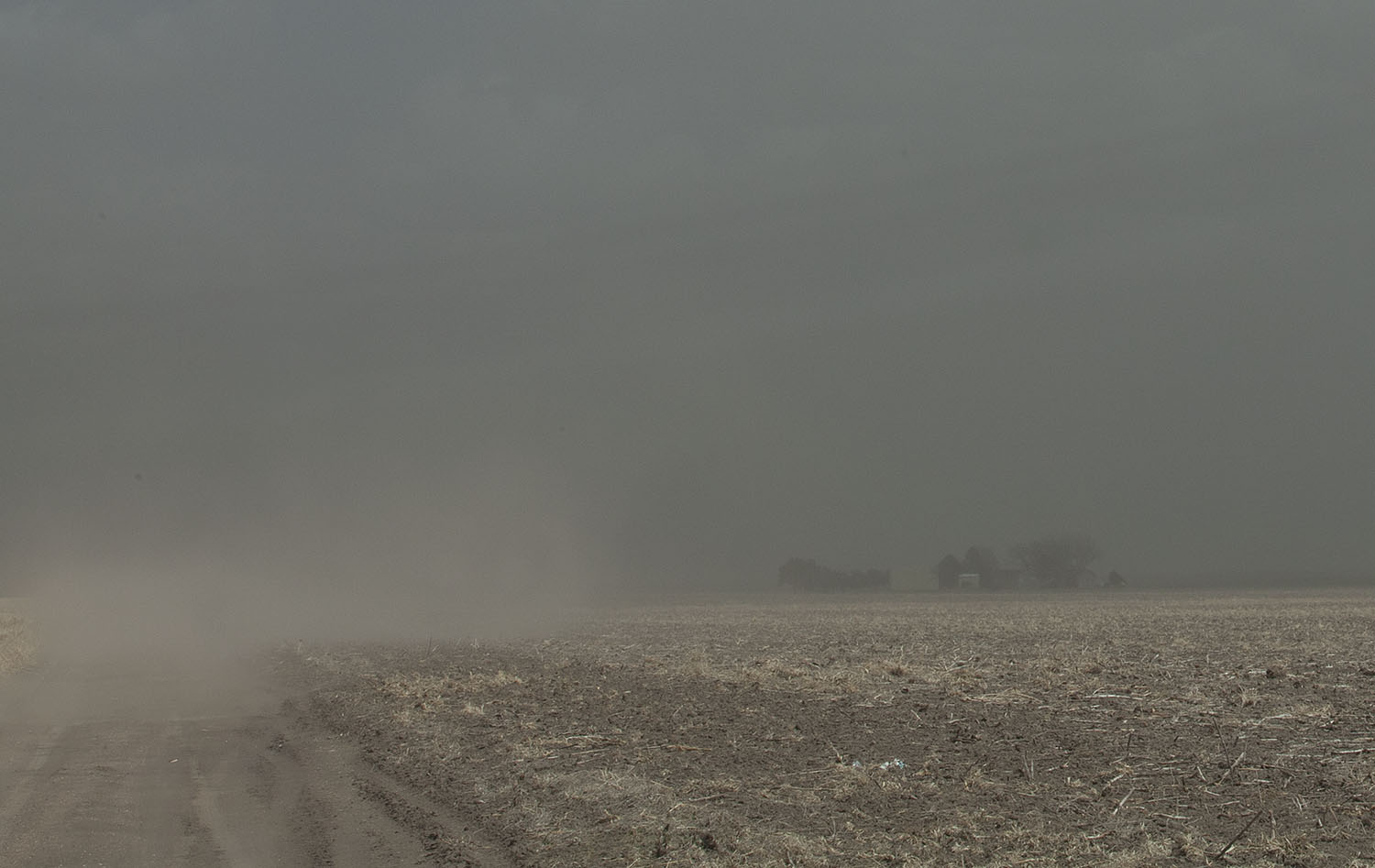
    Dust storm in northwestern Kansas, April 2016
    Dust storm in northwestern Kansas, April 2016

    IT MAY BE MY FAVORITE TROUT STREAM, PARTLY BECAUSE, AS SMALL AS IT IS, IT REGULARLY yields browns and cutthroats over five pounds, and in large measure because it isn’t anything like what most people imagine when they think of trout water. It’s a sun-baked, sand-bottomed creek that winds through the sage thirty miles from the mountains that give it birth, a stream more likely to water pronghorn than elk. And, once upon a time, it was a great place to fish.

    The last time I stopped there was about five years ago one sunny afternoon at the beginning of August, on my way to a meeting in Jackson. There was nothing rising, so I tied on a number 18 Copper John and worked my way past the first low bluff, dead-drifting the nymph through the lazy pools in the shade until the indicator stopped unexpectedly. I lifted the rod tip and felt a surge as a long shadow broke away from the bottom and headed upstream. A brown about half as long as my leg. The adrenalin surged, and I wondered whether I’d be able to turn him when the tension on the rod eased and the fish rolled to the surface. I reeled him back carefully, fully expecting an explosion when he saw me. But he lay on his side, gill covers working, while I got the hemostats on the nymph and twisted it free as he floated at my feet. He lay there for a long five seconds, exhausted by a fight that would have shamed a six-inch cutthroat, then swam slowly away.

    Strange, I thought, as I watched him go. Then I put my hand back in the water. I didn’t have a thermometer, but it quickly became apparent that I could take a comfortable bath in the pool. I’d never worried about water temperature in that stream before. I’ve worried about it ever since. It’s been five years since I’ve fished that creek.

    That’s one of the ways climate change has touched me, but by no means the only way. These days, I often wait until January for the first northern mallards to arrive on my favorite stretch of river in southeastern Wyoming— once upon a time, I could expect them reliably by Thanksgiving. Three out of the last four years, I’ve closed the pheasant season on the High Plains hunting in my shirtsleeves. Shirtsleeves in western Nebraska on the last day of January. While a mild winter may augur well for pheasant survival, the droughts and violent weather in the springs and summers over the last five years have taken a toll on hens and their chicks. The net result has been fewer roosters in the fall.

    It’s been said that we should simply adapt to changing climate, and I’ve followed that advice. I’ve given up fishing my favorite trout stream. I’ve learned to live with one or maybe two good mallard hunts in the last week of the season in place of the two months of waterfowling I once enjoyed. I carry plenty of water for my Brittany when we’re hunting the uplands, and I’ve gotten used to the idea that I’ll probably walk fifteen miles before he points that third rooster. I’m adapting. I have no choice.

    And I imagine the folks in Houston and Miami and Puerto Rico are learning to adapt as well. The insurance adjusters estimate that this fall’s hurricanes did around $200 billion in damage in the United States alone. The storms also claimed the lives of 217 people.

    Forest fires from Montana to Washington burned 8.4 million acres, along with several hundred homes. Another $2 billion. The fires in California: another $180 billion, forty-four more dead, and counting. The drought in the Dakotas and Montana: $2.5 billion. That hailstorm nobody outside of the southern Great Plains heard about last May: $2.2 billion.

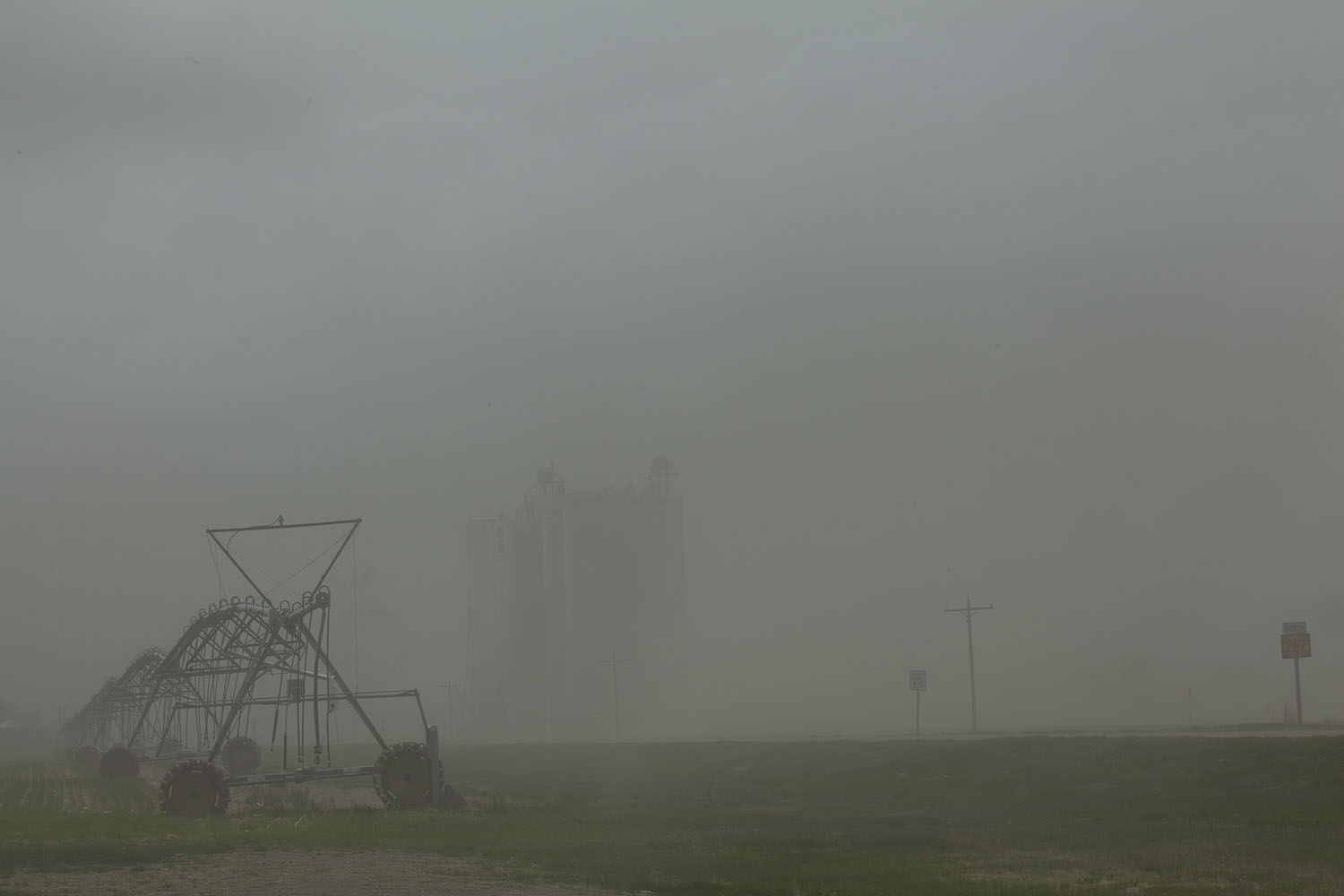
    The Kanorado, Kansas, grain elevator during an April dust storm
    The Kanorado, Kansas, grain elevator during an April dust storm

    Major bouts of severe weather in the United States alone cost us $387 billion in 2017 and something like 283 lives. That’s a lot of adapting. And, while it can be argued that there is no incontrovertible proof that these weather events were caused or made worse by the climate change we’ve created, nearly any expert will tell you that they are exactly what he expects as the planet gets warmer.

    The trouble with simply adapting is that it won’t solve the underlying problem or even stop it from getting worse. The physics are straightforward: Increase the amount of greenhouse gases, particularly carbon dioxide, in the atmosphere, and you will trap more solar energy in the air, water, and landmass of the earth.

    Purists insist that this process shouldn’t be called “global warming” because the effect of that increasing solar energy varies, depending on locale and time of year. It may mean reduced snowpack in some areas, increased rainfall in others. It may mean more intense blizzards during the winter, more intense thunderstorms in the summer. It may mean more fire or more flood.

    Whatever you want to call it, it’s costing us a lot already, and it will keep costing us more and more until we eliminate the root cause.  The climate change conversation is nearly always couched in the future tense. That’s appropriate— we need to worry about the long-term effects, some of which are already inevitable. But climate change is affecting our lives today. Right now. Hardly a week goes by without another bit of proof, another penalty to be paid. I hope that, sometime soon, we’ll move beyond the unavoidable process of adapting to climate change and get down to the hard and unavoidable task of dealing with it. The hour is late, and the stakes could not be higher.

  • The code

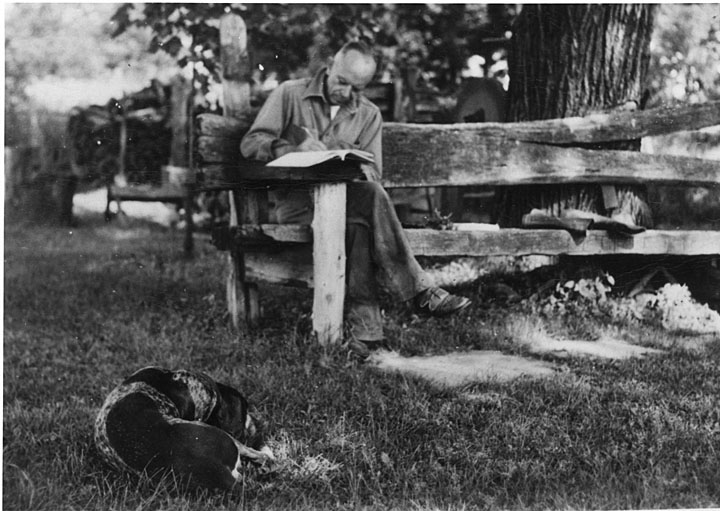
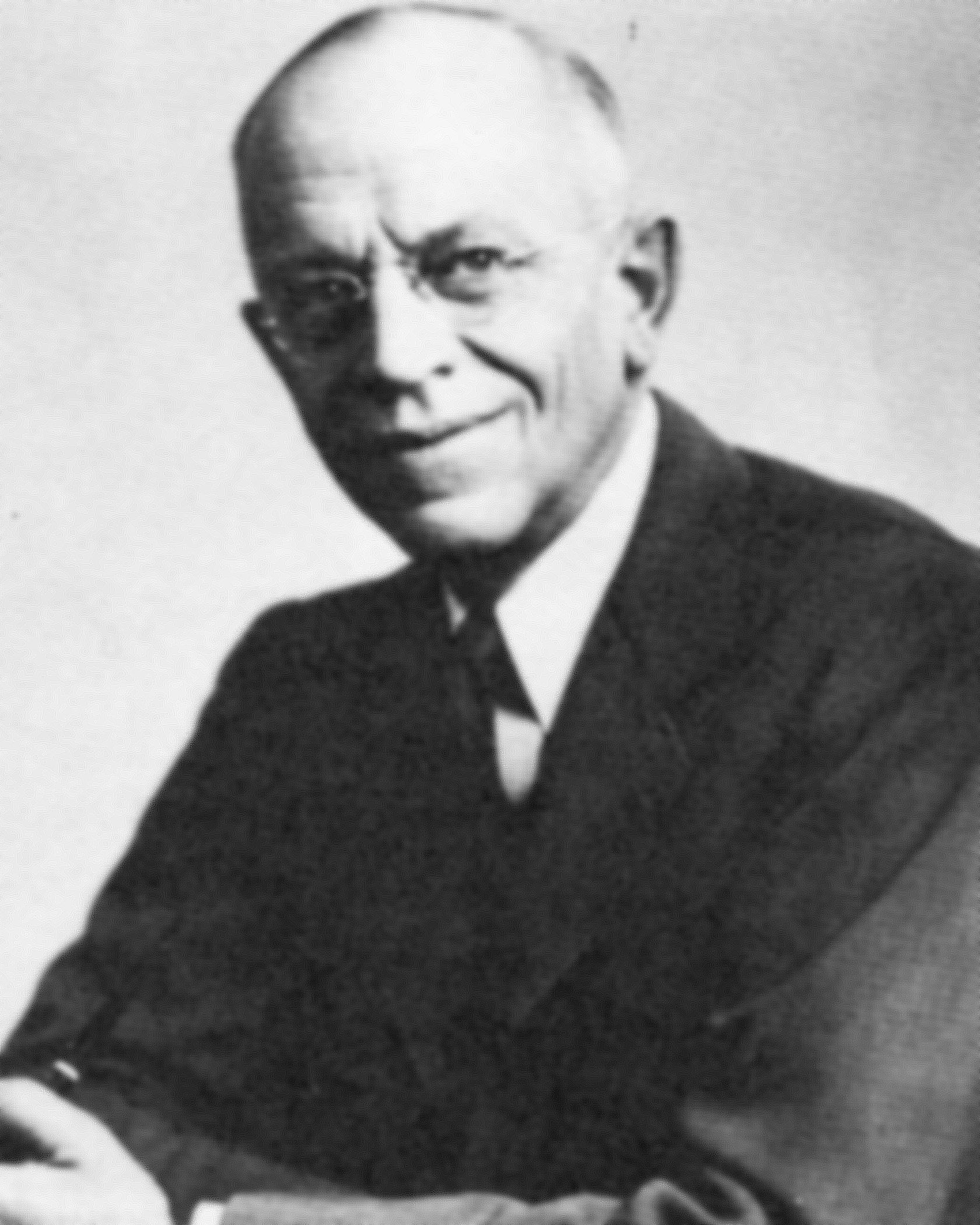
    Aldo Leopold (right) and his last graduate student, Robert McCabe in the field during McCabe's research.
    Aldo Leopold (right) and his last graduate student, Robert McCabe in the field during McCabe’s research.

    In 2014, I was invited to give the keynote address for the annual meeting of the Mountain and Plains Chapter of The Wildlife Society, the organization of professional wildlife biologists.  The situation on the conservation front was challenging then; it may be even more challenging now.  Here are my remarks: 


    THE WORD “PROFESSIONAL” HAS BEEN SADLY COMPROMISED in recent decades.  These days, it’s generally taken to describe someone who does what he does for money.  Webster’s offers a definition I find more appropriate: “characterized by or conforming to the technical or ethical standards of a profession.”  In some lines of work, this “conforming to the technical or ethical standards of a profession” begins with an oath.  Medical doctors still swear to uphold the Hippocratic creed; attorneys take an oath to uphold the constitutions of the United States and the states in which they practice.
    Wildlife professionals aren’t required to take an oath before they begin their practice, but I think we all agree that there is a code in our profession.  The Wildlife Society has written some of it down in the organization’s code of ethics, which requires its members, among other things:

    To use sound biological, physical, and social science information in management decisions;

    To promote understanding of, and appreciation for, values of wildlife and their habitats;

    And to uphold the dignity and integrity of the wildlife profession.

    Like so many ethical matters, these precepts are relatively easy to set down in high-flown prose.  They’re a lot harder to live by.  In the typical Hollywood film or best-selling paperback, the approach of an ethical dilemma is foreshadowed in not-so-subtle dialogue; the moment of truth is announced with a fully orchestrated John Williams fanfare, and Bruce Willis or Mark Wahlberg or Jason Statham emerges victorious at the end, bloodied but unbowed, to the applause of an appreciative crowd, on-screen and off.

    In the real world, none of that happens.  Ethical dilemmas sneak up on us, camouflaged in appeals for compromise and heartfelt tales of economic hardship.  The pivotal moment in the debate is generally buried in months of committee meetings, hearings, and white papers, and the professional who stands up on the side of sound information and transcendent values is as often vilified as praised.

    In spite of those harsh realities, the wildlife profession has a proud history of standing up, a history that’s worth remembering when really troubling ethical questions arise.  Here are three examples:

    Olaus Murie and the campaign to eradicate predators

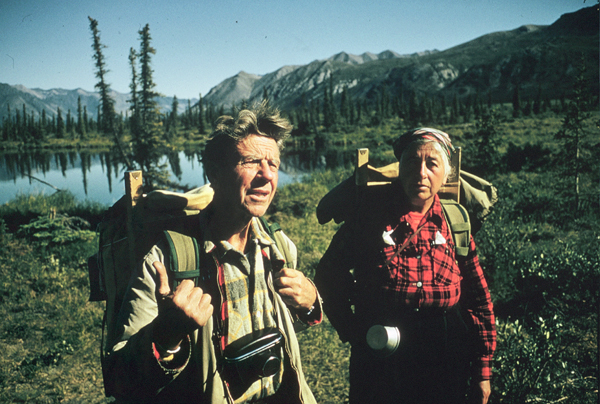
    Olaus and Mardy Murie in the backcountry of the Tetons.
    Olaus and Mardy Murie in the backcountry of the Tetons.

    Olaus Murie was born in the spring of 1889 to Norwegian immigrants in Moorhead, Minnesota, a railroad town on the eastern edge of the northern prairie.  His boyhood was tough by modern standards— from time to time, he boarded out to work on local farms, cut wood for money, and delivered milk to help support the family, but he also found time to indulge his passion for the outdoors in the prairies and timber along the Red River.

    After he worked his way through Fargo State College and Pacific University, Murie went to work as a game warden in Oregon until he got the chance to join an expedition to Hudson’s Bay headed by an ornithologist from the Carnegie Institute in 1914.  When the other members of the expedition headed home that fall, Murie stayed in the North without wages to continue collecting specimens over the winter. He learned the art of driving a dog team and picked up a scrap of the Inuit language in the process.  He went south the following summer but returned to northern Quebec two years later for a second collecting expedition.

    In 1920, he hired on with the Bureau of Biological Survey, forerunner of the U.S. Fish and Wildlife Service, to study the caribou herds in Alaska and the Yukon.  He spent the next eight years in Alaska, doing wildlife research the old-fashioned way by living, almost year-round, with his subjects.  He wrote the first major technical report on the caribou in the region before his bosses re-assigned him to Jackson Hole, where concerns had been raised about the health of the local elk herd.

    Murie’s rise as a researcher with the Biological Survey came at a time when the agency had taken on a huge new function. The survey began in 1885 as the Section of Economic Ornithology in the Department of Agriculture.  The unit owed its existence to the influence of the American Ornithologists Union, whose conservation committee had pressed the government to collect information on the food habits of birds in order to convince farmers that most birds didn’t eat crops but helped control the insects that did.  With that background, the new unit spent more time on research than it did on pest control.

    That began to change in the early 1900s as Congress pressed the agency for more tangible results.  The leaders began research on using poisons against insects and issued publications on trapping and poisoning methods to control predators that were taking livestock.  In 1915, the division, rechristened as the Bureau of Biological Survey, started its own trapping and poisoning program, with the stated intent of “destroying wolves, coyotes, and other predatory animals.”

    In 1921, the year after Murie hired on with the bureau, federal trappers reported taking more than 24,000 coyotes, 694 wolves, and 129 mountain lions. It was estimated that another 25,000 to 30,000 coyotes died of the lingering effects of strychnine and were not recovered.
    Congress was overjoyed.  In 1923, the appropriation for predator control was more than $400,000, and bureau trappers claimed a scalp count of 25,000 coyotes, 599 wolves, and 158 lions.  “In the campaign which has been waged for the destruction of timber wolves,” bureau chief E.W. Nelson reported, “most gratifying results have been obtained.”  The kill on coyotes continued to rise— 34,000 in 1924, 37,000 in 1925— while the count on gray wolves dwindled— 202 in 1926, 47 in 1927.

    In the 1920s, there weren’t many Americans who advocated complete protection of wolves and coyotes, but there were researchers in the scientific community who were concerned about what seemed to be a program to eliminate predators rather than controlling them around livestock.  Dr. Lee Dice at the University of Michigan was one of the first to raise his voice against government-funded eradication efforts.
    “I do not advocate that predatory mammals be encouraged nor permitted to breed everywhere without restriction,” he wrote in 1924, “but I am sure that the eradication of any species, predatory or not, in any faunal district, is a serious loss to science.”

    Murie had observed wolves hunting caribou in Alaska and Canada and was convinced that the packs had little effect on the herds, regardless of popular sentiment among settlers who had recently come into that country.  As part of his work in Jackson Hole, he had started a detailed analysis of coyote food habits to find out whether coyotes were taking an important toll on local elk.  Again, he concluded that coyotes had little effect on elk.

    In the spring of 1929, he wrote a five-page memo to the chief of his bureau, Paul Redington, considering the tone that the predator control program had developed:

    “In the predatory animal division . . . there is constant effort to produce hatred. . . .  It seems entirely unnecessary and undesirable to kill offending creatures in a spirit of hatred, call them “murderers,” “killers,” “vermin” in order to justify our actions. . . . Glaring posters, portraying bloody, disagreeable scenes, urging some one to kill, are working against the efforts of our other selves, who are advocating conservation, appreciation of wild life.”

    He pointed out that the American attitude toward predators was changing: “Many people, as you know, are advocating a certain balance between predatory species and the game, merely that the predatory animals may have some small place in our fauna.  I certainly think this is a reasonable request, especially where legitimate pursuits are not interfered with.”

    Murie was criticizing a program that, in 1929 alone, attracted $559,000 in Congressional appropriations and matching funds of $1.8 million from states and livestock groups.  I can find no record of Chief Redington’s reaction to the memo, but as a thirty-six-year denizen in the bowels of two state wildlife bureaucracies, I think I can guess what it was.

    By 1931, Murie had collected more than 700 scat samples from coyotes in the Jackson country, along with sixty-four stomachs.  With help from his brother Adolph, then at the University of Michigan, he analyzed these samples and prepared a manuscript to report the results.  He finished his final draft during the winter of 1931-32 and circulated it to officials in the bureau as well as to outside experts like Dr. Joseph Grinnell, a mammalogist at the University of California-Berkeley.

    The paper showed conclusively that coyotes were hardly eating elk or livestock— the overwhelming majority of their diet was voles and pocket gophers.  Murie followed where the data led.

    “Of the long list of items in the coyote’s year-long diet in the Jackson Hole country, 70.29 percent may be credited to the animal as indicating economically beneficial feeding habits; 18.22 percent may be classed as neutral, and only 11.49 percent may be charged against the coyote,” he concluded.  “To sum up, the fur value of the coyote, the potential value of its beneficial habits, the fact that the animal is intrinsically interesting and has a scientific value, however much derided, can be given considerable weight.  After all, the wildlife question must resolve itself into sharing the values of the various species among the complex group of participants in the out-of-door and wilderness wealth, with fairness to all groups.  Under such considerations, with possible local exceptions, the coyote deserves to remain a part of the Jackson Hole fauna, with a minimum of control, and that only in the case of unusual local situations.”

    Joseph Grinnell and other academics thought Murie’s research was sound and his conclusions, valid, but the reviewers at the bureau were not pleased.  At least one official complained that Murie was not a part of the food habits research unit and, thus, should not be collecting scat samples, even to find out whether coyotes were eating elk.  Another reviewer wrote that “Mr. Murie seems to favor the predator on every occasion possible.”   The manuscript disappeared into the bureau’s central office and was not published until October 1935.

    When the report finally appeared, the editor of Audubon’s Bird Lore, predecessor of Audubon magazine, invited Murie to write a popular article on his findings.  When the bureau’s chief of wildlife research found out about the project, he wrote the editor: “In view of the comparatively limited experience that Mr. Murie has had with the coyote and the limitation in his study of the food habits and economic relationships of the coyote . . . the Bureau is not warranted in approving for publication at this time the article as submitted by Mr. Murie.”
    Murie was also denied permission to present his findings at a technical conference that year.

    After twenty-five years with the bureau, Murie resigned in 1945 to become the executive director of the Wilderness Society, his profound differences with the bureau’s leadership never resolved.  Murie never offered a pubic explanation for his early departure, but it’s reasonable to believe that he left, at least partly, because of the abiding conflict with his administrators.  Shortly after he resigned, he wrote to Clarence Cottam, who was serving at the time as associate director of the Fish and Wildlife Service, as the Biological Survey had come to be known.

    “I know stockmen who are much more tolerant of coyotes that our Service is.  I know many hunters who are much more tolerant.  I know numerous people who would like to have a tolerant world, a world in which wild creatures may have a share of its products.  Many people like to think of the beneficial side, the inspirational and scientific values, of creatures like the coyote, as well as the destructive side.  This is the opposite of our official position.”

    Olaus Murie.  Professional.

    Aldo Leopold and the deer wars

    Aldo Leopold during his tenure as the first professor of wildlife management at the University of Wisconsin.
    Aldo Leopold during his tenure as the first professor of wildlife management at the University of Wisconsin.

    About the time Murie was deciding to part ways with the Fish and Wildlife Service, another confrontation over wildlife management flared up in Wisconsin with Aldo Leopold at its center.  A contemporary of Murie’s, Leopold grew up in more comfortable circumstances in Dubuque, Iowa, hunting and fishing along the Mississippi with his father and brothers. His parents could afford to send him to prep school in New Jersey, and when the time came for college, Aldo chose Yale, primarily because of its newly established school of forestry, the brainchild of Gifford Pinchot.

    At the time, Pinchot was presiding over the nascent U.S. Forest Service, and the Yale School of Forestry served as an academy to prepare young foresters for careers in his outfit.  Pinchot laid heavy emphasis on the idea of “use” in the term “wise use.”  His utilitarian approach to resource management put him at odds with men like John Muir, who emphasized the spiritual importance of wild places, but it fit well with political realities of the age.

    Young Aldo finished at Yale in 1909 and immediately accepted an appointment on the Carson National Forest in New Mexico.  His early positions on game management reflected his training and the prevailing attitude of the time.  In 1915, he called for more appropriations to support the Bureau of Biological Survey in “the excellent work they have begun,” and as late as 1920, he wrote: “It is going to take patience and money to catch the last wolf or lion in New Mexico.  But the last one must be caught before the job can be called fully successful.”

    Hard to believe that, twenty years later, the same man could mourn the loss of the “fierce green fire” in a dying wolf’s eyes and write: “I was young then, and full of trigger-itch; I thought that because fewer wolves meant more deer, that no wolves would mean hunters’ paradise.  But after seeing the green fire die, I sensed that neither the wolf nor the mountain agreed with such a view.”  Like Murie, Leopold had the strength of character to re-examine his positions on key issues when the facts demanded it, the strength to change his mind.

    Of the contentious issues Leopold addressed— the place predators deserved on the landscape, the importance of wilderness, the extension of the human ethical code to the rest of the natural world— none was as controversial or exposed him to such intense attacks as his position on deer management in Wisconsin.

    Leopold had left the Forest Service for a job surveying game populations in the upper Midwest, a project that led to Leopold’s book, Game Management, and an appointment as the world’s first professor of game management at the University of Wisconsin in 1933.

    Around the turn of the twentieth century, the forests in the northern and central part of Wisconsin began to recover from two generations of clear-cutting, and the young stands of shrubs and deciduous trees offered perfect food and cover for white-tailed deer.  The combination of excellent habitat and stringent legal protection allowed the state’s herd to explode.  As the second growth aged, reports of starving deer in the north country began to trickle in through the early 1930s.  For several years, Leopold pressed the state’s conservation department to research the problem, but the department resisted until 1940, when a change in leadership and increasing mortality among deer finally resulted in a technical inquiry into the cause, which turned out to be a classic case of overbrowsing.  In 1942, Leopold was appointed to a nine-member Citizen’s Deer Committee, charged with making an independent assessment of the deer situation.

    Leopold had seen what too many deer could do to themselves and their habitat.  He had been with the Forest Service in the Southwest at the beginning of the Kaibab debacle; he had done a detailed study of deer for hunt clubs in northern Michigan; he had watched with great interest as similar problems developed in Pennsylvania, and he had toured the intensively managed forests of Germany, dark stands of mature timber with no understory— and precious few deer.

    In May, 1943, he reported the findings of his committee to the state’s conservation organization and recommended an antlerless-only deer season for the fall.  He also suggested that the bounty on wolves be lifted and that artificial feeding efforts be curtailed.  The cure for whitetails was straightforward in his mind— it was the management of people, not deer, that most concerned him.

    “There is no doubt in our minds,” he wrote in his final report, “that the prevailing failure of most states to handle deer irruptions decisively and wisely is [due to the fact] that our educational system does not teach citizens how animals and plants live together in a competitive-cooperative system.”

    He was about to find out how right he was.

    As the deer season ended that year, opponents labeled it “the Crime of ’43.”  In 1944, a group of incensed deer hunters formed the Save Wisconsin Deer Committee and began publishing a monthly newspaper.  In the first issue, the committee identified the man they held responsible for the new management policy: “The infamous and bloody 1943 deer slaughter was sponsored by one of the commission members, Mr. Aldo Leopold, who admitted in writing that the figures he used were PURE GUESSWORK.  The commission accepted his report on this basis.  Imagine our fine deer herd shot to pieces by a man who rates himself a PROFESSOR and uses a GUESS instead of facts.”  Another irate hunter wrote: “ Perhaps, the big mistake that has been made is the fact that we do not have an open season on experts.”

    Leopold took this sort of public thrashing until his death in 1948 and never responded directly, preferring to refine and restate the case for antlerless deer seasons as a way of maintaining both deer and deer habitat, an approach that is universally accepted in the technical community today even though it’s still controversial in some sectors of the public, as many people in this room know all too well.

    Aldo Leopold.  Professional.

    Rachel Carson and persistent pesticides

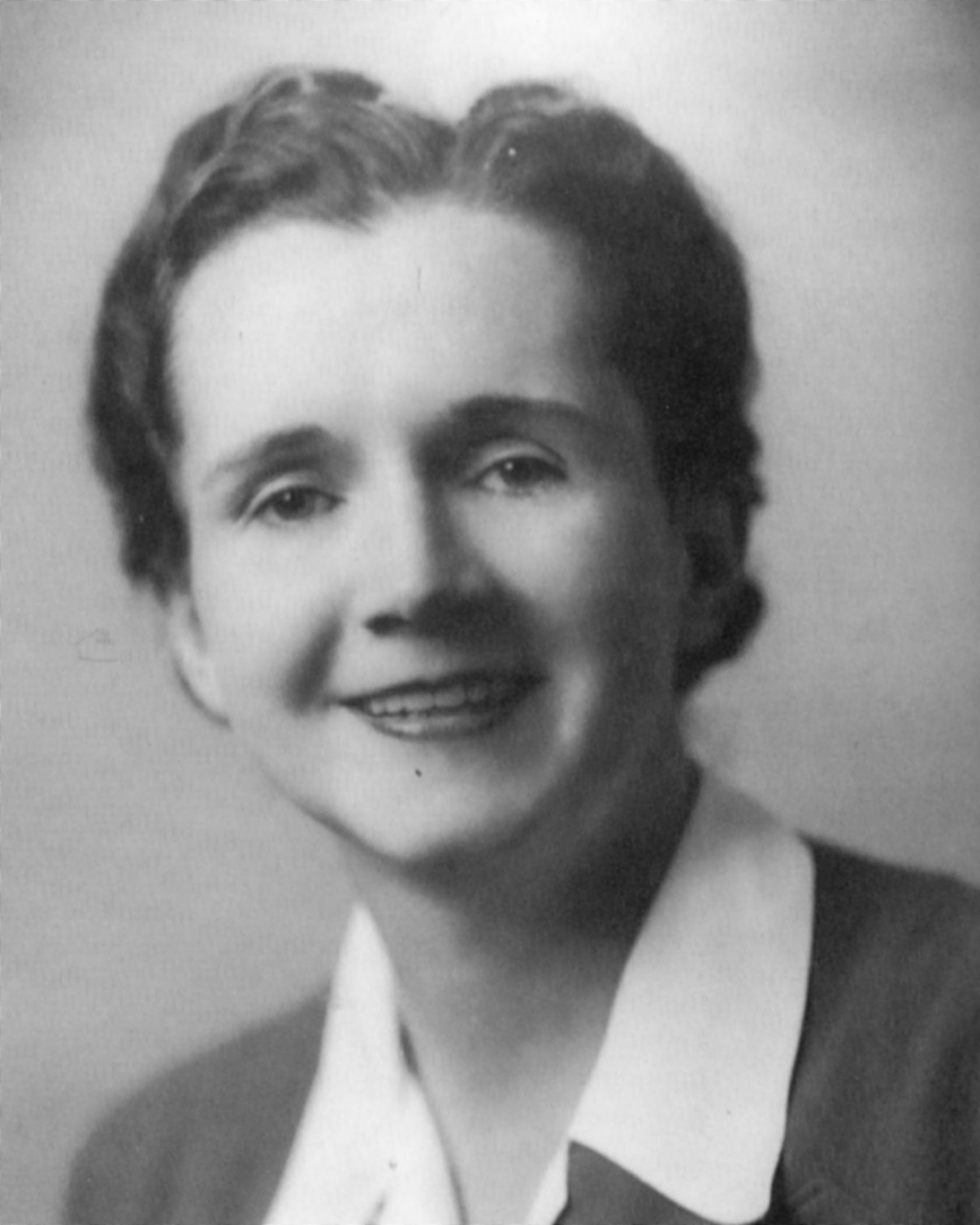
    Rachel Carson in 1944 toward the end of her career with the U.S. Fish and Wildlife Service.
    Rachel Carson in 1944 toward the end of her career with the U.S. Fish and Wildlife Service.

    Not long after Leopold’s untimely death, another biologist made national headlines.  She held a master’s degree in zoology from Johns Hopkins University and had worked her way up to a position as chief editor for the U.S. Fish and Wildlife Service after a sixteen-year career translating the technical reports from the Service’s biologists and managers into plain English.  Her name was Rachel Carson.

    Widely respected for her skill as a writer, Carson had published one book, Under the Sea Wind, along with many popular articles on marine biology for major magazines, but she’d never made enough with her words to depend on them for a full-time living.

    Until The Sea Around Us.  Published in 1952, her book on life in the ocean rose almost immediately to second place on the New York Times’ best-seller list.  Its success made her an instant celebrity and allowed her to take early retirement from federal service.  The public looked to her for more charming, insightful words on the marvels of nature.  What they got was Silent Spring.

    I think most of us in this line of work think of Silent Spring as one of the most important environmental books of all time and rate Rachel Carson as one of the most influential environmentalists of the last century, all of which is true enough.

    As we look back on the warm glow of her fame fifty years after Silent Spring first hit the streets, it’s easy to forget what the book cost its author.

    Carson first became concerned about the side effects of the wide use of DDT in 1945, as researchers at the Patuxent Research Center began to study its effects on waterfowl and other birds as well as beneficial insects.  She wasn’t against the use of pesticides entirely, but she was worried about their effects when they were used indiscriminately at a landscape scale.  At the time, she couldn’t interest an editor in the subject, which was probably just as well, since anything she might have written at the time would have been scrutinized by federal officials before it could be published.

    In 1957, on her own and with a national best-seller to her credit, Carson turned her attention back to the growing scientific literature on the effects of DDT and other pesticides.  She began serious work on the subject the next year, while also looking after her terminally ill mother and an obstreperous grand nephew she had adopted after his mother’s death. The analysis of the technical literature and unpublished research on the effects of pesticides was a daunting task, both in terms of the sheer volume of emerging information and its technical complexity.

    It was also politically sensitive.  As the USDA’s Agriculture Research Service began to recognize Carson’s intentions, administrators tried to block access to information she wanted from the agency.  She eventually got what she needed from people inside ARS who shared her concerns and leaked information.

    Two years into the research and writing, she was diagnosed with an ulcer, followed by a bout of pneumonia and then, in the spring of 1960, breast cancer.  She kept writing, often while in bed recovering from surgery, radiation therapy, and associated infections.

    Even before the book was finished, friends warned Carson that she was courting controversy.  Clarence Cottam, who had recently retired as director of the Fish and Wildlife Service, wrote to her in 1961: “I am certain you are rendering a tremendous public service; yet, I want to warn you that I am convinced you are going to be subjected to ridicule and condemnation by a few.  Facts will not stand in the way of some confirmed pest control workers and those who are receiving substantial subsidies from pesticides manufacturers.”

    Silent Spring was published on September 27, 1962, and the reaction from the chemical industry was immediate and intense.  One company threatened legal action.  Industry representatives and lobbyists arranged for an avalanche of complaints to the publisher, many of them anonymous. A biochemist with American Cyanamid wrote that “if man were to follow the teachings of Miss Carson, we would return to the Dark Ages, and the insects and diseases and vermin would once again inherit the earth.”  He accused her of being “a fanatic defender of the cult of the balance of nature.”  Her academic credentials were denigrated; her motives were questioned; her character was assaulted.  Former secretary of agriculture Ezra Taft Benson is said to have written a letter on Carson’s book to Dwight Eisenhower, wondering “why a spinster with no children was so concerned about genetics.”  He went on to speculate that she was “probably a Communist.”

    Time magazine thought that “her emotional and inaccurate outburst in Silent Spring may do harm by alarming the nontechnical public, while doing no good for the things that she loves.”  The National Agricultural Chemicals Association spent more than $250,000 attacking assertions in the book.   Some members of the academic community were severely critical while others expressed tepid support.

    It was a firestorm of corporate and bureaucratic outrage, and it came at a time when Carson was struggling with weakness and angina caused by repeated radiation treatments.  In spite of her deteriorating health, she accepted several invitations to speak on the issue of pesticides, defending her work and conclusions quietly, but with passion and technical precision.  In the spring of 1963, she was interviewed for an hour-long installment of CBS Reports, titled “The Silent Spring of Rachel Carson,” and in May, she gave testimony on pesticides before two committees in the U.S. Senate.

    The cancer had metastasized into her bones and liver.  By fall, she could barely walk, and as the new year dawned, she came down with a severe respiratory virus.  On April 14, 1964, with the debate she had started still galvanizing the nation, she died.  As for Silent Spring— before she died, she said that “it would be unrealistic to believe one book could bring about a change.  But now I can believe I have at least helped a little.”

    Rachel Carson.  Professional.

    The upshot

    Three exceptional people but by no means the only exceptional people in this field.  Over the years, I’ve known at least four who gave their lives in the line of duty and two others who came dangerously close.  I’ve also known a number who’ve stood up when the standing was hard:
    The group of biologists with the Montana Department of Fish, Wildlife and Parks who stopped the proposal to dam the Yellowstone River.  They won that fight, and after everyone else had declared victory and gone home, they were re-assigned and eventually eased out of the department.  The Yellowstone remains the only major undammed, free-flowing river in the contiguous forty-eight states as a result of their work and sacrifice.

    In 2003, A Wyoming Game and Fish biologist spoke at the North American Interagency Wolf Conference in Pray, Montana.  The Wyoming legislature had just passed a wolf management law that ignored the Game and Fish Department’s recommendation that wolves be classified as trophy animals across the state.  This biologist expressed the view that the legislature’s plan probably didn’t provide enough habitat to maintain a viable wolf population, which would land the wolves right back on the federal list of endangered species.  He had the data to back up his position, but that didn’t matter much to Wyoming politicians.  He was summarily placed on administrative leave, pending a review of his comments.  It took an outcry from professional organizations and biologists across the region to return him to duty.

    In 1983, that same biologist first pointed out the impacts a fence on Red Rim in the southern Wyoming desert would have on antelope and other big game.  The fence was built by a wealthy Texan, who argued that the department was mismanaging the antelope.  The biologist told reporters, “I’m morally responsible to those animals.  It’d be tougher than hell for me to sit back and watch them die.”  The landowner lawyered up and did his best to woo the state’s politicians to his side, but in the end, the fence came down.

    In the 1990s, several biologists were swept up in the deer wars in southwestern Wyoming as local herds were devastated by almost a decade of drought.  Often undercut by their own leadership, these men continued to emphasize the relationship between deer and forage, pointing out again and again that you can’t have any more deer than the habitat will support.  I think they laid the groundwork for the calmer, more productive conversations that characterize deer management in the state today.

    Then there were the confrontations over mined land reclamation, instream flow, and John Dorrance’s exotic game farm, the call for an end to sage grouse hunting.

    There’s no doubt that an employee owes a certain degree of loyalty to his employer.  In Wyoming, it’s popular to say that we should always “ride for the brand.”  But there are other loyalties to be considered.  The Wildlife Society’s code of ethics states that its members should “recognize the wildlife professional’s prime responsibility to the public interest, conservation of the wildlife resource, and the environment.”
    Our “prime responsibility.”

    I can’t say how far that responsibility should carry any professional.  These are dangerous times in conservation— the public constituencies that once supported enlightened wildlife management are increasingly divided and often caught up in their own self-centered demands, which makes it harder for a biologist to speak truth to power.  But, as hard as it may be, it is still the most important part of the biologist’s job.

    It’s often said that, as professionals, we need to pick our battles, and I agree with that, since it suggests that there are some battles worth fighting.  And I would go further: There are some battles worth fighting, even if there’s a chance we’ll lose.  Sometimes, a loss prepares the way for a victory.  A classic example was the struggle to stop the Glen Canyon dam on the Colorado River.  Conservationists eventually lost that fight, but the high-profile public debate on the issue changed the American view on dams and headed off another dam proposal that would have flooded the lower part of the Grand Canyon.

    Professional wildlifers have worked miracles across America and here in the mountains and plains, often at great personal sacrifice.  You are the bearers of that proud tradition.  It can be a heavy load, but one well worth carrying.  I’ve always liked Teddy Roosevelt’s view of the matter. “Far and away the best prize that life has to offer,” he told a crowd in 1903, “is the chance to work hard at work worth doing.”  You have that chance.  Make the most of it.

    And my deepest thanks for all you do.

  • Wyoming lawmakers lay an egg

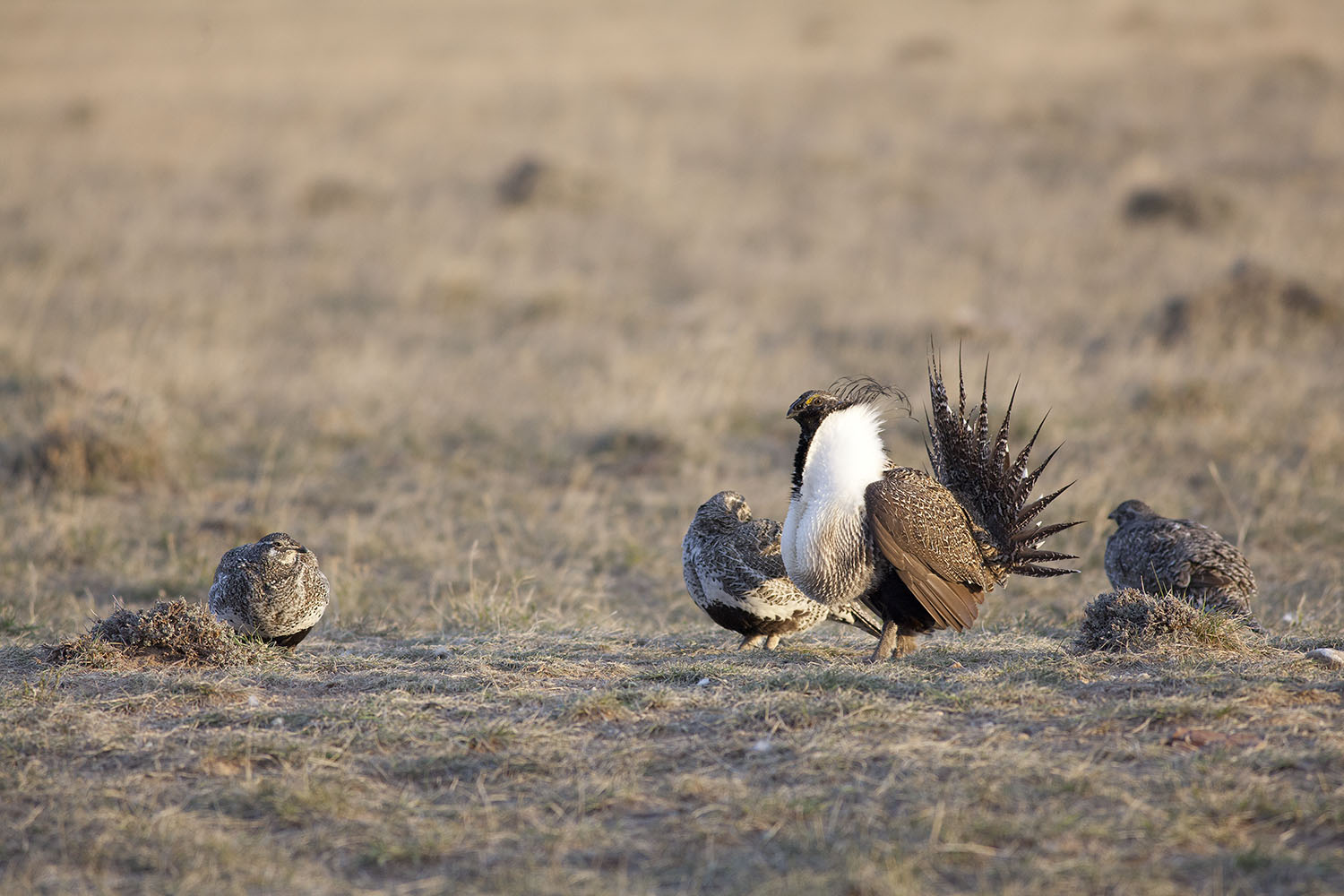
    Hen sage grouse visit dominant male on a spring breeding ground. copyright 2016 by Chris Madson, all rights reserved.
    Hen sage grouse visit dominant male on a spring breeding ground. copyright 2016 by Chris Madson, all rights reserved.

    ON MARCH 1, THE WYOMING LEGISLATURE PASSED A LAW ALLOWING GAME BIRD FARMS TO take sage grouse and their eggs from the wild in order to produce birds in captivity. Professional wildlife biologists were nearly unanimous in their opposition to the proposal, so much so that Wyoming Governor Matt Mead allowed it to become law without his signature, explaining that he had “considerable reservations with this new bill.”[i]

    In the wake of Wyoming’s legislative action, Ryan Zinke, the Trump administration’s new secretary of the interior, issued an order on June 8 calling for a 60-day review of the sage-grouse management plan[ii], the plan that was adopted in 2015 after years of intense debate and collaboration involving hundreds of western residents from a spectrum of backgrounds as well as representatives of local, state, and federal government, the plan that was instrumental in convincing the U.S. Fish and Wildlife Service to keep the greater sage grouse off the list of federally threatened species. Among other goals, Zinke’s order singled out captive breeding of sage grouse as a possible way to “maintain and improve the current population.”[iii]

    Captive breeding of sage grouse was a bad idea when it was proposed in the Wyoming legislature, as scores of wildlife professionals pointed out. It was a bad idea when it became law, as Governor Matt Mead pointed out. And it remains a bad idea, in spite of Secretary Zinke’s interest and tacit support. Here’s why:

    Captive breeding is a last-ditch step in the effort to hold onto an endangered species, an expensive, risky approach that has some chance of working when the habitat that supported the species is still available and practically none at all if there is no habitat left. Captive breeding has been of significant use in the effort to hold onto highly endangered animals like the California condor, the whooping crane, and the black-footed ferret and very little use for species like the red wolf and the Florida panther.

    There are several reasons biologists try to avoid using captive breeding. Sensitive species often don’t survive captivity, and when they do, they often refuse to breed or raise their young. Young animals that are raised by people often fail to imprint on their own kind and won’t breed at all. Young animals raised by closely related species, like young whooping cranes raised by sandhill crane adults, get mixed up about their identity and won’t breed with other members of their own species. Young animals raised in captivity often lack the most basic survival skills, like choosing the right foods in the wild, avoiding predators, or finding shelter in extreme weather. Finally, if the habitat that originally supported the species is rare or has disappeared entirely, there is no place to put animals that are produced in captivity.

    The challenges of maintaining populations of rare birds are nowhere more obvious than among America’s grassland grouse. The heath hen is extinct; the Gunnison’s sage grouse is on the federal list of threatened species[iv]; the lesser prairie chicken and Columbian sharp-tailed grouse have both been proposed for threatened status under federal law, and the Attwater’s prairie chicken, a permanent occupant of the federal endangered species list since its inception, has now declined to a population of 42 birds in the wild.

    When considering a captive breeding program for any grassland grouse, the case of the Attwater’s is worth review. This subspecies of the greater prairie chicken was included on the very first American list of endangered species in 1967. At that point, its population was in free fall from a presettlement high of as many as 120,000 birds[v] to barely 1,000[vi]. Nor did the collapse end there, even after a national wildlife refuge was created to protect some of the last scraps of remaining Attwater’s habitat in 1972[vii]. By 1990, biologists could find only 470 birds.[viii]

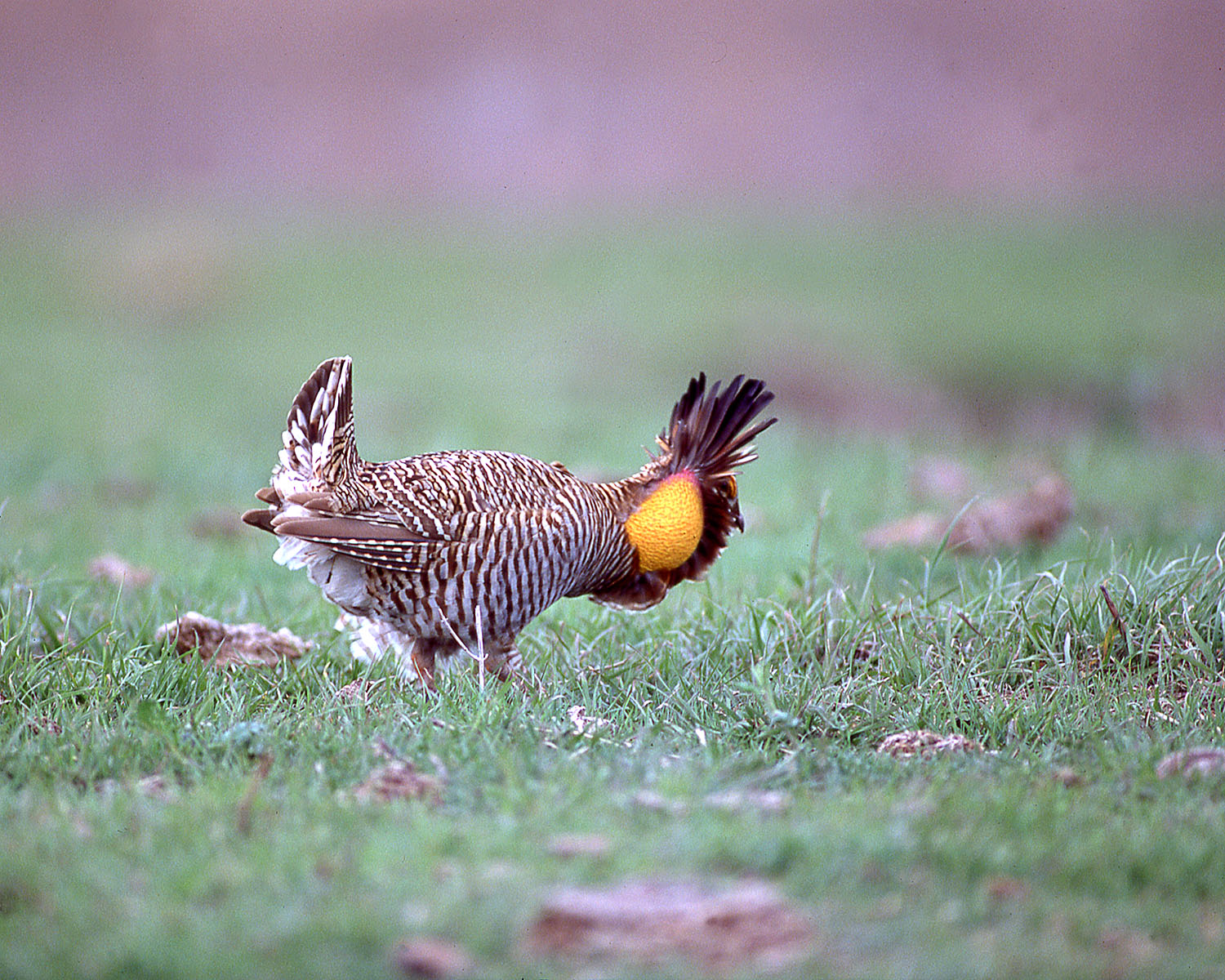
    A male Attwater's prairie chicken displaying on one of the species' last breeding grounds in southern Texas. Copyright 2015 Chris Madson, all rights reserved.
    A male Attwater’s prairie chicken displaying on one of the species’ last breeding grounds in southern Texas. Copyright 2015 Chris Madson, all rights reserved.

    Faced with this precipitous decline, wildlife managers decided to begin a captive breeding effort in 1992. It took a while to find a regime the birds would tolerate. In the first five years, the facility produced an average of 44 young birds per year. The first captive-raised birds were released to the wild in 1996, and over the next four years, the average number of birds produced rose to 66 per year. Between 2012 and 2016, production increased again, to more than 300 birds per year.[ix]

    Numbers of Attwater’s prairie chickens in the wild have bounced around in the years since the release of captive birds began. The population dropped as low as 40 birds in 2002, rose, then dropped back to 40 in 2005. In 2016, it hit a modern high of 130, but a major flood that year hit the birds hard. The 2017 count was back to 42 birds.[x]

    There’s little doubt that the subspecies would be gone if it hadn’t been for the steady supply of captive-reared birds. Let me repeat that: The Attwater’s prairie chicken would almost certainly be extinct if it hadn’t been for the research, commitment, and persistence of a group of scientists and technicians who overcame many of the barriers to keeping the birds in captivity, getting them to breed, and raising young prairie chickens to flight stage. These conservationists have worked a minor miracle.

    However, it’s also clear that 25 years of captive breeding and consistent introduction of pen-reared birds, combined with all the other management efforts, have not been enough to move the Attwater’s prairie chicken out of danger— 42 birds in 1996; 42 birds in 2017.[xi] Right back where they started. Drought, hurricanes, floods, and the invasion of an exotic insect, the fire ant, have all set back the recovery, and beyond these environmental shocks, there are indications that the captive-reared Attwater’s chickens are weaker than their wild brethren.

    Research suggests that there are differences in the function of the immune systems of Attwater’s prairie chickens in the wild and those raised in captivity, differences that could affect survival of captive birds when they are released and possibly even the survival of any chicks they produced.[xii] Other investigators report that Attwater’s prairie chickens raised in captivity are less alarmed by the approach of a dog and don’t fly as far as other prairie chickens when they’re disturbed. The difference apparently lasts throughout their lives and may well mean that the captive-reared birds are more vulnerable to predators.[xiii]

    And the hard truth is that there aren’t many places left to put captive-reared Attwater’s prairie chickens. Val Lehman, the first researcher to take a hard look at the bird, estimated that, in good years, there were around 6 million acres of Attwater’s prairie chicken habitat.[xiv] These days, there are between 100,000 and 200,000 acres left, depending on how you count, or roughly three percent of the original.[xv]

    Beyond these biological issues, there is the matter of cost. Several private-sector conservation facilities house captive-rearing programs for Attwater’s prairie chickens, and all these organizations help fund the effort, which makes it hard to estimate the actual cost. At least one authority on the Attwater’s program has been quoted as saying that the released birds run about $1,000 each,[xvi] and that may well be a conservative figure, since it doesn’t include the start-up costs of the captive breeding program or construction of the buildings that house it.

    That’s what a captive breeding program looks like, and it’s why biologists suggest captive breeding only as a last resort when a species is in imminent danger of extinction.

    The situation facing greater sage grouse is worrisome, without doubt. Half the bird’s range has been destroyed, and much of what remains is in no better than fair condition[xvii]. New diseases like West Nile virus also pose a threat.[xviii] Still, there are between 200,000 and 500,000 sage grouse left[xix] and about 120 million acres of

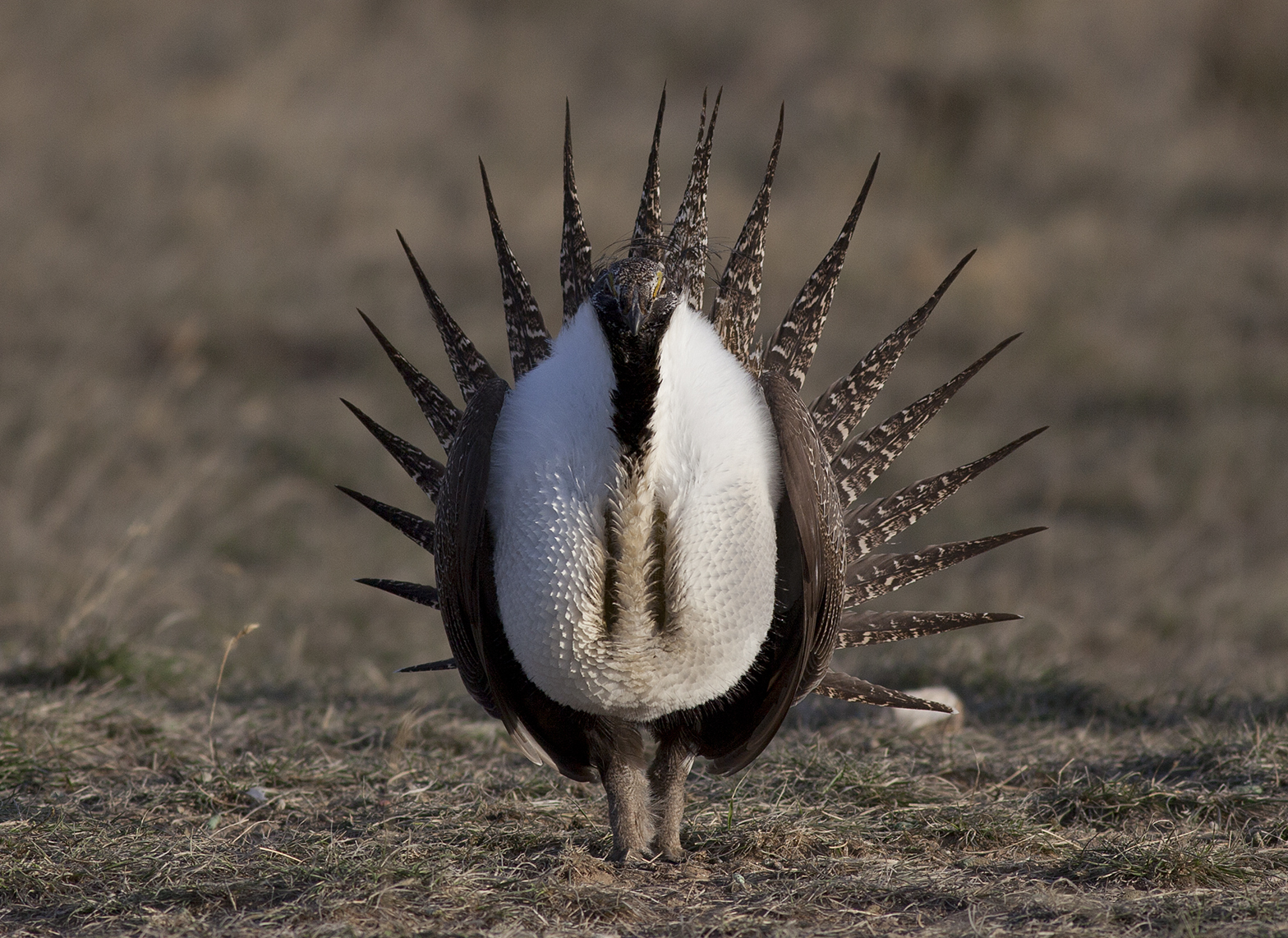
    A male sage grouse displays on a communal spring breeding ground. Copyright 2016 Chris Madson, all rights reserved.
    A male sage grouse displays on a communal spring breeding ground. Copyright 2016 Chris Madson, all rights reserved.

    occupied habitat.[xx] The opportunity to influence management on these lands is much greater than it is in Attwater’s prairie chicken habitat, since more than 60 percent of greater sage grouse country is controlled by the Bureau of Land Management and other federal agencies.

    With all these reasons to avoid captive breeding of greater sage grouse, why would Secretary Zinke mention it as an area of focus for the team charged with this 60-day review? The secretary’s order offers a chilling motive: He believes captive breeding may allow “energy and other development of public lands . . ., job creation and local economic growth.”[xxi] In other words, he is hoping to find a way to accelerate habitat loss in the West’s sagebrush grasslands, the one trend that really does threaten the future of sage grouse, along with Columbian sharptails, pronghorns, mule deer, and a host of other wild things that depend on the sage.

    Alarm over the possibility of a major shift in sage-grouse management has transcended party lines. On May 26, Governor Mead, a dyed-in-the-wool Wyoming Republican, and Colorado Governor John Hickenlooper, a twenty-first-century western Democrat, co-signed a letter to Secretary Zinke expressing their worry over the possibility that he might make major changes to the sage grouse management plan currently in place without consulting the many interest groups that helped forge the agreement.

    “We are concerned,” they wrote, “that this is not the right decision.”

    I share the governors’ concern. The management approach for sage grouse that is being followed today is the product of an intense negotiation that stretched over several years and involved all points of view. Upsetting that delicate consensus now would be a severe blow to sage grouse and the sagebrush grasslands on which they depend. And adopting a captive-breeding effort to justify accelerated industrial incursions into the sagebrush wilderness is, at best, an act of ignorance and, at worst, a cynical perversion of science and conservation to benefit a well-heeled special interest.

    Sage grouse don’t need help with their love lives— they handle that just fine on their own. What they need is a place to live, a landscape that provides food, water, and shelter, secure nurseries, refuge from blizzards and drought. The key to the future of sage grouse is habitat, not captive breeding.

    And we hold the key in our hands.


    [i] Letter from Governor Matt Mead to The Honorable Edward Murray, Wyoming Secretary of State, regarding Enrolled Act No. 0091 — Original HB0271 Game bird farms — greater sage grouse. March 14, 2017.

    [ii] Order No. 3353, Secretary of the Interior, Washington, D.C. June 8, 2017.

    [iii] Order 3353, page 3, lines 18-21.

    [iv] ECOS Environmental Conservation Online System, U.S. Fish and Wildlife Service. https://ecos.fws.gov/ecp0/pub/SpeciesReport.do?dcomname=1&searchstring=sage-grouse&action=generate&outgrouped=false&outformat=html&outtype=species&dsciname=0&dgroup=2&dstatus=3&dinvname=-1&dspcode=-1&dfamily=-1&ddate=-1&dleadreg=-1&drange=-1&dregions=-1&dmapstatus=-1&dvip=-1&dinvpop=-1&dcrithab=-1&dspecrule=-1&dstates=-1&dwl=-1&sgroup=0&ssciname=1&scomname=2&sinvname=-1&sspcode=-1&sfamily=-1&sdate=-1&searchkey=comname&searchkey=sciname&header=Results+of+Species+Search&s8fid2=24012698821181&s8fid2=112761032791&s8fid2=112762573891. Consulted on July 22, 2017.

    [v] Johnsgaard, Paul A., 2002. Grassland Grouse and Their Conservation. Smithsonian Institution Press, Washington, D.C. p. 20.

    [vi] Attwater’s prairie chicken count data provided by Terry Rossignol, manager at the Attwater’s Prairie Chicken National Wildlife Refuge.

    [vii] Johnsgaard, p. 26.

    [viii] APCNWR data.

    [ix] Personal communication, Terry Rossignol, manager of the Attwater’s Prairie Chicken National Wildlife Refuge, July 19, 2017.

    [x] APCNW data and personal communication with Terry Rossignol.

    [xi] APCNWR data.

    [xii] Meier, S.A., C.A. Fassbinder-Orth, and W.H. Karasov, 2013. Ontogenetic changes in innate immune function in captive and wild subspecies of prairie chickens. Journal of Wildlife Management 77(3): 633-638.

    [xiii] Hess, M.F., N.J. Silvy, C.P. Griffin, R.R. Lopez, and D.S. Davis, 2005. Differences in flight characteristics of pen-reared and wild prairie chickens. Journal of Wildlife Management 69(2): 650-654.

    [xiv] Lehmann, V.W. 1941. Attwater’s prairie chicken: Its life history and management. U.S. Government Printing Office, Washington, D.C. p. 4.

    [xv] Bergan, J., M. Morrow, and T. Rossignol, 2010. Attwater’s prairie chicken recovery plan, second revision. U.S. Fish and Wildlife Service, Albuquerque, NM. pp. 28-29.

    [xvi] Pearce, Michael, 2014. Prairie chicken propagation plan has risks. Wichita Eagle-Beacon, July 19, 2014.

    [xvii] Public Employees for Environmental Responsibility BLM Rangeland Health Standards Mapping Project https://mangomap.com/pdl/maps/24736/BLM%20RANGELAND%20HEALTH%20STANDARDS%20EVALUATION%20DATA%20(2012)?preview=true#zoom=6&lat=35.844535&lng=-111.851807&layergroups=pdl%3Afd2d4cda-6549-11e4-a90b-22000b2517a0,pdl%3A881e3858-596b-11e4-a105-22000b2517a0&isNewLayer=false&hostPermalinkEnable=false&bck=bingmap, viewed July 23, 2017.

    [xviii] Taylor, R.L., J.D. Tack, D.E. Naugle, and L.S. Mills, 2013. Combined effects of energy development and disease on grater sage-grouse. PLOS One 8(8): e71256.

    [xix] U.S. Fish and Wildlife Service fact sheet: https://www.fws.gov/greatersagegrouse/factsheets/GreaterSageGrouseCanon_FINAL.pdf Viewed July 23, 2017.

    [xx] Knick, S.T. and J.W. Connelly, 2011. Greater sage-grouse: Ecology and conservation of a landscape species and its habitats. University of California Press, Berkeley, CA.

    [xxi] Order No. 3353, Secretary of the Interior Ryan Zinke, June 8, 2017. p. .3.

  • Testimony on sage grouse captive breeding before the Wyoming Game and Fish Commission

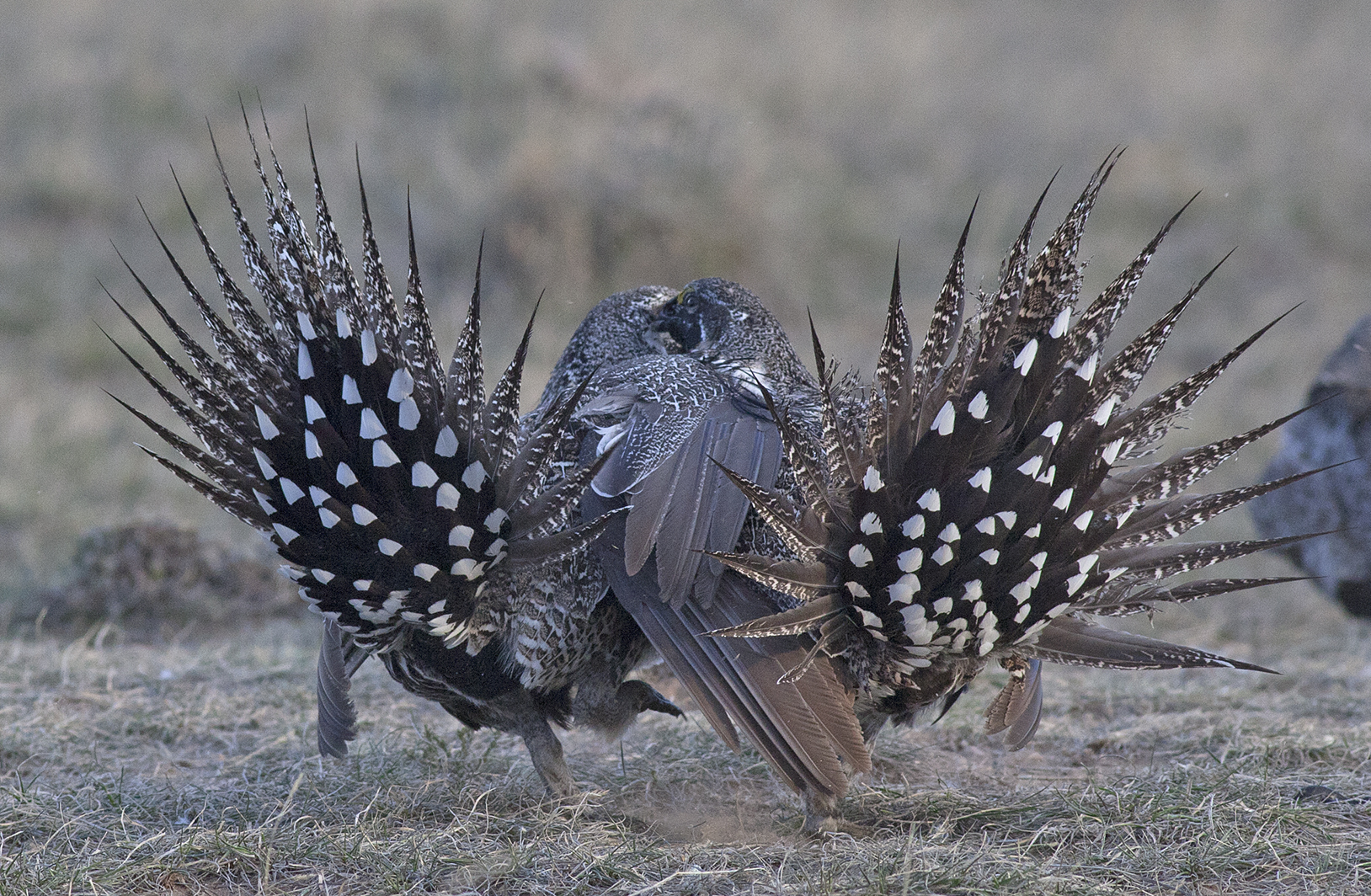
    sage grouse fighting 6-1

    THANK YOU, MR. PRESIDENT AND LADIES AND GENTLEMEN OF THE COMMISSION FOR THE OPPORTUNITY TO SPEAK TO YOU TODAY.

    My name is Chris Madson. I hold a master’s degree in wildlife ecology from the University of Wisconsin-Madison. I served six years with the Kansas Department of Wildlife and Parks, where I was exposed to management issues relating to greater and lesser prairie chickens. After that, I served thirty years with the Wyoming Game and Fish Department. I am a certified wildlife biologist with The Wildlife Society.

    I think it’s fair to say that the community of wildlife professionals is nearly unanimous in its opinion that captive breeding greater sage grouse is a bad idea. Hard experience with a number of captive breeding programs lends weight to this view. Perhaps the best example of the pitfalls that plague captive breeding and reintroduction is the Attwater’s prairie chicken.

    Wildlife managers began a captive breeding effort to save the Attwater’s prairie chicken in 1992. By 1996, the first year captive-bred birds were released to the wild, the population had declined to 42 birds.

    The infusion of birds from the breeding program helped stabilize the population. In 2016, the count hit a modern high of 130 birds in the wild, but in 2017, the count was back to 42 birds.

    The Attwater’s would almost certainly be extinct if it hadn’t been for captive breeding, but it’s also clear that 25 years of captive breeding and introduction of pen-reared birds have not been enough to move the Attwater’s prairie chicken out of danger— 42 birds in 1996; 42 birds in 2017. Right back where they started.

    That’s what a captive breeding program looks like, and it’s why biologists suggest captive breeding only as a last resort when a species is in imminent danger of extinction.

    Ladies and gentlemen of the commission, I am confident that Wyoming Game and Fish professionals can promulgate the best possible oversight program within the limits of this statute. In this case, the devil is NOT in the details— the concept of captive breeding itself is the problem.

    Following the passage of this statute, the leaders of the Game and Fish Department had little choice but to make these recommendations. But you, ladies and gentlemen of the commission, have more latitude. You are the department’s governing body. Captive breeding in Wyoming cannot proceed without regulation. If you do not adopt regulations this year, you allow the people of the state to more fully consider the wisdom of captive breeding sage grouse.

    Frankly, this law is a classic example of political interference in a highly complex technical field. Your vote against captive breeding regulations is a vote in support of biology over politics in Wyoming’s wildlife management.

  • A rose by any other name . . .


    Flick's skunk bath

    FLICK THE BRITTANY AND I TAKE A WALK EVERY MORNING.  IT’S ABOUT three miles for me and somewhere between nine and fifteen miles for him, I’d guess. Keeps us both in shape for the bird seasons. The usual route leads around the outside of a small golf course, past the local high school, and around the edge of the city’s composting facilities. The advantage of this route is the amount of open space— a well-disciplined dog can get all the exercise he needs without encountering cars, joggers, bikers, and other morning traffic.

    There are quite a few wild things in this waste spaces. A mule deer doe and her progeny use them regularly, although I seldom see more than their tracks. The local flock of Canada geese grazes on the outfields of the ball diamonds we pass on our way, and a couple of pairs of mallards nest and raise broods in the vicinity. In some years, the local red fox dens behind the compost piles in the winter. A month or so ago, I met a raccoon crossing the road at dawn, and yesterday, there was a merlin hunting out of one of the shelterbelts.

    This morning, there was also a skunk. I didn’t see him, but as soon as I heard Flick’s high-pitched bark, I was afraid there had been a meeting. Sure enough, he came up out of the drainage ditch with a distinct yellow patch between his eyes. It was a direct hit, the stench already drifting down with the breeze. Enough to gag a maggot, as my dad used to say.

    Flick and I have had this experience half a dozen times over his life. He doesn’t seek out skunks, but he does sometimes overrun his nose, which leads to occasional confrontations. If I’m lucky, he dodges most of the shot; if I’m not, he catches the full dose square in the face. This morning, he left a scent trail that hung down the street for the better part of an hour.

    Every time I have to deal with a skunked dog, I heap blessing upon the anonymous benefactor of all owners of hunting dogs, that gifted soul who invented “the recipe.” This combination of hydrogen peroxide and baking soda is miraculous in its ability to nullify skunk odor. As I was scrubbing Flick down this morning, I recognized some slight modifications I’ve made to hasten the deodorizing process. I offer them to fellow hunters and other dog owners who may be dealing with this problem at some point in the future.

    The first time I used the recipe, I just splashed it on the dog while we stood in the backyard. I quickly found that the mixture didn’t do much good after it had soaked into the grass. I diluted my next batch to stretch it, but that reduced its potency. These days, I put the dog in the smallest tub he can stand in— for my 56-pound Brittany, that’s a storage container from Target. That way, I can pour the mixture on him at more or less full strength, then easily recycle it from the bottom of the tub.

    For my dog, I use up to 8 pints of hydrogen peroxide with the appropriate amount of baking soda. The hydrogen peroxide costs a dollar a pint at my super market, so the cost is minimal compared to the extended hassle of keeping a skunked dog around the yard, let alone the house.

    The recipe calls for dish-washing detergent or other “liquid soap.” That’s fine if your dog has been sprayed in the rear or flank, but most dogs take the blast right in their faces. Most versions of the recipe warn that you should be careful not to get it in a dog’s eyes, since it really stings. That’s great advice, except that any square millimeter of fur that has skunk musk on it will continue to stink until it’s thoroughly treated. That includes eyebrows, eyelids, jowls, and muzzle. If you are too careful with the dog’s eyes, he will carry a faint eau d’skunk on his face for several weeks.

    This time, I decided to use baby shampoo instead of detergent. “Johnson’s No-More-Tears” formula. All that’s required is a wetting agent, and the baby shampoo seems to work just fine for that, while allowing a thorough scrubbing of the dog’s face.

    I mix up a gallon of the recipe at a time. When I’m done with the scrub-down and rinse, I ask my wife to sniff-test the dog, partly because she apparently has a more refined sense of smell than I do, but mostly because prolonged exposure to the odor blunts my ability to smell the stuff. A fresh nose is more sensitive.

    If there are any areas with residual odor— and there always are— I mix a second batch and concentrate on those places. Rinse copiously with the garden hose, and, once he’s dry, Flick is once again fit company in the house.

    Now, if I can just figure out how to deal with that skunk. I can live-trap him, but that leaves a salient question: how to deal with a live skunk in a trap. A .22 long rifle seems the most expedient solution, but I am, alas, inside the limits of a town that allows no discharge of firearms. A detour on the morning walk is probably in order . . .

  • The discipline

    Shirley Mt sunset 3THE FIRST SET OF TRACKS LED TO A SECOND, THEN FOUR OTHERS, THEN EVEN MORE— a herd of elk weaving through the timber. The prints weren’t all that fresh, probably made the previous evening, but the herd didn’t seem to be in a hurry, and, against all the hard experience I’ve had trying to catch up with elk, I figured it was worth a try, especially since this was the freshest sign I’d seen in three days.

    A mile later, I broke out of the trees onto a windswept point that gave me a view of the next big ridge to the east, a spine of rock and lodgepole pine that formed the east rim of Ten Mile Canyon. A ravine opened at my feet and dropped steeply down to the river a thousand vertical feet and half a mile away.

    The tracks dropped into the head of the ravine. Of course.

    If it had been the first day or even the second, I wouldn’t have followed. But, by the morning of the third day, it gets hard to find easy elk on public land. This might be the best chance I had left. Following them down there was going to be hard— I could see where the elk had slipped and slid down the slope. And if I killed something down there, getting it out was going to be a lot worse. I hesitated, thought about a couple of alternatives, and shrugged. The first thing to do was find them, then I could make up my mind. I followed the tracks.

    All the way down to the river, as it turned out. When they got to the bank, they turned upstream and walked another quarter of a mile to a riffle. Where they crossed. It was nearly four feet deep out in the middle; the current was brisk, and there was a shelf of ice in the eddies along the bank. The ambient temperature stood at about twenty degrees. Another close look at the tracks— still several hours old. I was not going after these elk.

    I walked along the river to the next side canyon and turned up it in the forlorn hope that it might have an elk or two of its own, then started the long, weary climb back to the west rim.

    We call this a sport, I thought, as I stripped off my hat and gloves and opened the zipper on my fleece. I’ve been involved in several sports over my lifetime, mostly for entertainment, but one or two pretty seriously. I spent a number of years training for those— weight rooms and wind sprints, intervals and over-distance. A lot of sweat, a lot of hard work.

    But not as hard as this. A serious training schedule may take three or even four hours out of a day. I’d rolled out at four this morning; now, it was ten, and when I got back to the top of the mountain, I would continue until dark. The same yesterday. Same the day before that. And, if I don’t find an elk this afternoon, I thought, it’ll be the same tomorrow.

    Nor was endurance all I needed. I’d learned the hard way that I ‘d better stay focused, no matter how tired I was. Putting my head down and just pulling the hill was a sure way to be ambushed instead of ambushing. Covering miles was pointless if I wasn’t paying attention, which is easy to say when you’re back in town gossiping and remarkably difficult to actually do when you’re worn down to a frazzle and your socks are wet.

    “Sport” hunting. We use it to distinguish what we do from other pursuits that involve killing a wild animal. Somewhere in the long, shadowy history of the hunt, a certain breed of practitioners needed some way to distinguish the concept of fair chase from taking game for the market or to just to provide meat for the family. Someone— an Englishman, I have no doubt— decided to call this peculiar brand of venery “sport” hunting.

    I’m sure he meant no slight. The English are known to blur the distinction between casual pastimes and more weighty matters. Henry Newbolt is famous for his poem “Vitaï Lampada,” in which he draws a comparison between a battlefield in Sudan and a game of cricket, of all things: ”The river of death has brimmed his banks/ And England’s far, and Honour a name/ But the voice of a schoolboy rallies the ranks/ ’Play up! Play up! And play the game!’”

    The blood-soaked sands of the desert may have been Newbolt’s idea of sport, but such moments seem altogether more somber than that to me. To my ear, there’s something lightweight about the word “sport.” Webster’s defines it as a verb— “to amuse oneself”— or a noun— “physical activity engaged in for pleasure or exercise.”

    I stopped to pant, looking up to where the ravine forked and steepened. Long way to the top yet. Am I doing this for exercise? Or pleasure? Is this amusement? That faint taste of pennies on the back of my tongue suggested that this “exercise” was somewhat less than “amusing.” But, I reflected, if you want to find elk, you need to go where the elk are . . . or might be. I stripped off a layer and stuffed it in my daypack, saddled up, and continued the climb.

    It seems to me that hunting is much more serious than sport. Many of its forms call for a combination of strength and endurance, knowledge and skill, and, above all, patience and persistence that are seldom required in other sports, especially when those sports are conducted far from any approving crowd or paying sponsor. And, setting aside the physical and mental challenges for a moment, it’s worth reflecting on the fact that, sooner or later, the hunt results in a death. While some people wax overly hysterical about that, it is a sobering reality that sets hunting apart from just about anything else that is considered sport (except some kinds of fishing, which are really just aquatic forms of hunting).

    Back up on the rim, I gave myself five minutes to recover. Somewhere over on the other side of the river, on that tall ridge, the bunch of elk I’d been tracking had settled down for the afternoon, five miles from the nearest road. If I came in from the other side tomorrow, could I find them? Would this tracking snow survive the afternoon? Decisions to be postponed. For the rest of the day, I’d look for elk on this side of the river. Patience. Persistence. More often than not, a hunter makes his own luck. I turned south and started for the next patch of timber.

    As I walked, the snow dragging at my feet, calves still complaining a little after the climb, it occurred to me that hunting is really a discipline, a martial art. Hunting well, with insight and precision, reverence and humility, is exceptionally difficult. Not even the most experienced, dedicated hunter can always achieve that higher plane. And, I thought as I scanned the treeline ahead, that may be what keeps veteran hunters coming back over the decades— the challenge of attaining the elusive moment of perfection. The quest for grace.

    Words are powerful things. They convey meaning on many levels, the most important often being the most subliminal. And so we should take great care in our choice of words, especially when we’re attempting to describe exceptionally intense experiences to people who have never had them.

    Like hunting. When it’s just us folks, a bunch of hunters swapping tales around the campfire, we can indulge in that special shorthand that comes from shared experience. In that situation, everybody knows how steep the mountains are at the head of Horse Creek, what it’s like to find a way through the nasty deadfall on the north face up there, how hard it is to see an elk in the black timber before the elk sees you. Everybody knows that the hours spent looking for the first fresh track aren’t empty; they’re spiced with unexpected encounters: the black bear in the huckleberry patch, the great gray owl up in the lodgepoles, the marten, the eagle, the massive bole of that 500-year-old Doug fir on the edge of the palisades where you can eat lunch while you soak in the matchless view below. The perfect stillness in the timber at dawn and sunset.

    We don’t need to tell each other that part of the story because we’ve all lived it, so we cut to the chase, the climax of hours, days, even weeks of effort. The moment of the kill, how he appeared out of nowhere, the angle of the shot, the follow-up. Hunters fill in the rest of the experience.

    Nonhunters can’t. When a nonhunter is listening, we do ourselves a disservice with our shorthand, whether we’re chatting at a party, posting a photo on Facebook, or talking in front of a video camera. The commitment, the involvement, the focus hunting requires separate it from nearly everything else a modern person does. In its most intense moments, it transcends physical and mental demands and becomes something spiritual. It’s not a game. It’s not a sport. It’s a calling. A discipline. A way of life. Most hunters know that, of course; it’s why we hunt, but we should always be careful to say what we know. Words matter.

  • Ethics and the meat hunter

    snowies-bull-2016I SAW THE YELLOW FLANK AND THE BRANCHED ANTLERS AS HE  stepped through a thin place in the second-growth timber, maybe seventy yards away. He was gone before I could even slip the rifle sling off my shoulder, let alone shoot, but the wind was in my favor, so I went to the right as fast as I could without making too much noise, stepping rock to rock to avoid the crunch of the frost in the gravel, watching the wall of second-growth lodgepole and limber pine for another break. The seconds ticked by as I made haste slowly, already losing hope. Then, a narrow lane down the slope, and he was there, on the other end, fifty yards away, stock-still and quartering my way, staring right at me, trying to figure out exactly what had made the motion he had caught out of the corner of his eye. Before he ran.

    I figured I had about three seconds before he decided to evacuate. For many years, I struggled with this kind of quick-draw confrontation— get the rifle to the shoulder quickly but don’t spook the animal, find him in the scope, decide to make that irrevocable commitment, and squeeze the trigger, all before he jumps. It’s not the kind of shooting they teach at the rifle range, more like taking a pheasant with a shotgun. I held on the near shoulder, and at the sound of the shot, he spun and disappeared.

    I walked down to the spot. A splash of red, another, and another. Every jump he took spilled bright lung blood. I looked out fifty yards ahead and saw a branch move— no, not a branch, an antler beam just above the ground. As I arrived, I heard him take his last breath.

    There was, in that moment, the wind-sheer of emotion that always takes my breath away, even after fifty years in the field. Relief that the shot was well taken and the animal hadn’t suffered, that I’d found him without difficulty. A sudden release from the discipline big game hunting requires, the day-after-day commitment, physical and mental, the white-hot focus on the moment. Sorrow at his dying and the growing sense that someday, not all that far off, I would take that last breath myself. Regret. Elation. And, as I took out the knives, gratitude for this food, which will feed my family over the next year.

    For most of the last thirty years, our household has lived on a steady diet of wild meat— a fair amount of small game, some antelope, some deer, but mostly elk. In spite of that, I’m not sure I’d call what I do subsistence hunting. If the elk gods don’t smile, we can afford supermarket burger, although the price is breathtaking and the process that brings the meat to market turns my stomach. We infinitely prefer hormone- and antibiotic-free, locally grown meat, so big game hunting at my house isn’t just a pastime; it’s something I do for reasons of health and philosophy.

    Like many of the really important matters in life, it’s taken me many years to begin to understand my relationship as a hunter with the elk I pursue, and as the light has dawned, I’ve come to recognize a tension between the practical demands of subsistence and the ideal of sport.

    It’s all well and good to hunt for the challenge, the experience, the exercise, the fresh air, but if you really want the meat, coming home with nothing in the pickup is a serious matter. Hiking the elk timber ten or fifteen miles a day gives a hunter plenty of time for thought, and as the hours go by with no elk in evidence, such thinking inevitably turns to shortcuts. How to get the easy elk. The sure elk.

    That’s not necessarily a bad thing. It may lead to increased effort or better planning, an oath to get into better physical shape next year, a more careful study of the map or even of elk themselves, but it can also lead to darker behavior that violates the ethical canons of hunting and/or the law.

    These cross-currents of need and motive are nothing new—they’ve probably been a part of hunting for as long as hunters have gone looking for meat. For that reason, it’s instructive to consider the attitudes of true subsistence hunters toward their quarry.

    There’s a tendency to assume that all hunter-gatherers were paragons of sporting virtue in their relationship with game. Reports from observers who had a chance to witness the day-to-day activities among true hunter-gatherer cultures cast significant doubt on that notion. Many native American hunters succumbed to the siren song of the market as it established a high value in trade goods for game and wild fur, and the resulting pressure began to undermine populations of big game and furbearers well before Europeans took over the slaughter.

    Even in pre-Columbian America, the natives used techniques for taking game most modern hunters would find objectionable. Deer and moose were pursued in deep water by canoe and in deep, crusted snow by snowshoe; moose were snared; herds of buffalo were driven over cliffs; rabbits and other small game were driven into nets. The idea of “fair chase” took on a different meaning when a family’s next meal depended on success, not just a sporting effort.

    The sustainability of the harvest was built into the primitive hunting-gathering culture. After a particularly successful drive, meat and hides were undoubtedly wasted, but whenever an animal was taken, it was used as completely as human ingenuity and the technology of the time allowed, simply because the group needed the food and fiber. Harvest was limited by the effectiveness of hunting technique and weaponry, and when the game was depleted in a given area, the groups of people in that area moved on. Human populations were severely limited by their tools and regional scarcity of game, which, in turn, limited the impact of their harvest.

    This isn’t to say that Paleolithic hunters had no ethical scruples when it came to the chase. Whatever their differences, hunting societies from the pole to the tropics shared one thing— a respect, even reverence, for their prey. Anyone who has spent time in pursuit of wild animals can understand the origins of this attitude. Hunting is never predictable. Sometimes, game seems to be everywhere; other times, it seems to have disappeared for no apparent reason. It’s easy for any hunter to get superstitious about such things, even when he’s carrying a state-of-the-art firearm and has a dependable supply of beans waiting back at camp.

    For the men who hunted with bows and atlatls, such superstitions deepened into religion. We can see the ghosts of their rituals in the images left to us by ancient hunters on the walls of the caves at Chauvet and Lascaux. In the hunting cultures that survived into the modern era, there was a common theme of ritual designed to demonstrate the hunter’s respect for the animal that has died and, often, gratitude to the god or gods who provided that animal.

    The Inuit of northern Canada have hunted for millennia in one of the harshest environments on earth. Their experience with animals in that hostile place has led them to believe that all living things have spirits.

    “The great peril of our existence,” one Inuit elder has said, “lies in the fact that our diet consists entirely of souls.”

    For the Inuit and all other subsistence hunters, the failure to propitiate the spirit of an animal that had been killed put the guilty hunter and his entire band at risk of retribution.

    The Canadian biologist C.H.D. Clark spent much of his career working in and around the Thelon Game Sanctuary in what is now Nunavut and the Northwest Territories, a corner of the globe that, even today, is about as far from civilization as it’s possible to get.

    In the late 1930s, Clark met an old man in one of the local villages. The man had been blind most of his life, and the condition of his eyes showed that he’d lost his sight because of injury, not infection or illness. After Clark had known the local people for several years, he asked one of the elders what had happened. He was told that, when the man was young, he had repeatedly shown a complete lack of respect for the caribou he was killing. Afraid of the spiritual consequences of this irreverence, the villagers put out his eyes.

    Whether an animal has a spirit is something each hunter must decide for himself. If the followers of the ancient customs of hunting were right, then a hunter who fails to show gratitude for his quarry may well suffer the practical consequences of having given offense. It may be a long time before another animal comes his way. And there may be other penalties for such failures as well, curses that follow a hunter from this life into eternity.

    Of course, in this enlightened age, most people take a different view. For all too many modern folk, animals are soulless beings, put here solely for our sustenance and subject to our dominion. I don’t subscribe to that view myself, but even if it’s true, there are moral ramifications that follow the taking of a life. How an animal dies may, in fact, mean very little to the victim. But it means a great deal to the person doing the killing. Even if there is no one else to witness that final moment, the hunter has to reckon with it himself.

    At the very least, we should give the quarry a quick death with as little suffering as possible. Beyond that, we should seek to leave the animal its dignity and beauty, even in death. We should do whatever we can to kill sustainably, leaving enough animals to maintain the population and enough wild country to support them.

    Perhaps most of all, we should always kill with respect. A subsistence hunter may see that fact even more clearly than the hunter who pursues game only for sport. Man and animal, hunter and prey are swept along together in the great natural processes of the planet, the individuals no more than the water through which the wave passes. Killing is a part of life, something no living thing can avoid. The test the hunter faces is not whether he kills but how.

  • This land is our land

    beartooths-lake


                                                                                                                                                                                                                                                                                IT WAS SUPPOSED TO BE FOR THE COMMON MAN. THAT’S WHAT THOMAS JEFFERSON THOUGHT WHEN he forged the deal that made the 800,000 square miles of Louisiana Territory the property of the United States. “The earth is given as a common stock for man to labor and live on,” he wrote to James Madison in 1785. “The small landowners are the most precious part of a state.”[i]

    But even before the Americans bought Louisiana from the French, before the French extorted it from the Spanish, possibly even before the French gave it to the Spanish to keep it out of British hands in 1762, that dream of an agrarian society of small landholders in the West, each independent and beholden to no one but himself, had faded into the distance like the rainbow after a thunderstorm.

    It may never have been possible. The geography of the land beyond the Missouri was daunting: canyons a mile deep, mountains two miles high; rivers that roared in the spring, then sank into the sand for the summer. Too much sun, too much sky, and always the wind, punishing the land and the life upon it. Until the arrival of the horse, there were large expanses that not even the Indians could endure. Jefferson’s vision of a rural utopia needed rich soil and enough rain to thrive; it found neither in the interior West.

    But if there was ever a time when a man could travel to the Shining Mountains beyond the Missouri and live unfettered by the demands of civilization, it had long since passed by the time Lewis and Clark made their way to the Pacific. The American ideal, the democratic association of free men on free land, stalled in the western wilderness. It took a huge bank account and a focused mission to survive, let alone prosper, on these vast, untamed landscapes, which is why the West was opened, not by a few intrepid settlers, yearning to breathe free, but by a succession of well-funded companies that explored and exploited the northern and western frontiers and eventually stripped them of anything that could be converted to profit.

    These days, we celebrate the free trapper as the apotheosis of American liberty. We celebrate a myth. We choose to ignore the far-flung corporate conglomerates that forced their way into the heart of the continent: the Hudson’s Bay Company, incorporated in 1670[ii] and a major force in the trade for more than two centuries afterward; the North West Company, established in 1779[iii] to challenge the Hudson’s Bay traders in the wilderness beyond Lake Athabaska; the Missouri Fur Company from St. Louis, led by Manuel Lisa and backed by the powerful Chouteau family;[iv] William Ashley’s Rocky Mountain Fur Company;[v] and the powerful American and Pacific fur companies, formed and backed by the New York entrepreneur John Jacob Astor.[vi]

    Men like John Coulter, Jedediah Smith, and Jim Bridger led the fur brigades, but men like Astor made them possible. When Astor incorporated the American Fur Company in the spring of 1808, he invested a million dollars in the firm. Soon thereafter, he established the Pacific Fur Company to exploit the fur trade between the Columbia River and the Far East,[vii] investing another $400,000 in that plan, which included the purchase of a new ship.[viii] Lisa’s Missouri Fur Company started with an investment of $40,000.[ix] It took money to form the fur brigades, provide their equipment and food, furnish trade goods, and transport furs to the markets in Europe. The fur trade was big business.

    It was cutthroat business, too. The contest between the Hudson’s Bay Company and the North West Company lasted almost forty years before the opponents decided that a merger was better business than the effort to annihilate each other. When the Hudson’s Bay Company found out that American fur traders were spilling over the Continental Divide to compete for the trade, the directors of the English company adopted a scorched-earth policy, doing their best to wipe out the beaver and other furbearers south of the Columbia River so that the Americans would have nothing to trap.[x]

    The competition between the Rocky Mountain Fur Company, Astor’s American Fur Company, and the Hudson’s Bay Company is the stuff of legend. At times, it may even have transcended harassment and price gouging. Historian John Ewers has described the Hudson’s Bay Company posts along the Saskatchewan River in prairie Canada as “the armories from which Blackfoot warriors obtained their firearms and ammunition.”[xi] It’s likely that British trade guns, powder, and lead claimed the lives of many American trappers.

    Smaller operators like Nathaniel Wyeth’s group and Benjamin Bonneville’s brigade were forced out of the trade by the big companies, who had the wherewithal to out-bid the smaller firms, even if it meant taking a loss for the year. It’s been said that the War of 1812, often explained as an American reaction to British interference on the high seas, was at least partly a fight to decide whether American or British companies would have the upper hand in the western fur trade.[xii] The struggle for supremacy among the various factions in the Rockies ebbed and flowed across the decades, but ultimately, another trend decided the future of the industry itself.

    The unrelenting pressure on furbearing animals, especially the beaver, had a predictable effect. As early as 1826, naturalist John D. Godman predicted that the beaver was headed for extinction. “A few individuals may, for a time, elude the immediate violence of persecution,” he wrote, but the species would eventually be lost “in the fathomless gulf of avarice.”[xiii] In 1834, the American Journal of Science observed that “the animals are slowly decreasing, from the persevering efforts and the indiscriminate slaughter. . . . They recede before the tide of civilization.”[xiv]

    With beaver scarce as timber in the sage, the European market turned to other fibers for the manufacture of hats, and the great beaver hunt in the Rockies came to an end. The last mountain man rendezvous was held on the Green River in 1840, and by all reports, it was little more than a shadow of the great summer gatherings of the early 1830s. As “Doc” Newell, one of the veterans of the fur trade remarked of the affair, “Mr Drips Feab & Bridger from St Louis with goods but times was certainly hard . . . no beaver and everything dull.”[xv]

    So ended the first great wave of development on the public domain in the American West. The beaver, whose pelts had built an empire, had been hunted to the brink of extinction. The men who had set the traps were gone, a large proportion of them the victims of violent deaths, the rest fading away on hard-scrabble farms in Missouri or Ohio or Oregon as they mourned the passing of a life they loved and had spent their best years to destroy. The profit from thirty years of toil and danger was in New York and London, in the vaults of the big companies that had run the business. It was a pattern that would become all too familiar over the next century.

    The beaver trade died just as American enthusiasm for the elysian fields of Oregon began to take hold. For more than a generation, a handful of land speculators and eastern politicians had sung the praises of the West Coast, and by 1841, the public relations campaign had convinced a handful of restless settlers to emigrate. In 1846, the United States finally settled the long-standing border dispute with Britain, and the boundary between the two nations was set on the 49th parallel. At the same time, the U.S. took almost half of Mexico by force, adding another 500,000 square miles to the public domain.

    mule-creek-horizontal-crop-lrWith the question of sovereignty settled, traffic on the Oregon Trail increased through the 1840s, then exploded when James Marshall’s 1848 discovery of gold at Sutter’s Mill became public knowledge. California joined the union in 1850; Oregon followed in 1859, and visionaries began to talk about the need to tie the East and West together. Wagons and sailing ships weren’t enough, the thinking went. The solution was at hand, the miracle of the age: the railroad.

    But there was a problem— 2,000 miles of unsettled wilderness between the rapidly growing nation east of the Mississippi and the newly minted states on the West Coast. Railroads were in the business of moving freight, and there was practically no freight to be moved between the Sierras and the Great Plains. Men who knew railroading were unwilling to gamble their own money on a transcontinental line, and in the wake of the gigantic expenditures of the Civil War, Congress wasn’t anxious to pay for the project.

    At first, Washington tried to interest the railroads by offering them land. Congress was willing to give the builders all the right of way required across the public domain, and just to sweeten the deal, the politicians threw in the deeds to every other section for ten miles on either side of the tracks. The railroads didn’t bite. So Congress offered $50,000,000 of bonds, with the principle and interest guaranteed by the federal government. The details of the repayment of these bonds were so sketchy that they represented another $43,000,000 of largesse for the railroads.[xvi]

    Why this outpouring of generosity? Our eighth-grade history books told us that it was a simple commitment to the idea that the nation should be united by rail, and there’s little doubt that a patriotic impulse was one of the motives the railroad magnates shared. Another was sheer greed. The railroaders distributed $250,000 in bonds around Washington, D.C., to congressmen and other key officials who could help sweeten the deal.[xvii] The bonds were worth nothing if the transcontinental line wasn’t built; they were worth plenty if it was.

    State and federal governments were even more generous with land grants. The railroads west of the Mississippi were given 131,000,000 acres of land by the federal government and another 44,000,000 acres by the states.[xviii] Combined with the control the railroads had over routes and choices of town sites, this allowed company insiders to reap huge profits in real estate.[xix] It’s been called “speculation,” but for the executives who played the game, it was really a sure thing.

    The deals that were made to complete the three great transcontinental rail lines bear an uncanny resemblance to the speculative bubbles built by Enron and the purveyors of collateralized debt obligations in our century. They were “leveraged’ to the hilt, which meant main players borrowed far more than they could pay back— unless the rail project yielded an immense profit— and many of them found ways to evade any personal financial responsibility to investors through limited liability corporations and other means.

    The railroads were built. The Union Pacific and Central Pacific lines met at Promontory, Utah, in 1869, forming the first transcontinental link across the country. Construction on the Northern Pacific, from Minneapolis to Seattle, began in 1870. Progress was delayed by financial issues, but the line was completed in 1883. The Southern Pacific link across the Southwest was completed the same year.

    The insiders in the investment schemes owned controlling interest in construction companies they made sure were hired to build the railroads. These companies charged exorbitant rates— it’s been estimated that the bill for the western part of the first transcontinental line was twice the actual cost. The profits went back to the principle investors. The key players in just the California part of the shell game that built the Union Pacific transcontinental line came away with $10,000,000 in clear profit.[xx]

    The chicanery, bribery, and fraud eventually led to scandals, both in California and in Washington, D.C. The Congressional investigation of the Credit Mobiliér lending and construction firm set off months of public outrage. More than thirty members of Congress had taken gifts of shares from the company, but no one was indicted and only two members of Congress were even censured. The organizers at the California end of the line avoided a similar investigation when all the records of their finance and construction company were mysteriously destroyed in a fire.[xxi]

    The lack of adequate capital to back the rampant speculation surrounding the transcontinental railroads was largely to blame for the financial panic of 1873 and the six-year depression that followed.[xxii] As always, the brunt of the downturn fell on people of modest means. More than 18,000 businesses closed their doors;[xxiii] small farms failed, and wages in the railroad sector and elsewhere were slashed.

    The trains rolled on steel rails, but in the nineteenth century, the railroads were built with wood. It took more than 2,000 ties to build a mile of track and at least thirty poles to string the telegraph line alongside,[xxiv] timber the forests along the routes supplied. It’s been estimated that between twenty and twenty-five percent of all timber cut in the last third of the nineteenth century found its way into railroads.[xxv]

    The demand was so intense that the mountains within thirty miles of the tracks in Wyoming were almost denuded. Since the ties were floated down local streams wherever possible, the beds of these creeks were scoured by the annual run of ties, then smothered with silt from the surrounding hillsides, and since most of the ties were laid without any treatment and, in many cases, lasted only three or four years, the demand for replacements remained strong for decades.

    Once again, the common folk shouldered the brunt of the cost of the great project, in money, heartache, and blood. The environment sustained a heavy blow, and a handful of wealthy speculators reaped the profit.

    Mining in the West didn’t wait for the railroads. After the California rush of 1849, there were several other major strikes across the West before the golden spike was driven in Utah. The romantic image of those miners is the gray-bearded prospector leading a burro up some lonesome mountain valley, which is no more accurate than our conception of the fur trade. Mineral deposits on the West’s public domain were often discovered by individual prospectors, but the extraction of minerals took equipment and men, commodities the independent operator could seldom afford. Control of the gold, silver, and copper quickly passed into the hands of well-financed companies.

    There were two ways to remove precious metals. One was to follow the veins back into the solid rock of the mountains. Mines of this kind required huge quantities of timber to guard against cave-ins. A mining engineer working on the Comstock silver lode in western Nevada invented a new approach to shoring up mines that consumed up to 80,000,000 board feet of lumber per year on the Comstock alone. One historian of the area has written that “the people of the Comstock walk over a forest of underground timbers of enormous dimensions.”[xxvi]

    One of the members of the Hayden expedition visited the Front Range of Colorado in 1869 and reported that “the rapid increase in mining operations and population in the mining sections, which are in the heart of the pine regions, is rapidly consuming, for building purposes, fuel, &c., the pines around these points.”[xxvii] He went on to add that “saw-mills are being erected in the interior of the mountain districts, as water-power is easily obtained along the little creeks.”

    By 1879, mills were so common in Wyoming that the territorial legislature passed a law to stop the disposal of sawdust “into any river, creek, bay, pond, lake, canal, ditch, or other water course.”[xxviii] It was one of the West’s earliest pollution laws, but without enforcement, it had little effect.

    The hunger for wood continued for the next twenty years. In 1897, the General Land Office reported that the steady loss of forest “fully demonstrated the want of wisdom in placing the public timber thus free of cost at the disposal of the public. It is also unjust in granting exceptional privileges to the residents of the States, Territories.”

    The problem was that the trees weren’t going to the average citizen. “Large corporations and companies have secured permits at different times to cut many millions of feet,” the 1897 report observed. And sometimes, the big operators didn’t bother with permits. “For illustration, suit was recommended against the Bitter Root Development Company in 1894 for $315,250, the value of 31,525,000 feet of saw logs,” the report added. “This company has been one of the principal factors in supplying timber to the Anaconda Mining Company, being, in fact, an adjunct of the latter.”[xxix]

    Placer gold was distributed through large deposits of loose dirt and gravel across the West. How much a company made depended on how fast it could process the mixture, In 1853, Edward Matteson, a California miner, updated an ancient technique to expedite matters— he built dams uphill from his diggings, then brought the water through a ditch and then a hose and nozzle, generating a high-pressure stream that washed tons of gravel into his sluices.[xxx] It was called hydraulic mining, and it was quickly adopted anywhere mine companies had a source of water uphill from their operations.

    While the technique had undeniable advantages for the miners, it was disastrous for the watercourses downstream. Tons of silt choked rivers and streams, exacerbating floods and, after particularly heavy runoff, depositing thick layers of mud in the flood plains and crop fields below. Often, the silt carried heavy metals and acids that killed fish and other aquatic life for miles. Once again, the public’s interest suffered while the profit from the public’s land found its way into the coffers of big companies.

    Out on the flatlands, the situation wasn’t much better.

    laramie-peak-3-panoramaStockmen had been grazing cattle and sheep in parts of the West since Cortez hit the beach. While the conquistadors indulged their obsession with gold and silver, Spanish settlers and their animals brought some measure of stability and permanence to the early colonies. The herds advanced with Spanish settlement, first to the country around Santa Fe, then into the lower Rio Grande valley of Texas, and at last to the missions of California. Farther north, the Hudson’s Bay Company saw the first emigration into Oregon Territory from the fledgling United States in the early 1840s, and officials there expanded their farming operations along the Columbia River, including a thriving herd of beef and dairy cattle, in an effort to solidify the British claim to the region.

    The markets for the commodities these early herds produced were mostly local, simply because the transportation systems of the time couldn’t move them from the frontier to population centers. As a result, domestic livestock had little impact on the public domain. That changed suddenly soon after the close of the Civil War.

    The biggest change, of course, was the explosive growth of the American rail system, but there were other developments as well. The development of a practical system of refrigeration for railroad cars and ships in the late 1870s allowed producers and processors to move fresh meat thousands of miles without spoiling. And, out on the frontier, the great war machines of the Comanche and Sioux were finally defeated, which made the business of ranching safer on thousands of square miles of western grassland.

    Starting a ranch, even a small operation, took some start-up capital. The cattleman needed a good remuda of horseflesh, the tack to saddle them, the money or equipment to keep them shod. He needed to prove up a claim on a piece of land for headquarters— the Homestead Act allowed him 160 acres free of charge, if he occupied them for five continuous years, or he could buy them for $1.25 an acre. The Desert Land Act of 1877 expanded grants to a full section of 640 acres at a price of twenty-five cents an acre.

    And he needed some cows. The price of a Texas longhorn at the northern railheads varied between three dollars and eight dollars a head,[xxxi] and that investment wouldn’t begin paying dividends until this spring’s calves had grown into two- to-four-year-old steers. A cattleman, as opposed to a cowboy, was a man of property who might have to wait years to see a return on his investment.

    In the years after the Civil War, America’s appetite for beef far outstripped the supply, and the producers who could furnish cattle made quick fortunes. That effect was heightened by the situation in Europe where outbreaks of hoof-and-mouth disease and anthrax in the 1860s took a heavy toll on livestock.[xxxii] There was money to be made with American cattle, and it didn’t take long for investors in Britain and Scotland to take advantage of the situation.

    The first British cattle corporation to operate in the United States formed in 1879, raising capital of $350,000 with which it bought up ranches in South Dakota and Wyoming. Over the next twenty years, thirty-six more British corporations invested $34,000,000 in the western cattle business. These were just the offshore investments; at the same time British capitalists were making their presence felt, well-heeled Americans from the East and Midwest were buying into the business. What had been a family-run, hand-to-mouth calling became an industry, and as was the case with most other industries of the time, the big money took complete control.

    In the years of the open range on public land, the big conglomerates played the system to gain control of key tracts of land. In 1884, The New York Times reported on the General Land Office’s investigation of illegal claims on the public domain. According to the newspaper, inspectors from the Land Office had found “between 5,000,000 and 6,000,000 acres are now illegally fenced, and that several million acres are fraudulently entered” as claims with the Land Office. One of the officials was quoted as saying, “Cattlemen will employ men to herd their stock and then will give $50 or $100 to each one to make an entry for 160 acres. When he has secured his patent, it is understood that he must transfer it to the person who advanced the money. Many of the cattle dealers will not employ men unless they will agree to make the entries.”[xxxiii]

    In 1880, the governor of Wyoming estimated that the ranching operations in the state ran 540,000 head of cattle and about 375,000 head of sheep.[xxxiv] Over the next three years, the number of cattle in the state rose to about 800,000, where it plateaued, and the number of sheep continued to climb, reaching more than 6,000,000 by 1909.[xxxv]

    At the turn of the last century, it was clear that the grasslands of the state couldn’t sustain that kind of pressure. In 1900, B.C. Buffam of the University of Wyoming Agricultural Experiment Station wrote: “The natural ranges have greatly deteriorated through over-stocking, which has prevented the best grasses from re-seeding themselves for so long a time that they have run out.”[xxxvi]

    The condition of pastureland across the West was essentially the same— thirty years of intense grazing had done damage to grasses and broad-leafed forage plants that would last for decades or even longer. At the same time, invasive plants like cheatgrass had been imported with contaminated seed, which would damage the rangeland in the Great Basin forever. The dreaded cattle disease brucellosis was brought to North America with infected livestock and was probably introduced into Yellowstone bison shortly after 1900 when domestic cows were used to foster young buffalo in an effort to preserve the species.[xxxvii]

    s-absarokaAfter less than a century, this is what Jefferson’s dream for his beloved western territory looked like: a land controlled and operated by millionaires and conglomerates, many of whom had stretched the law or simply flouted it to control the economy and politics of the public domain. A land stripped of its pristine promise: the range overgrazed; the forests over-cut; mountainsides raw and bleeding from the pitiless extraction of precious metals; streams polluted; the great herds of game, the beaver, the sage grouse all but extinct.

    The entire nation was appalled. Faced with the ruin wrought by an unfettered market and a moneyed elite, a generation of Americans began looking for a different way to realize the democratic ideal in the arid West. It began in 1872 with the creation of the world’s first national park, continued in 1890 with the protection of our first national forest, and culminated in the Taylor Grazing Act of 1934 and the Federal Land Policy and Management Act of 1976, two laws that mandated better management of BLM lands.

    The movement proceeded from the notion that our common interest is sometimes best served when we own some things together. The idea of places and resources held in the public trust gained traction with wildlife in the 1840s[xxxviii] and was extended over the next century to the great open spaces of the West’s public domain.

    The form and function of the consensus has been hammered out over the last hundred years. It has changed with time, and it will continue to change as the people who care about the public domain change, and as the land itself changes. Finding consensus among 300 million citizens is always a challenge, and it is especially difficult when we look for consensus on managing public land in the West.

    But neither history nor recent experience supports the notion that these lands would better serve America if they were in state ownership or private hands. The demands big business continues to make on the public domain in the West haven’t changed, they’ve been held in check only by federal regulations that seek to control the management of national forests and BLM holdings. If these lands were to be given to the states or sold to private interests, these smaller governing entities or owners would not have the power to resist the influence the corporations wield. Even the federal government struggles to resist that influence. Land use would quickly return to the patterns that developed in the nineteenth century. The resources on the public domain, renewable and nonrenewable, would be sacrificed to enhance profits and the public would lose its right to visit what was left.

    These days, Americans are dispossessed, confined in our apartments, on our quarter-acre lots, estranged from the land that, in large part, has defined our character as a people and a nation. We are held prisoner by economics. One of the few physical expressions of freedom we have left is the public domain. Together, we can use it without destroying it; we can enjoy it without dividing it.

    We should never give it up.


    [i] Jefferson, Thomas, 1984. Writings. Letter to James Madison from Fontainebleau, France, October 28, 1785. p. 840. Library of America, Penguin-Putnam.


    [ii] DeVoto, Bernard, 1952. The Course of Empire. Houghton Mifflin, New York, NY. p. 126.


    [iii] DeVoto, Bernard, 1952. p.302.


    [iv] Dolin, Eric Jay, 2010. Fur, Fortune, and Empire. WW. Norton & Company, New York, NY. p. 183.


    [v] DeVoto, Bernard, 1947. Across the Wide Missouri. Houghton Mifflin, New York, NY. p. 23.


    [vi] Dolin, Eric Jay, 2010. p. 194-196.


    [vii] Dolin, 2010. p. 194.


    [viii] Dolin, 2010. p. 197.


    [ix] Chittenden, Hiram Martin, 1902. The American Fur Trade of the Far West. F.P. Harper Company, New York, NY. p. 140.


    [x] Dolin, 2010. p. 285.


    [xi] Ewers, John C., 1958. The Blackfeet: Raiders on the Northwestern Plains. University of Oklahoma Press, Norman, OK. p.56.


    [xii] Dolin, 2010. p. 212.


    [xiii] Dolin, 2010. p. 283.


    [xiv] Dolin, 2010. pp. 282-283.


    [xv] Newell Robert, 1959. Memorandum of Robert Newell’s Travles in the Teritory of Missourie. Champoeg Press, Portland, OR.


    [xvi] White, Richard, 2011. Railroaded: The Transcontinentals and the Making of Modern America. WW. Norton & Company, New York, NY. pp.22-23.


    [xvii] White, 2011. p. 22.


    [xviii] White, 2011, pp. 24-25.


    [xix] White, 2011. p. 156.


    [xx] White, 2011. p. 36.


    [xxi] Folsom, Burton W., 2010. The Myth of the Robber Barons: A New Look at the Rise of Big Business in America. Young America’s, Herndon, VA. p. 22.


    [xxii] Lubetkin, John M., 2006. Jay Cooke’s Gamble: The Northern Pacific Railroad, The Sioux, and the Panic of 1873. University of Oklahoma Press, Norman, OK. pp. 276-285.

    [xxiii] Public Broadcasting System. The American Experience. http://www.pbs.org/wgbh/americanexperience/features/general-article/grant-panic/?flavour=mobile


    [xxiv] Department of Agriculture Forestry Division, Bulletin No.1, 1887. Report on the Relation of Railroads to Forest Supplies And Forestry. Washington, D.C., Government Printing Office. pp. 14-15.


    [xxv] MacCleery, Douglas W., 2011. American Forests: A History of Resiliency and Recovery. Forest History Society, Durham, NC. p.19.


    [xxvi] Davis, Samuel, 1913. The History of Nevada. The Elms Publishing Company, Reno, NV and Los Angeles, CA. p. 410.


    [xxvii] Thomas, Cyrus in Hayden, F.V., 1869. Preliminary Field Report of the United State Geological Survey of Colorado and New Mexico. Washington: Government Printing Office. p. 151.


    [xxviii] Session Laws of Wyoming Territory Passed by the Sixth Legislative Assembly, 1879. Leader Steam Book and Job Print, Cheyenne, WY. p. 117.

    [xxix] Report of the Commissioner of the General Land Office, 1897. Washington: Government Printing Office. p. 76.


    [xxx] http://www.pbs.org/wgbh/amex/goldrush/peopleevents/e_landscape.html


    [xxxi] Brayer, Herbert O., 1949. The influence of British capital on the western range-cattle industry. The Journal of Economic History 9: 85-98 (Supplement: The tasks of economic history)


    [xxxii] Brayer, 1949.


    [xxxiii] The New York Times, August 24, 1884, p.5. “Millions of acres fenced and fraudulently entered by the cattle kings.”


    [xxxiv] Hoyt, John, W., 1880. Report of the Governor of Wyoming Territory, Made to the Secretary of the Interior for the Year 1880. Washington, D.C. Government Printing Office. p. 4.


    [xxxv] Larson, T.A., 1965. History of Wyoming. University of Nebraska Press, Lincoln, NE. p. 367.


    [xxxvi] Buffam, B.C. and W.H. Fairfield, 1900. “Forage Plants.” In the Annual Report of the University of Wyoming Agricultural Experiment Station. p.3.


    [xxxvii] Meagher, Mary and Meyer, 1994. Origin of brucellosis in bison. Conservation Biology 8 (3): 645-650.


    [xxxviii] Martin v. Waddell 41 U.S. 16 Pet. 367 (1842)